

Key takeaways
Agent coaching software helps contact center and CX leaders close the performance gap between top and bottom agents, which McKinsey research has measured at up to 230% in the same team
The category splits into two approaches: live coaching that prompts agents during calls, and supervisor-side coaching that uses call data to plan one-on-ones
The five main types of agent coaching software in 2026 are real-time agent guidance, conversation intelligence with coaching workflows, QA-driven coaching platforms, role-play and simulation tools, and CCaaS coaching add-ons
Level AI ranks as the best overall agent coaching software for 2026 because it unifies real-time agent assist, 100% automated QA, and coaching plans tied to QA findings in one platform
The features that separate strong agent coaching software from weak tools are coaching effectiveness measurement, full call coverage instead of sampling, and tight integration with your existing CCaaS and CRM stack
Sales teams and support teams need different agent coaching software, and choosing across that line is the most common buying mistake
Introduction
A 2023 Stanford and MIT study of more than 5,000 contact center agents found that those with access to AI assistance were 14% more productive on average, and less-experienced agents improved by 35%. That single finding has shifted how CX leaders think about agent coaching software. Coaching is no longer a once-a-month one-on-one between a supervisor and a struggling rep. It is a continuous loop that connects every conversation to feedback, every score to a coaching plan, and every coaching plan to a measurable change in behavior.
The problem is that the agent coaching software category is fragmented. Some platforms coach the agent live during the call. Others equip the supervisor with insights for a structured one-on-one. Some sit inside a CCaaS. Others are best-of-breed specialists. The 12 platforms in this guide cover the full range, and the comparison below will help you pick the right one for your team size, channels, and budget.
What Is Agent Coaching Software and How Is It Different From QA Tools?
Agent coaching software is the set of tools that contact center and CX teams use to improve agent performance through structured feedback, skill building, and behavior change. The best agent coaching software pulls data from real customer conversations, surfaces the moments worth coaching on, and helps supervisors turn that data into a plan an agent can actually act on.
It is easy to confuse coaching software with three adjacent categories, and the difference matters when you are building a shortlist:
Quality assurance software evaluates agent performance against a scorecard. It scores calls but does not always close the loop into coaching plans.
Training and LMS tools deliver structured curriculum and onboarding content, but they are not driven by live conversation data.
Real-time agent assist prompts agents during a call with knowledge articles, scripts, or compliance reminders. It supports the moment but does not always feed long-term coaching.
Agent coaching software sits in the middle and connects all three. The best platforms in 2026 pull QA scores in, generate coaching plans automatically, and measure whether those plans actually moved performance. If you want to see how QA feeds into coaching in practice, our guide to contact center quality assurance software covers the workflow in detail.
Which types of agent coaching software should you consider?
Agent coaching software falls into five types in 2026. Each solves a different problem, and most contact centers eventually need more than one. Knowing which type you are buying is the single biggest factor in whether the rollout works.
Real-time agent guidance. These tools coach agents live during the conversation with prompts, scripts, and behavioral nudges. Best for high-volume sales, compliance-heavy environments, and fast onboarding. Examples: Balto, Cresta, Dialpad.
Conversation intelligence with coaching workflows. These platforms record, transcribe, and analyze every call, then surface the moments worth coaching. Best for sales teams and support teams that want post-call insight. Examples: Gong, Chorus, Level AI.
QA-driven coaching platforms. These tools score 100% of conversations, identify performance gaps, and generate coaching plans tied to specific QA findings. Best for contact centers that want coaching grounded in objective data. Examples: Level AI, AmplifAI, Observe.AI.
Role-play and simulation tools. These platforms let agents practice scenarios against simulated customers before going live. Best for onboarding and skill-building, not in-the-moment performance. Examples: Second Nature AI, Whatfix Mirror.
CCaaS coaching add-ons. These are coaching modules inside a broader contact center platform. Best for teams that already have a CCaaS contract and want coaching in the same stack. Examples: NICE CXone, Genesys, Talkdesk.
If you are unsure which type you need, start with the problem. If your agents fail in the moment, look at real-time guidance. If your supervisors run inconsistent one-on-ones, look at QA-driven coaching platforms.
Live coaching vs supervisor-side coaching: which one does your team actually need?
This is the most important distinction in the agent coaching software category, and most buying guides skip it. The two approaches solve different problems, and getting it wrong is the most common reason coaching rollouts fail.
Live coaching tools prompt the agent directly during the call. The platform listens, detects a moment, and surfaces a script, a knowledge article, a compliance reminder, or a behavioral nudge. The agent reads or hears it, adjusts in the moment, and the call gets better. Best fit:
High-volume outbound sales where conversion is the metric
Compliance-heavy industries like financial services or insurance
New agent onboarding where the goal is short-term performance lift
Scripted or semi-scripted environments
Supervisor-side coaching tools do not interrupt the call. They analyze the conversation after it ends, score it against your QA framework, surface the calls and behaviors worth coaching on, and help the supervisor run a structured one-on-one. Best fit:
Complex support environments where calls vary widely
Skill-building that needs to compound over time
Teams where supervisors already run regular coaching cadences
Quality programs that link coaching to specific QA findings
In real buyer conversations, this trade-off comes up constantly. One supervisor at a large support organization put it plainly during a vendor evaluation: live prompts felt distracting to agents handling complex multi-issue calls, but post-call coaching tied to specific QA moments moved CSAT measurably within a quarter. The right answer for many teams is a hybrid agent coaching software platform that does both. Level AI, Cresta, and Observe.AI all fall in that camp.
How should you compare the best agent coaching software in 2026?
The comparison table below covers the 12 platforms reviewed in this guide. Compare them on AI approach, coverage, integrations, and whether the tool actually measures coaching effectiveness, not just coaching activity.
Tool | Best for | Coaching approach | Real-time | Post-call QA | 100% auto QA | Coaching effectiveness tracking | Ideal team size | Starting price |
|---|---|---|---|---|---|---|---|---|
Level AI | Best overall | Hybrid | Yes | Yes | Yes | Yes | 50 to 5,000+ | Custom |
Balto | Real-time guidance | Live | Yes | Partial | No | Partial | 25 to 500 | Custom |
Cresta | Outcome data coaching | Hybrid | Yes | Yes | Yes | Yes | 100 to 5,000+ | Custom |
AmplifAI | QA to coaching workflows | Supervisor-side | No | Yes | Yes | Yes | 100 to 5,000+ | Custom |
Observe.AI | Compliance-heavy coaching | Hybrid | Yes | Yes | Yes | Partial | 100 to 2,000 | Custom |
Gong | Sales coaching | Supervisor-side | Partial | Yes | Partial | Partial | 20 to 1,000 | $100+/user/mo |
Chorus.ai | Sales coaching | Supervisor-side | Partial | Yes | Partial | Partial | 20 to 1,000 | $100+/user/mo |
CallMiner | Speech analytics and coaching | Supervisor-side | No | Yes | Yes | Partial | 200 to 5,000+ | Custom |
Dialpad | UCaaS native coaching | Hybrid | Yes | Yes | Partial | No | 10 to 500 | $80+/user/mo |
CloudTalk | SMB sales and support | Supervisor-side | Yes | Partial | Partial | No | 5 to 200 | $19+/user/mo |
NICE CXone | Enterprise CCaaS coaching | Hybrid | Yes | Yes | Yes | Partial | 500 to 10,000+ | $71+/user/mo |
Second Nature AI | Role-play and simulation | Practice | No | No | No | Practice-only | 20 to 1,000 | Custom |
Which agent coaching software is best for your use case?
The 12 reviews below are segmented by buyer type. Each entry covers what the tool does well, three key features, the ideal buyer, and what the tool is not great at.
1. Level AI: best agent coaching software
Level AI is a unified CX platform that brings together real-time agent assist, automated QA across 100% of conversations, automated coaching plans, and inferred CSAT in a single stack. It is the most complete platform on this list because it covers the full coaching loop: it scores every call, surfaces the moments worth coaching on, generates a coaching plan tied to specific QA findings, and tracks whether the agent's performance actually changes over time.
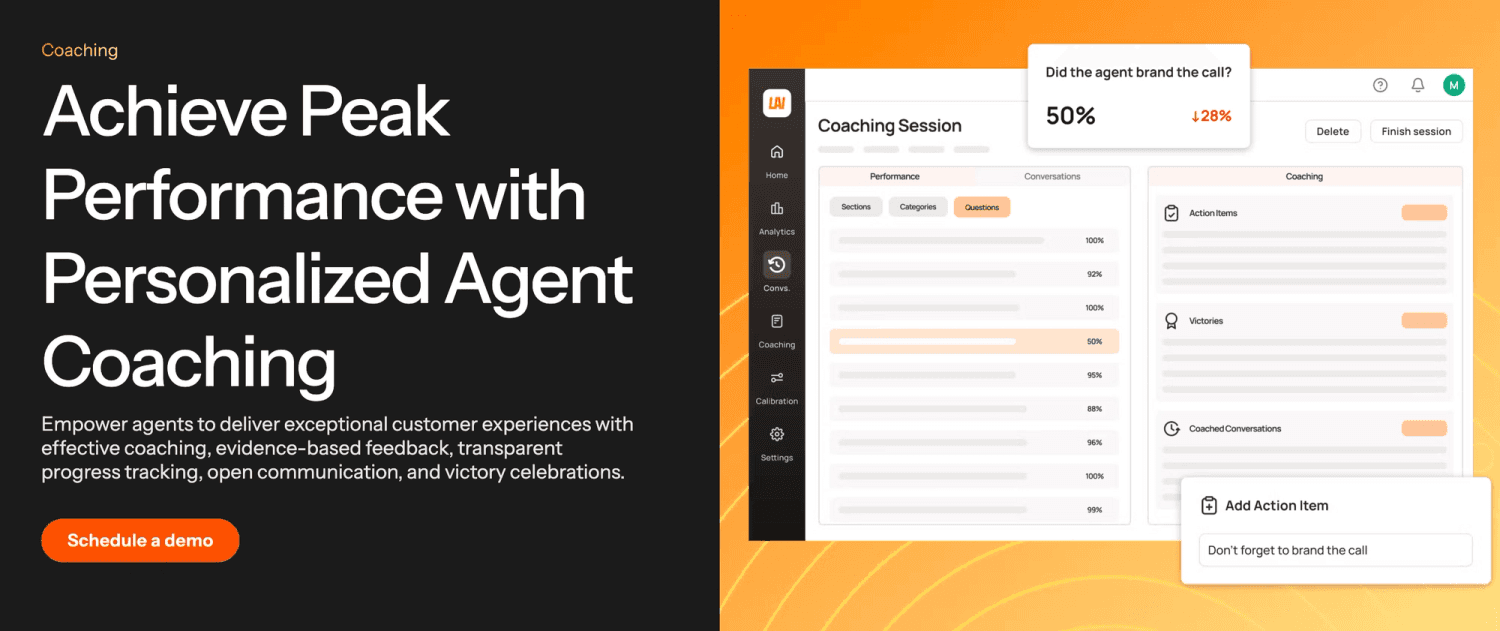
What makes Level AI stand out in vendor evaluations is explainability. When the platform scores a call, it shows the supervisor and the agent exactly which moments drove the score, in plain language. One enterprise buyer put it this way during a recent evaluation: "I want it to show its homework. I don't want a black box telling my agent they failed empathy. I want to see the moment." That kind of transparency is what makes agent coaching software adoption stick.
Key features:
100% Auto QA powered by natural language understanding, with scores tied to specific call moments
AI-generated coaching plans linked to QA findings, with progress tracking over time
Real-time agent assist on voice and chat, with knowledge surfacing and after-call summaries
Best for: 50 to 5,000+ seat contact centers running mixed support and sales, especially BPO and enterprise teams that need omnichannel QA tied to coaching.
What it is not great at: Pure outbound sales coaching where conversion-stage call analytics matter more than service quality. For that, Gong or Chorus is a closer fit.
See how Level AI's agent coaching works in practice
2. Balto: For real-time agent guidance:
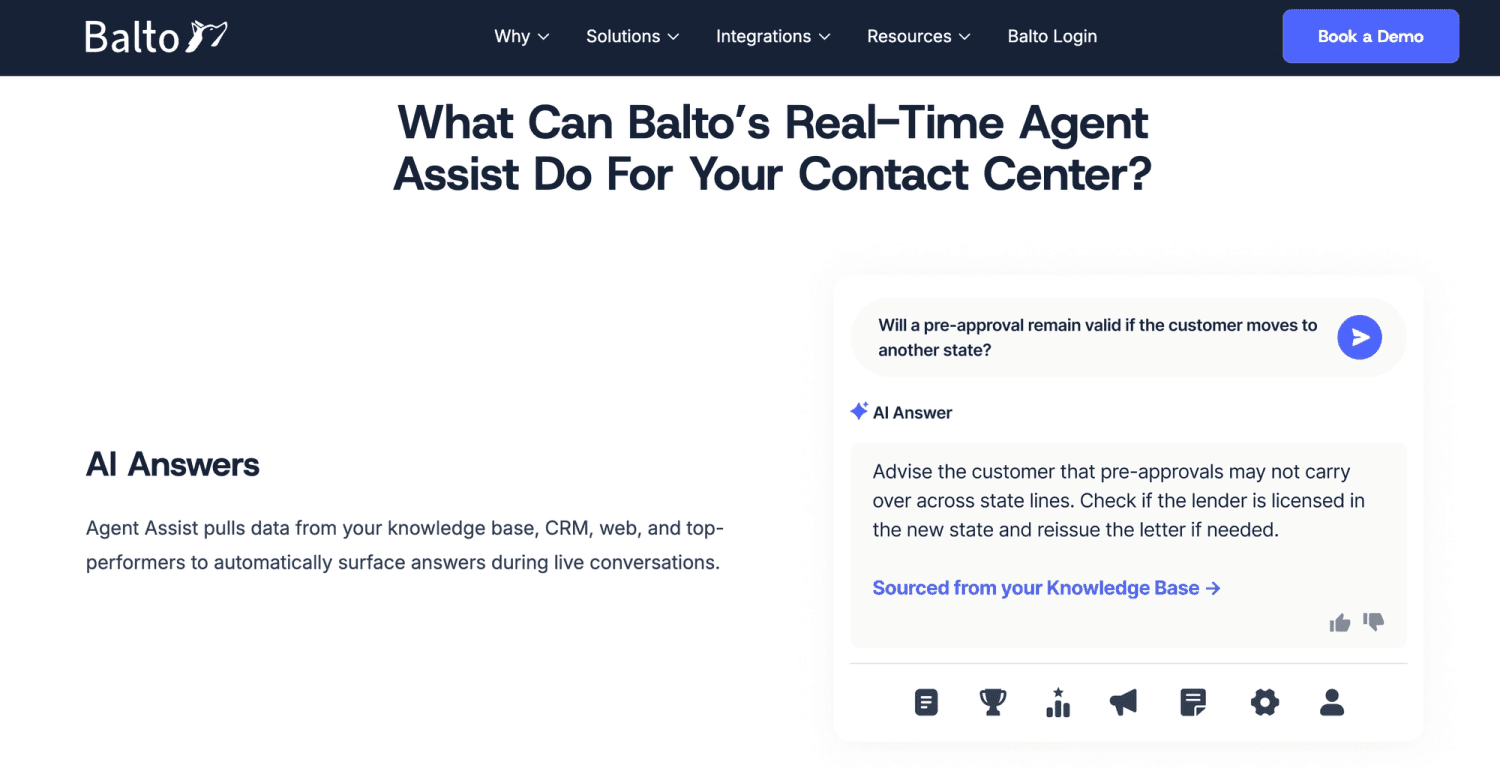
Balto is the cleanest example of pure live coaching agent coaching software. It listens to every conversation in real time and surfaces dynamic prompts, scripts, and compliance reminders to the agent's screen as the call unfolds. Supervisors can also live-listen with one click and two-way chat with agents during calls.
Key features:
Real-time dynamic prompts and scripts that adapt to the conversation
Live listening and two-way agent chat for in-the-moment supervisor support
Coaching playlists for sharing best and worst calls across the team
Best for: Contact centers and sales teams that want prompts in the moment, especially in compliance-heavy industries like financial services and insurance.
What it is not great at: Long-term coaching effectiveness measurement and QA-grounded one-on-ones. Balto leans hard on live guidance, and supervisor-side coaching is a thinner layer.
3. Cresta: best for outcome-data coaching at enterprise scale:
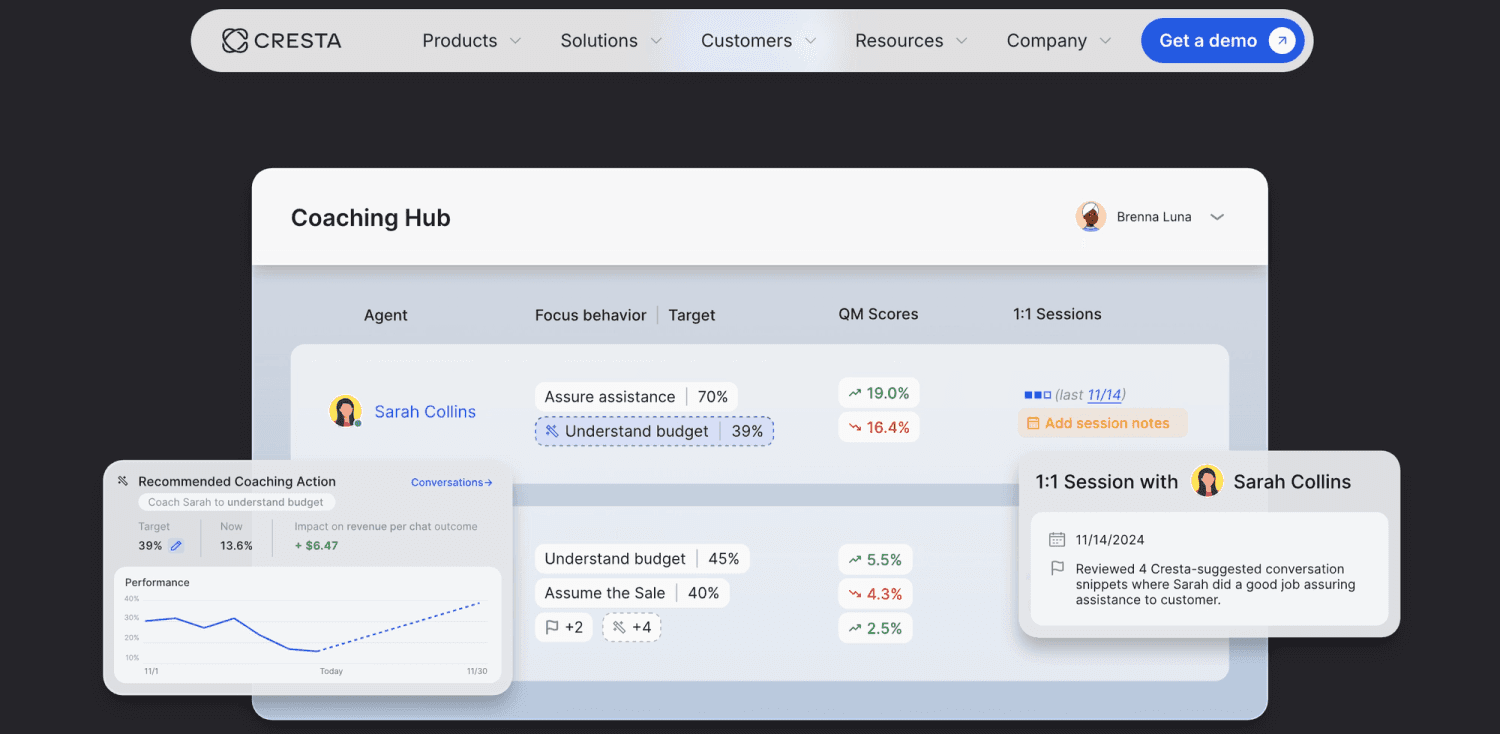
Cresta is a generative AI platform purpose-built for large contact centers. What sets Cresta apart is how it ties coaching behaviors to business outcomes. The platform uses outcome inference models to figure out which agent behaviors actually correlate with CSAT, resolution, and sales conversion, then coaches against those behaviors specifically.
Key features:
Outcome inference that links specific behaviors to CSAT, resolution, and conversion
Real-time agent assist on voice and chat, targeted to individual agents based on adherence
Automated quality scoring across 100% of conversations with personalized coaching plans
Best for: Enterprise contact centers in telecom, retail, automotive, and financial services that want coaching grounded in outcome data, not assumptions.
What it is not great at: Smaller teams. Cresta is built for enterprise scale and pricing reflects that.
4. AmplifAI: best for QA to coaching workflows for supervisors
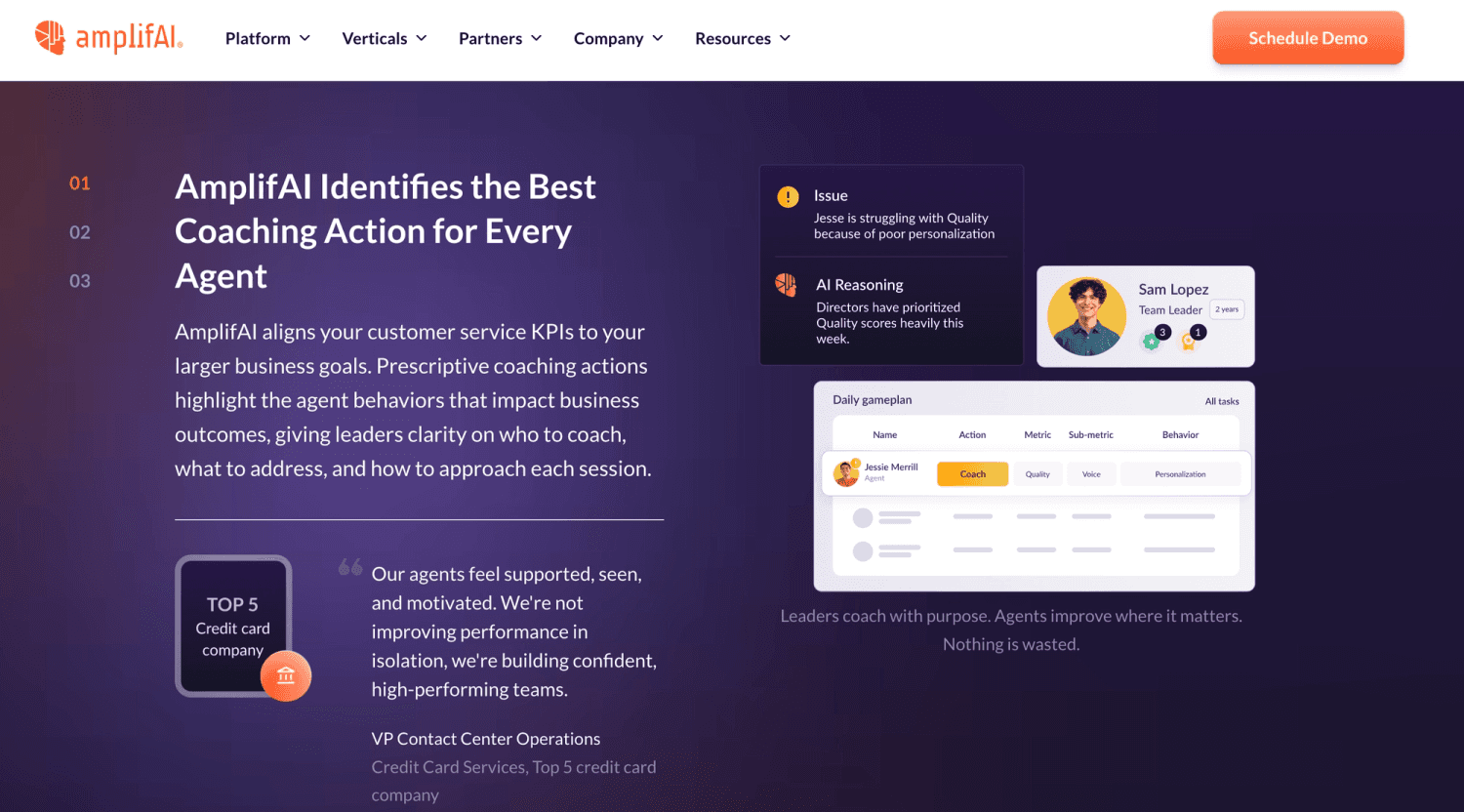
AmplifAI is built specifically for supervisors who run structured coaching cadences. The platform takes QA findings, performance data, and high-performer behavioral patterns, then tells team leaders exactly who to coach, on what, and with what next-best action. Its Coaching Effectiveness Index tracks whether each coaching session actually changed agent behavior.
Key features:
Next-best coaching action recommendations driven by QA findings and performance data
Coaching Effectiveness Index that measures whether coaching changed behavior
Auto QA across 100% of conversations with high-performer persona modeling
Best for: BPO and enterprise contact centers with established supervisor coaching cadences that want to make those one-on-ones more effective.
What it is not great at: Real-time agent prompts during live calls. AmplifAI does not do live coaching by design.
5. Observe.AI: best for compliance-heavy industries
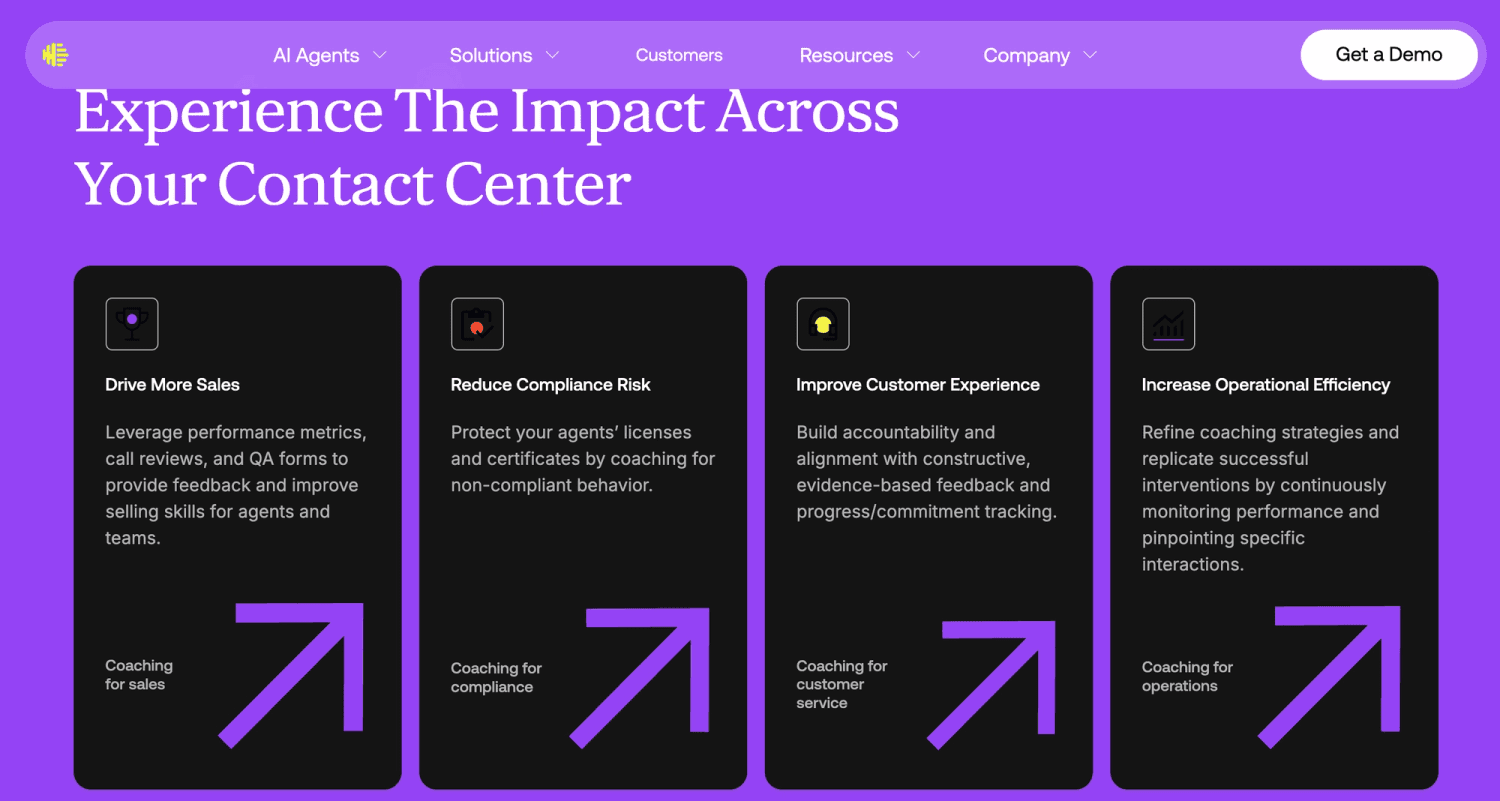
Observe.AI combines real-time agent assist with post-call analytics and automated quality evaluation. The platform is particularly strong in financial services, healthcare, and insurance where compliance scoring needs to run on every call and audit trails matter.
Key features:
Real-time agent assist with compliance reminders and de-escalation prompts
Automated quality scoring with detailed audit trails
Post-call coaching workflows tied to compliance scorecards
Best for: Contact centers in regulated industries where compliance failures are expensive and audit defensibility matters.
What it is not great at: Lightweight or SMB use cases. Observe.AI is enterprise-leaning.
6. Gong: best for B2B sales teams
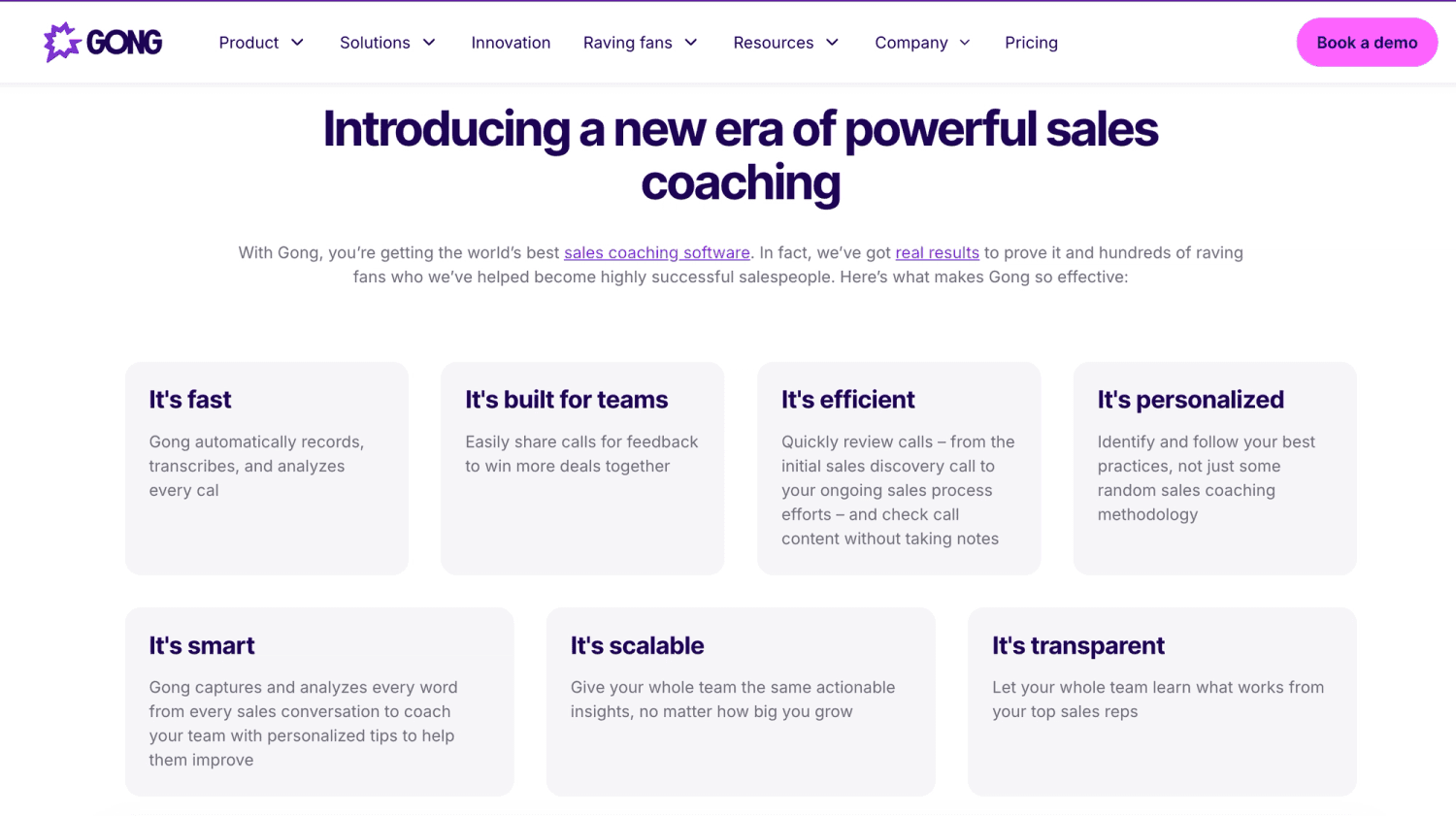
Gong is the most established conversation intelligence platform for B2B sales. It records, transcribes, and analyzes every call and meeting, surfaces deal risks, and gives sales managers structured coaching workflows tied to deal stages.
Key features:
Deal intelligence that flags risks across the pipeline
Coaching workflows tied to call moments like objections, competitor mentions, and pricing
Strong integrations with Salesforce, HubSpot, and Outreach
Best for: B2B sales organizations with 20+ reps that want coaching grounded in real call data rather than manager intuition.
What it is not great at: Customer support or service environments. Gong is built for revenue teams, not CX teams.
7. Chorus.ai: best for mid-market sales coaching
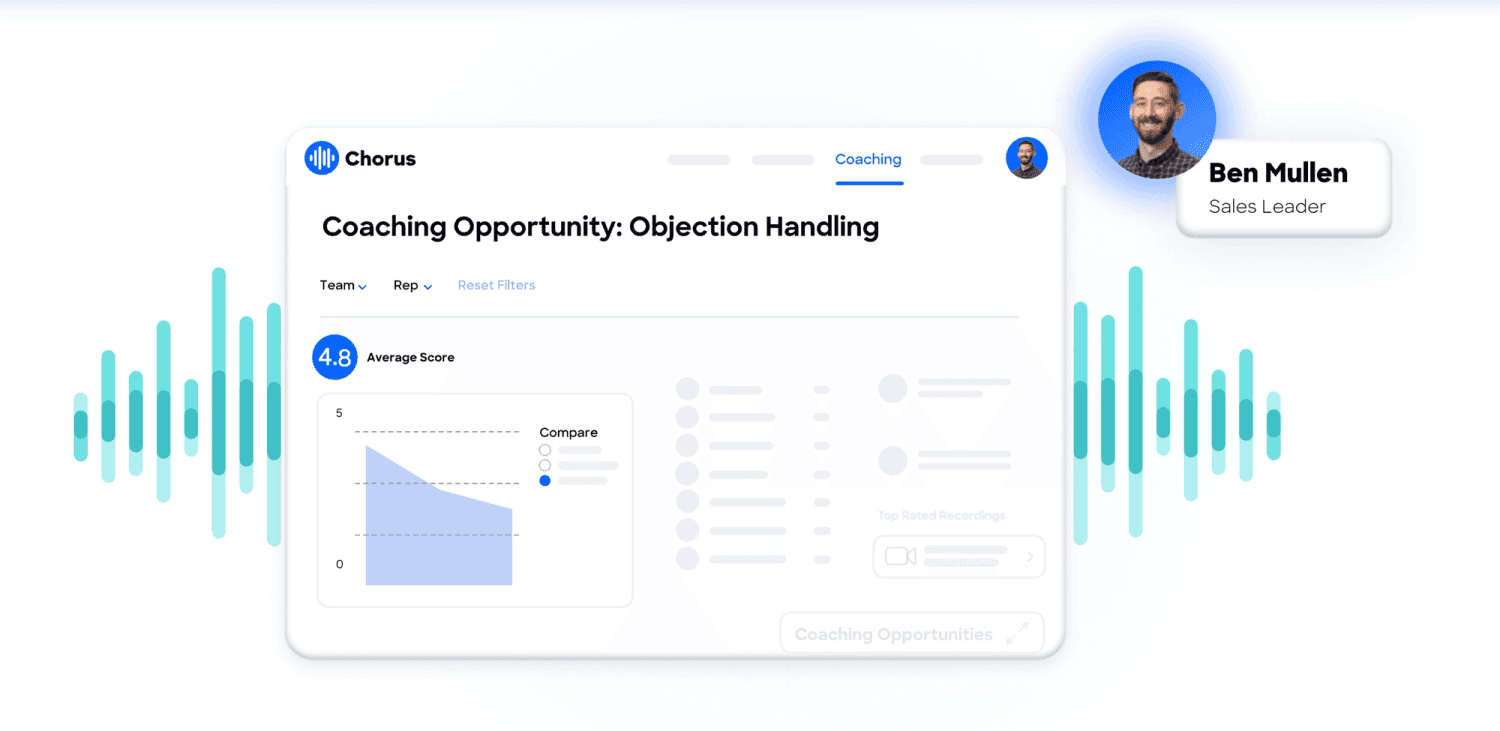
Chorus.ai is a conversation intelligence platform similar to Gong but tuned for mid-market sales teams. It surfaces key moments in sales calls, tracks talk-to-listen ratios, and lets managers build coaching playlists.
Key features:
AI moment detection for objections, competitor mentions, and buying signals
Talk-to-listen ratio tracking and pacing analytics
Coaching playlists and clips for sharing best practice across the team
Best for: Mid-market sales teams that want Gong-style coaching at a slightly more accessible price point.
What it is not great at: Contact center support coaching and complex QA workflows.
8. CallMiner: best for speech analytics and coaching
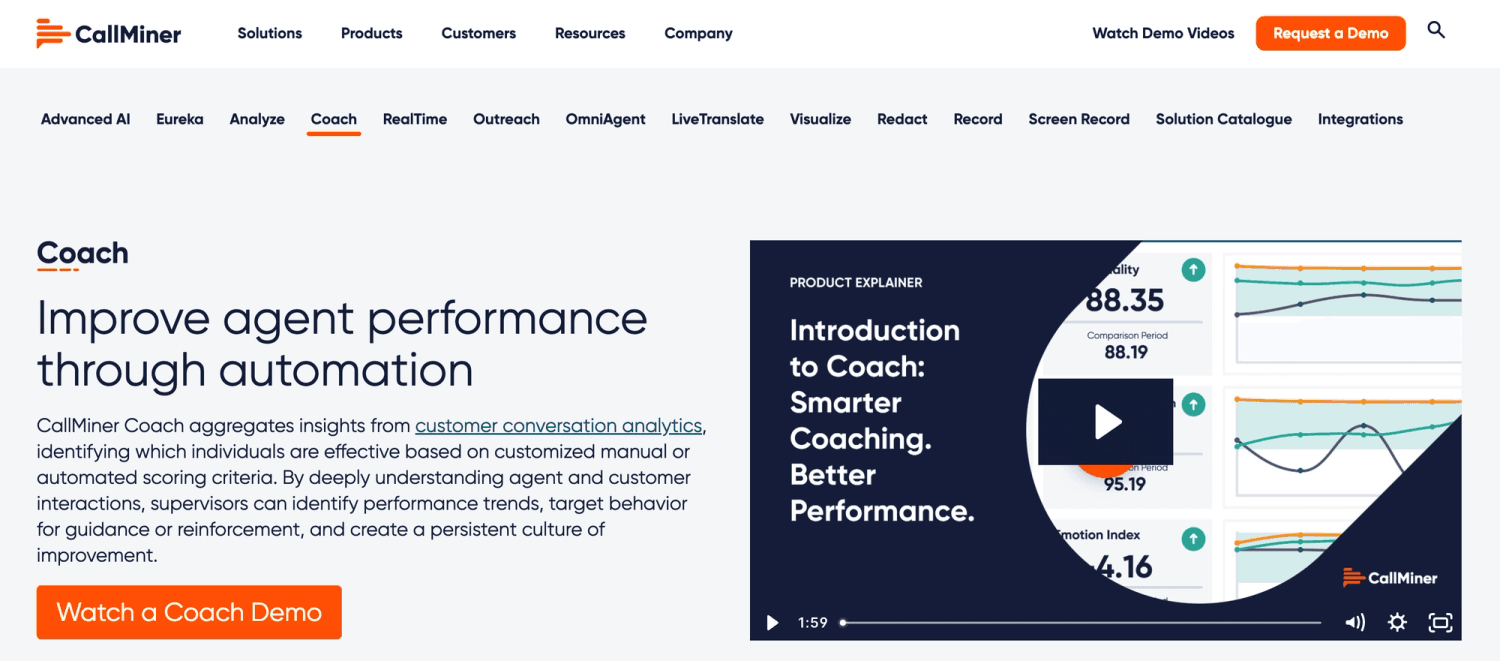
CallMiner is one of the oldest names in conversation analytics. The platform analyzes interaction data at scale, surfaces coaching insights from speech patterns, and feeds those insights into supervisor workflows.
Key features:
Deep speech analytics across voice and digital channels
Coaching insight surfacing tied to interaction patterns
Strong reporting and analytics for QA leaders
Best for: Large contact centers and BPOs that already use speech analytics and want coaching workflows layered on top.
What it is not great at: Real-time agent assist and modern conversational AI workflows. CallMiner's strength is in deep post-call analytics.
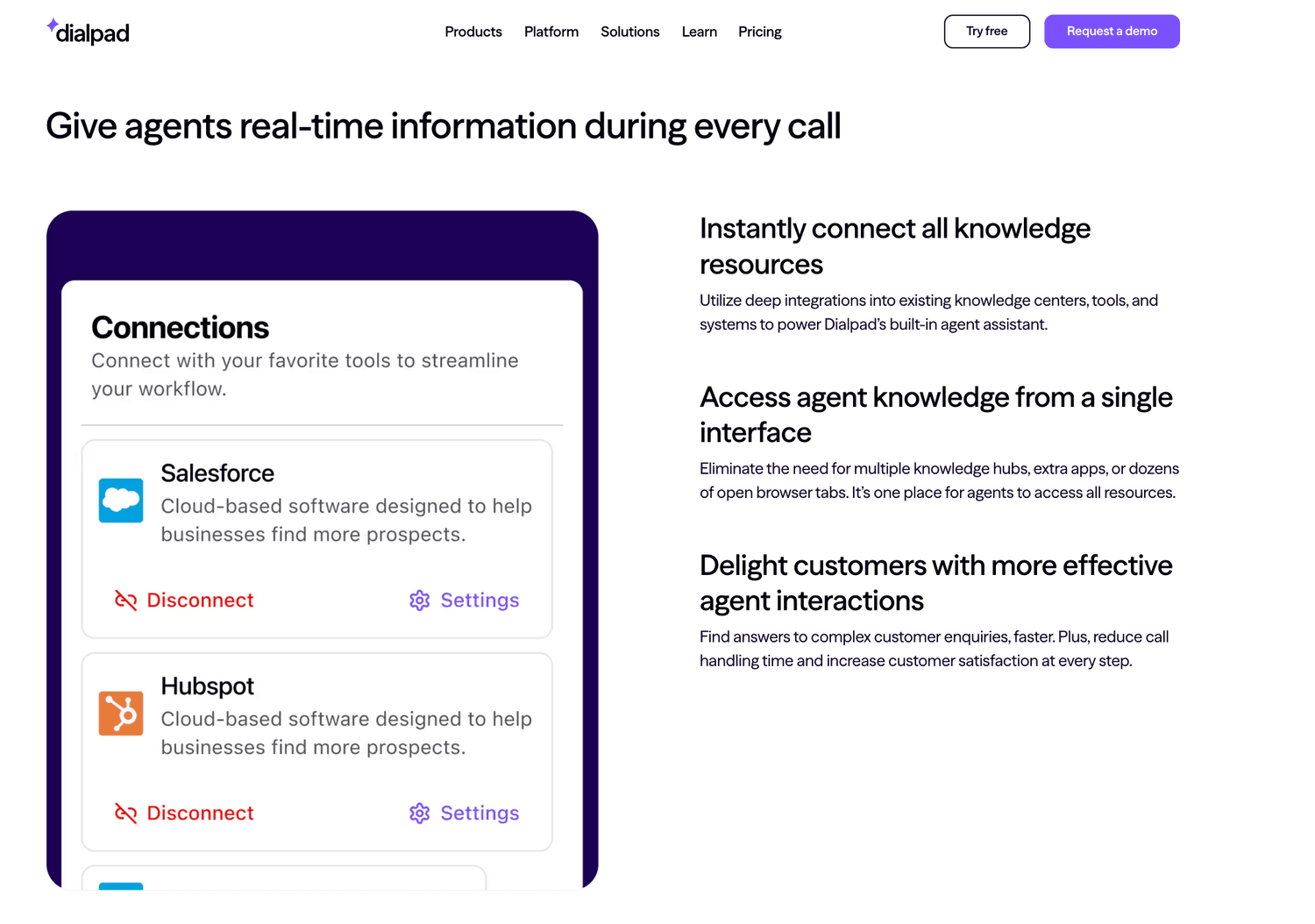
9. Dialpad: best for UCaaS native coaching
Dialpad is a UCaaS platform with built-in AI coaching features. It offers real-time transcription, live coaching prompts, automated call summaries, and AI scorecards across all plans.
Key features:
Real-time AI transcription and live coaching prompts during calls
AI Scorecards that grade calls against configurable criteria
Unified phone, messaging, and video in one platform
Best for: Mid-market teams that want a phone system and agent coaching software in the same stack without separate vendor management.
What it is not great at: Deep QA workflows and coaching effectiveness measurement. Dialpad's coaching is a feature within a broader UCaaS platform, not a specialist tool.
10. CloudTalk: best for SMB sales and support
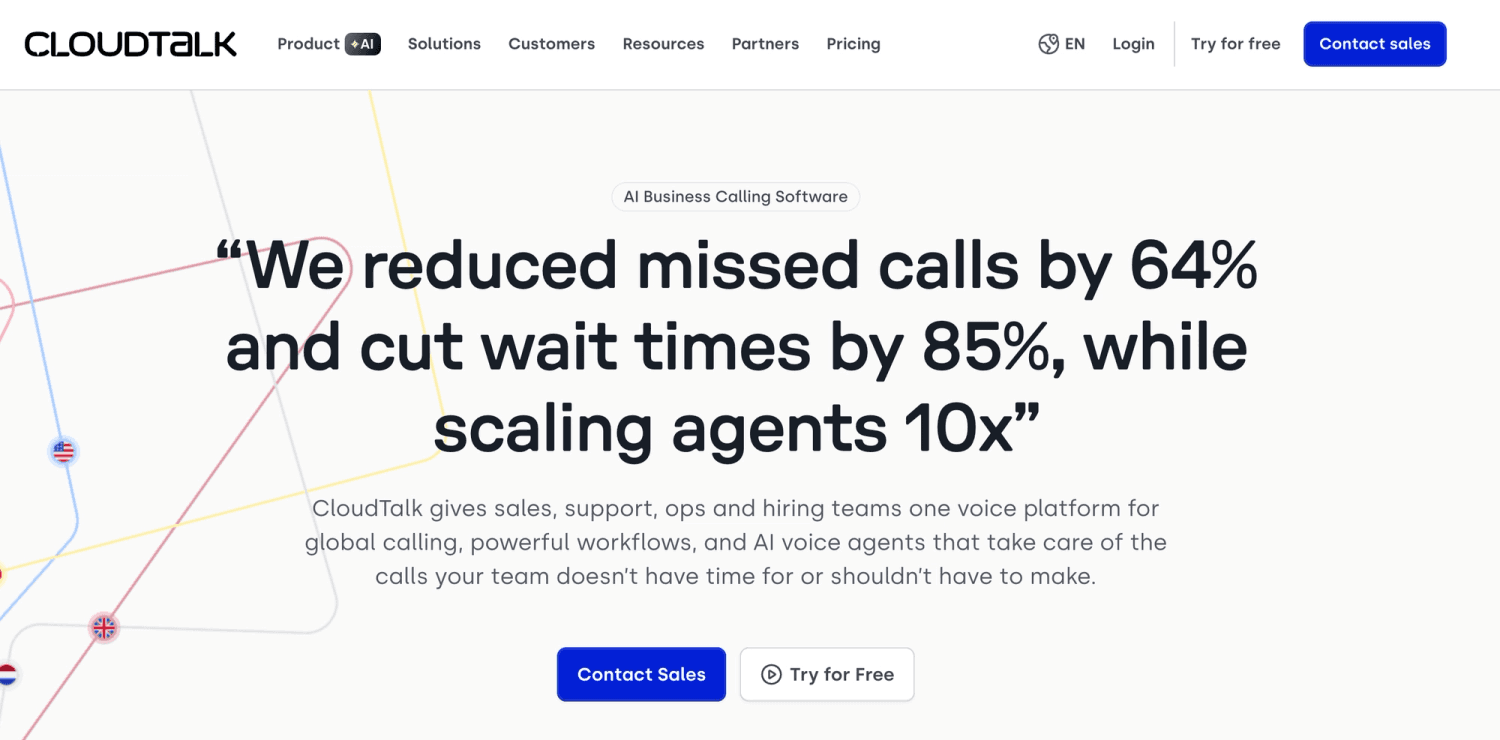
CloudTalk is a cloud-based business phone system with AI Conversation Intelligence as an add-on. The platform combines live monitoring (whisper, barge, listen) with post-call analytics on transcripts, sentiment, and talk ratios.
Key features:
Whisper, barge, and live listen modes for in-the-moment supervisor coaching
AI Conversation Intelligence with call summaries, AI call scoring, and smart notes
Deep CRM integrations including HubSpot, Pipedrive, Salesforce, and Zendesk
Best for: SMB and lower mid-market sales and support teams that want coaching built into their phone system.
What it is not great at: Enterprise contact center scale, 100% Auto QA, and coaching effectiveness tracking.
11. NICE CXone: best for enterprise CCaaS coaching
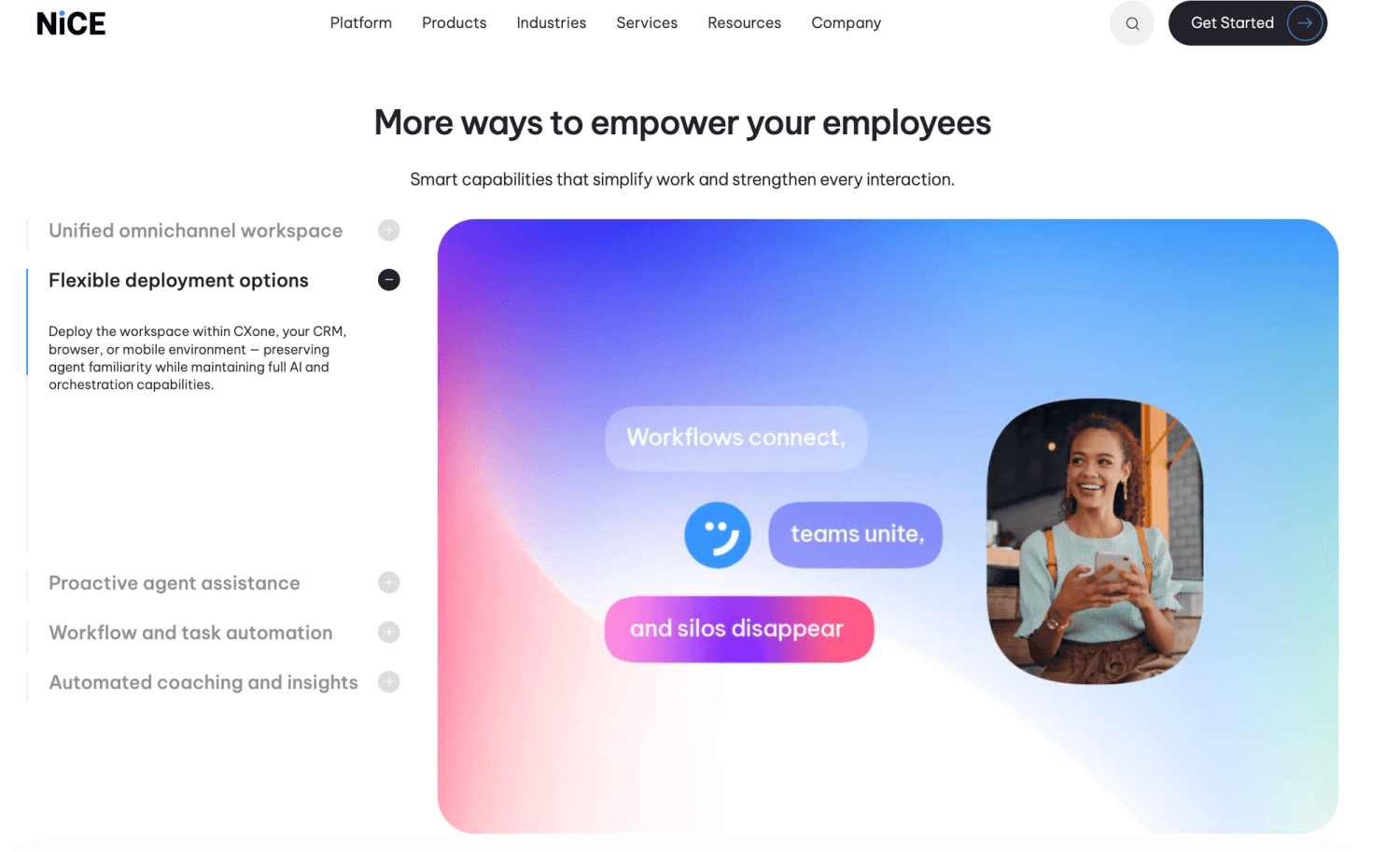
NICE CXone is a full enterprise CCaaS platform with Enlighten AI handling automated quality scoring, sentiment analysis, and agent coaching as part of the broader stack.
Key features:
Enlighten AI for automated quality scoring and agent coaching
Workforce engagement management with forecasting, scheduling, and adherence
100% interaction analytics with QA tied to coaching
Best for: Large enterprise contact centers that want coaching as part of a unified CCaaS deployment.
What it is not great at: Quick deployment and SMB budgets. NICE is enterprise scale with enterprise complexity.
12. Second Nature AI: best for role-play and simulation
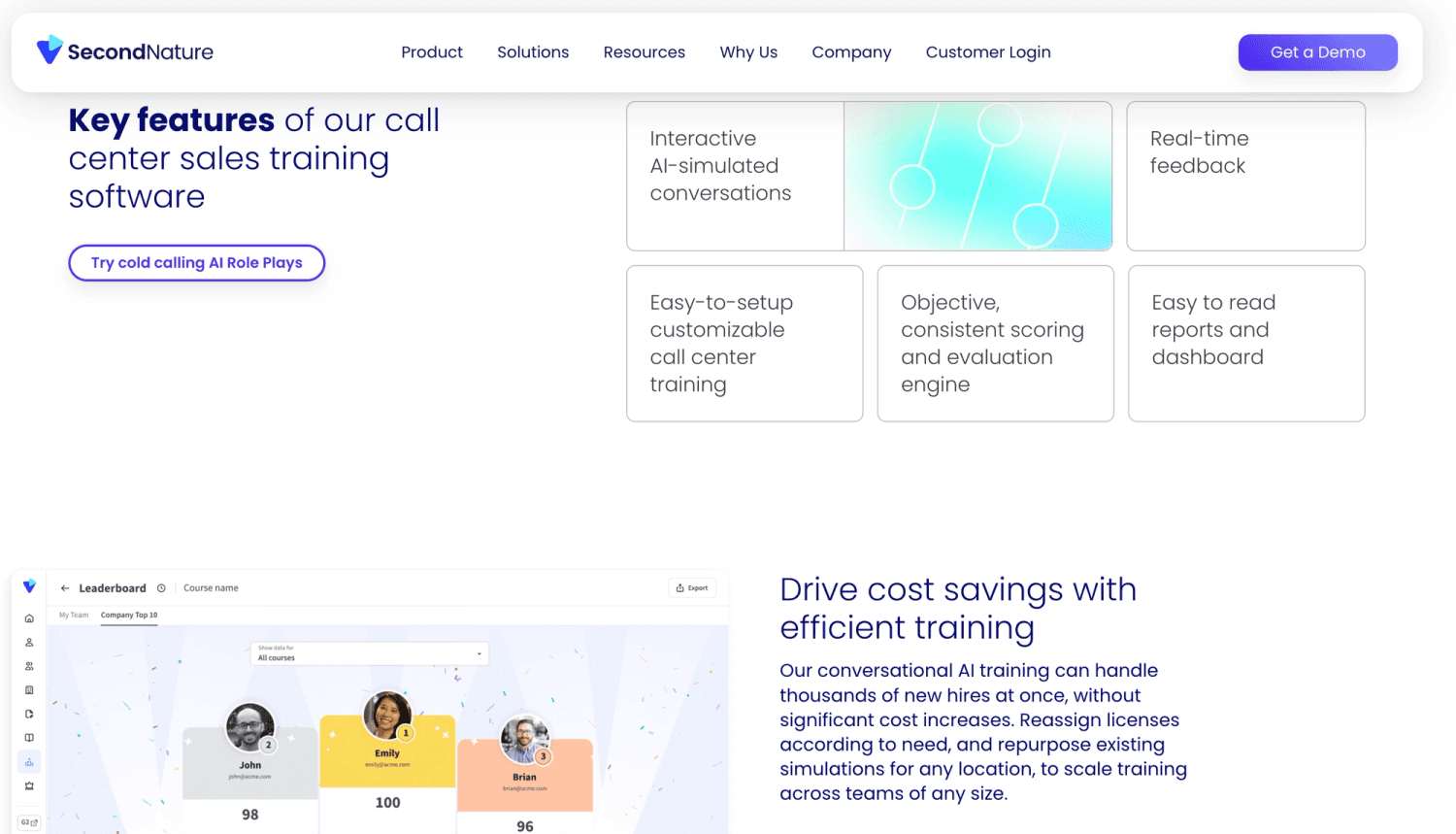
Second Nature AI is a different category from the others on this list. It is a practice and simulation platform that lets agents role-play scenarios against an AI customer before they go live. It is the right tool for onboarding and skill-building, not for live or post-call coaching.
Key features:
Lifelike AI role-play scenarios with adjustable customer moods
Conversion of real call recordings into training scenarios
Scoring and feedback against perfect-call benchmarks
Best for: Sales and service teams with high onboarding volume who want agents to practice before customer-facing calls.
What it is not great at: Live conversation analysis or real-time coaching. Second Nature is for practice, not production.
What features should you look for in agent coaching software?
Eight features separate strong agent coaching software from weak tools. Use these as your evaluation checklist:
Coaching effectiveness measurement. Does the platform track whether coaching actually changed behavior, or does it only count coaching sessions? Activity tracking is easy. Outcome tracking is what matters.
Full call coverage instead of sampling. Modern QA scores 100% of conversations. If a platform samples 2% of calls, you are coaching on a tiny slice of reality.
Real-time and post-call coverage in one stack. Many teams need both. Buying two separate tools means two contracts, two onboarding cycles, and two sets of data that may not talk to each other.
Behavior to outcome correlation. Which agent behaviors actually drive CSAT and resolution? Strong platforms infer this from data rather than assuming it from a scorecard.
Integration depth with CCaaS and CRM. Salesforce, Zendesk, NICE, Genesys, Five9, and Talkdesk are the most common integration targets. Custom dev work is a red flag.
Explainability of scoring. Can the platform show exactly which moment in a call drove a score? This is what makes agent and supervisor adoption stick. As one buyer put it during an evaluation, "I want it to show its homework."
Coaching plan automation tied to QA findings. When a QA score flags an empathy gap, does the platform automatically generate a coaching plan, or does the supervisor build it from scratch?
Multi-channel support. Voice, chat, email, and messaging all need to be scored and coached. Voice-only is a 2018 feature set in 2026.
Our guide to Auto QA software goes deeper on full-coverage scoring and how it feeds coaching.
How should you evaluate agent coaching software vendors?
When you sit down with a vendor for a demo or pilot, the questions that separate good agent coaching software from marketing fluff are the ones below. These are the questions enterprise buyers actually ask in real evaluations:
Does the platform score 100% of interactions, or does it sample? If it samples, what percentage?
Does it work across voice, chat, and email, or is it voice only?
Does it integrate with our existing CCaaS, CRM, and ticketing without custom development work?
Does it tie coaching plans directly to specific QA findings, or are coaching plans built separately?
Can it show its scoring logic at the call level, so a supervisor can defend the score to an agent?
Does it measure coaching effectiveness, not just coaching activity?
What does a pilot look like, and what does success look like at 30, 60, and 90 days?
What is the implementation timeline from contract signature to live deployment?
If a vendor cannot answer the explainability question clearly, that is a real signal. Black-box scoring kills agent trust faster than anything else in a coaching rollout. For a deeper look at how to evaluate scoring transparency, see our guide on choosing contact center QA software.
How do you implement agent coaching software without it becoming shelfware?
The most expensive mistake in agent coaching software is not the contract value. It is buying a platform that nobody uses six months later. Three implementation pitfalls cause most rollout failures, and avoiding them is straightforward:
1. Rolling out across the whole floor on day one. Start with one team, prove ROI on one or two metrics like CSAT or first-call resolution, and only then expand. Big-bang deployments overwhelm supervisors and create change-fatigue across the floor.
2. Training supervisors on dashboards but not on coaching conversations. A great QA dashboard does not make a great coach. Supervisors need training on how to run a structured one-on-one using the data the platform surfaces. Without that, the dashboards generate insights nobody acts on.
3. Measuring activity instead of outcome. The wrong metric is "number of coaching sessions completed this week." The right metric is "CSAT delta on the behaviors we coached on." If your agent coaching software cannot measure the second metric, you will not know whether the rollout is working until your annual CSAT review.
The teams that get this right pick a narrow first use case (often objection handling for sales or de-escalation for support), prove the loop end to end, and expand from there. Our integrations guide covers how to wire coaching data into the systems your supervisors already work in, which removes a lot of the change-management friction.
How Much Does Agent Coaching Software Cost in 2026?
Pricing in this category is fragmented, and most enterprise vendors keep their pricing custom. Here are the honest brackets:
SMB SaaS coaching tools like CloudTalk, Aircall, and Dialpad start at $19 to $80 per user per month. These usually bundle coaching into a phone system or UCaaS license.
Mid-market sales coaching platforms like Gong and Chorus start around $100 to $150 per user per month, billed annually. Most contracts are seat-based with enterprise discounts.
Enterprise CCaaS with coaching modules like NICE CXone, Genesys, and Talkdesk run $80 to $250 per user per month depending on tier and AI add-ons.
Best-of-breed coaching specialists like Level AI, Cresta, AmplifAI, Balto, and Observe.AI use custom enterprise pricing. Expect deal sizes to vary widely based on seat count, channel coverage, integration depth, and AI usage.
Two pricing notes that come up in almost every vendor conversation: first, watch for hidden add-ons (sentiment analysis, real-time agent assist, or voice of customer are often priced separately even in "all-in-one" platforms). Second, push for an outcome-based pilot before committing to a multi-year contract. A 90-day pilot tied to a measurable KPI like CSAT, AHT, or first-call resolution is the cleanest way to test whether the platform actually moves your numbers.
Help agents improve faster with Level AI
If your team is evaluating coaching platforms that tie 100% Auto QA to automated coaching plans across voice and chat, Level AI is the most complete platform on this list. See how it works on your own call data: book a Level AI demo.
Frequently asked questions
What's the difference between agent coaching software and agent assist software?
Agent assist software helps agents during a call by surfacing knowledge, scripts, and prompts in the moment. Agent coaching software focuses on improving agent performance over time through feedback, QA-driven coaching plans, and skill-building. The best platforms in 2026 do both. See our real-time agent assist guide for the live-coaching side.
How much does agent coaching software cost in 2026?
Pricing ranges from $19 per user per month for SMB tools like CloudTalk to $250 per user per month for enterprise CCaaS coaching modules. Best-of-breed platforms like Level AI and Cresta use custom enterprise pricing tied to seat count, channels, and integrations. Expect a 90-day pilot before signing multi-year contracts.
Can agent coaching software work for small contact centers, or only enterprise?
It works for both, but the right tool depends on team size. SMBs with 5 to 50 agents are better served by phone-system-native coaching like CloudTalk or Dialpad. Mid-market and enterprise teams of 100+ agents benefit more from specialist platforms like Level AI, Cresta, or AmplifAI that offer 100% Auto QA and coaching effectiveness tracking.
Does AI replace human coaches in contact centers?
No. The platforms that work best in 2026 use AI to handle the parts coaches cannot scale (scoring every call, surfacing the moments worth coaching, generating draft coaching plans) while keeping the human supervisor central to the actual coaching conversation. AI replaces the busywork, not the relationship.
How do you measure whether agent coaching software is actually working?
Track the metric you are trying to move, not the activity. Strong measurement looks like: CSAT delta on the behaviors you coached on, first-call resolution change on coached agents versus a control group, and AHT improvement after a specific coaching plan.
What integrations matter most when buying agent coaching software?
At minimum: your CCaaS (NICE, Genesys, Five9, Talkdesk, Amazon Connect), your CRM (Salesforce, HubSpot, Zendesk), and your ticketing or service platform. Without these, coaching data lives in a silo and nobody acts on it. Our integrations directory lists the most common targets.

" transform="translate(247.297 0)" width="197.82796686746997px"/><path d="M 170.627 0 C 171.353 0 172.122 0.325 172.939 1.064 C 173.761 1.807 174.601 2.942 175.447 4.484 C 177.139 7.567 178.793 12.158 180.378 18.127 C 183.546 30.056 186.405 47.348 188.809 68.751 C 193.617 111.549 196.592 170.691 196.592 236.029 C 196.592 301.367 193.617 360.509 188.809 403.307 C 186.405 424.709 183.546 442.002 180.378 453.931 C 178.793 459.9 177.139 464.49 175.447 467.574 C 174.601 469.116 173.761 470.251 172.939 470.993 C 172.122 471.733 171.353 472.058 170.627 472.058 C 169.901 472.058 169.131 471.733 168.314 470.993 C 167.492 470.251 166.652 469.116 165.806 467.574 C 164.113 464.49 162.461 459.9 160.876 453.931 C 157.708 442.002 154.848 424.709 152.444 403.307 C 147.637 360.509 144.662 301.367 144.662 236.029 C 144.662 170.691 147.637 111.549 152.444 68.752 C 154.848 47.348 157.708 30.056 160.876 18.127 C 162.461 12.158 164.113 7.568 165.806 4.484 C 166.652 2.942 167.492 1.807 168.314 1.064 C 169.131 0.325 169.901 0 170.627 0 Z M 71.713 0 C 62.009 0 52.656 6.435 44.052 18.342 C 35.457 30.238 27.69 47.491 21.156 68.871 C 8.091 111.621 0 170.721 0 236.029 C 0 301.337 8.091 360.436 21.156 403.187 C 27.69 424.566 35.457 441.82 44.052 453.715 C 52.656 465.623 62.009 472.058 71.713 472.058 C 81.416 472.058 90.77 465.623 99.373 453.715 C 107.969 441.82 115.736 424.566 122.269 403.187 C 135.334 360.436 143.425 301.337 143.425 236.029 C 143.425 170.721 135.334 111.621 122.269 68.871 C 115.736 47.492 107.969 30.238 99.373 18.342 C 90.77 6.435 81.416 0 71.713 0 Z" fill="transparent" height="472.05786706056097px" id="AtqcuIS6E" stroke-dasharray="" stroke-linecap="butt" stroke-linejoin="miter" stroke-miterlimit="10" stroke-width="1.845" stroke="rgb(146, 146, 146)" transform="translate(102.538 0)" width="196.59214365028447px"/><path d="M 123.024 0 C 89.215 0 58.469 26.24 36.139 68.983 C 13.822 111.702 0 170.76 0 236.029 C 0 301.298 13.822 360.356 36.139 403.075 C 58.469 445.817 89.215 472.058 123.024 472.058 C 156.834 472.058 187.58 445.817 209.91 403.075 C 232.226 360.356 246.048 301.298 246.049 236.029 C 246.049 170.76 232.226 111.702 209.91 68.983 C 187.58 26.24 156.834 0 123.024 0 Z" fill="transparent" height="472.05786706056097px" id="nKu1rpt6g" stroke-dasharray="" stroke-linecap="butt" stroke-linejoin="miter" stroke-miterlimit="10" stroke-width="1.845" stroke="rgb(146, 146, 146)" width="246.04881024096358px"/><path d="M 0 6.691 C 0 2.996 2.88 0 6.432 0 C 9.984 0 12.863 2.996 12.863 6.691 C 12.863 10.386 9.984 13.382 6.432 13.382 C 2.88 13.382 0 10.386 0 6.691 Z" fill="rgb(254, 80, 0)" height="13.38193205317657px" id="qx6powAle" transform="translate(423.219 103.185)" width="12.863448795180375px"/><path d="M 0 6.691 C 0 2.996 2.88 0 6.432 0 C 9.984 0 12.863 2.996 12.863 6.691 C 12.863 10.386 9.984 13.382 6.432 13.382 C 2.88 13.382 0 10.386 0 6.691 Z" fill="rgb(254, 80, 0)" height="13.38193205317657px" id="NK9e8zC6o" transform="translate(293.204 255.173)" width="12.86344879517992px"/><path d="M 0 6.691 C 0 2.996 2.88 0 6.432 0 C 9.984 0 12.863 2.996 12.863 6.691 C 12.863 10.386 9.984 13.382 6.432 13.382 C 2.88 13.382 0 10.386 0 6.691 Z" fill="rgb(254, 80, 0)" height="13.38193205317657px" id="GMpYPNX_6" transform="translate(427.575 329.773)" width="12.863448795180375px"/><path d="M 0 6.691 C 0 2.996 2.88 0 6.432 0 C 9.984 0 12.863 2.996 12.863 6.691 C 12.863 10.386 9.984 13.382 6.432 13.382 C 2.88 13.382 0 10.386 0 6.691 Z" fill="rgb(254, 80, 0)" height="13.38193205317657px" id="xEa1_xTe3" transform="translate(99.187 154.777)" width="12.863448795180375px"/><path d="M 0 6.691 C 0 2.996 2.88 0 6.432 0 C 9.984 0 12.863 2.996 12.863 6.691 C 12.863 10.386 9.984 13.382 6.432 13.382 C 2.88 13.382 0 10.386 0 6.691 Z" fill="rgb(254, 80, 0)" height="13.38193205317475px" id="RVMs3MQ2J" transform="translate(111.25 382.759)" width="12.863448795181284px"/><path d="M 0 6.691 C 0 2.996 2.88 0 6.432 0 C 9.984 0 12.863 2.996 12.863 6.691 C 12.863 10.386 9.984 13.382 6.432 13.382 C 2.88 13.382 0 10.386 0 6.691 Z" fill="rgb(254, 80, 0)" height="13.381932053172932px" id="ka1rTUarQ" transform="translate(28.818 63.445)" width="12.863448795180375px"/></g></svg>)