
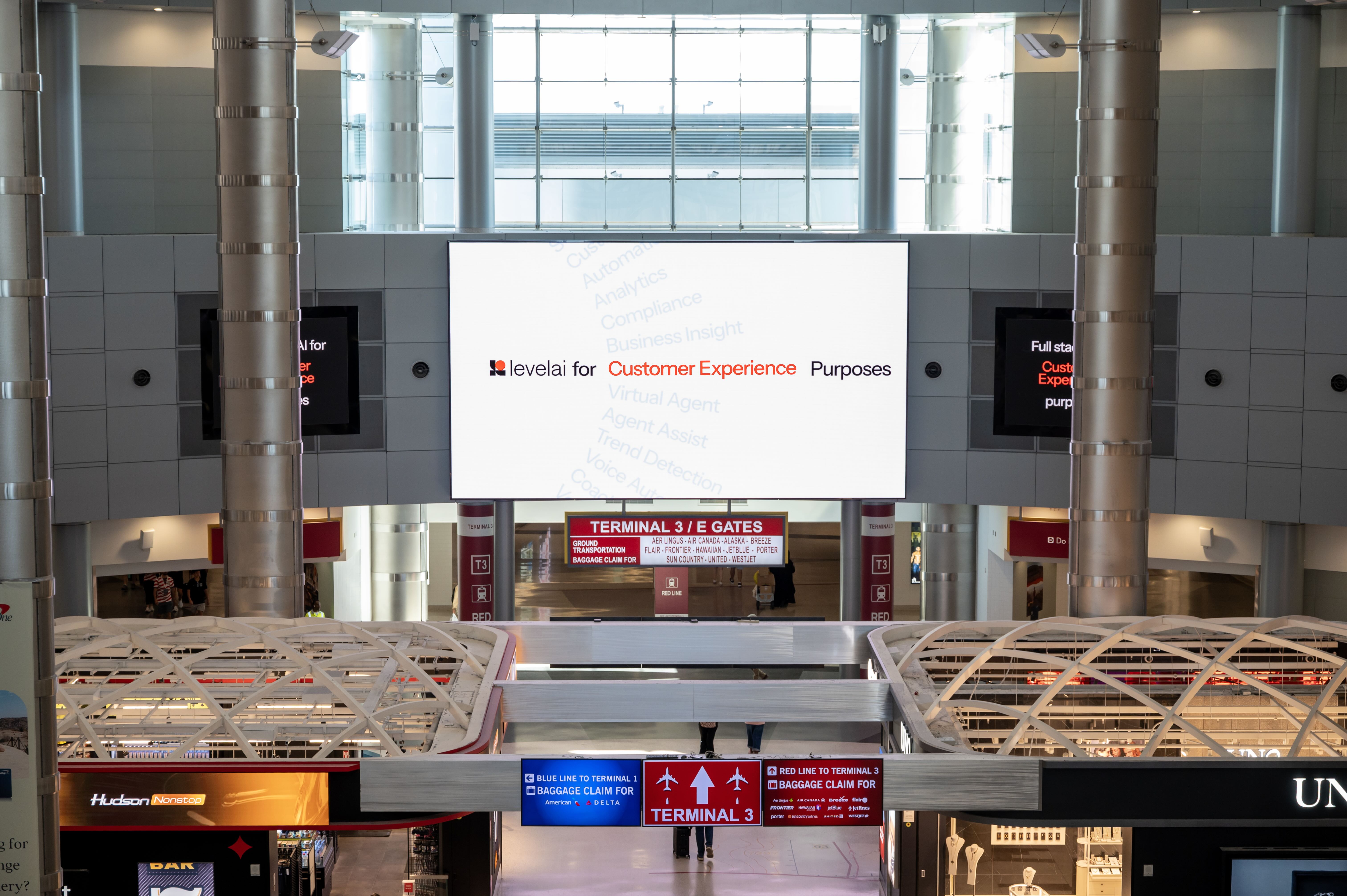
This was the year the industry stopped asking whether to deploy AI and started accounting for what happened when they did. Across four packed days, #CCWLV26 made one thing clear: the contact centers seeing results are not the ones that deployed the most tools. They are the ones that governed what they built.
From a packed workshop on AI Workers to conversations across Booth 145, the same questions kept surfacing: how do you measure AI performance on outcomes that matter, how do you govern agents you can’t fully predict, and what does the workforce actually look like when automation moves faster than anyone modeled?
The market reality: 74% of AI deployments have been reversed
A Sinch report released at the show found that 74% of enterprise AI agent deployments have been reversed after go-live, with governance failures cited as the primary cause. These were not failed deployments — they were deployments that worked, shipped, encountered edge cases, and caused brand damage that no checklist had anticipated.
The organizations not in that 74% invested in governance infrastructure before they needed it. That distinction — building quality and auditability from the start rather than retrofitting it — was the clearest line between the teams celebrating results and the ones walking back decisions on the show floor.
Key takeaways:
Governance is not a feature you add after deployment. The organizations not in that 74% built QA, auditability, and compliance infrastructure in from the start — before agents hit edge cases in live environments.
A UJET study found zero contact center agents describe AI as essential to their daily work, despite most using it daily. AI that doesn’t measurably help the humans doing the work doesn’t get adopted — and doesn’t produce the outcomes it was deployed to deliver.
CX leaders are being asked for ROI, not roadmaps. That requires a platform that scores every interaction, flags failure patterns by agent and queue, and connects AI performance to the metrics executives are held to.
Efficiency was the wrong goal
Standout floor quote of the week: “We were measuring deflection rate as our primary AI success metric. We were getting better at deflecting customers. We were not getting better at serving them.”
A Front Research survey of 700 B2B CX leaders put a name to the outcome: the “coordination tax.” Tool proliferation adds management complexity instead of removing it, and organizations optimizing for deflection are making a poor financial bet. Harvard Business Review data shows customers who have had a genuinely good service experience spend 140% more than those who have not.
CMP’s 2026 Executive Priorities Survey confirmed which metrics executives are actually held to: CSAT (80% Top-2 Box), First Contact Resolution (71%), and Self-Service Resolution Rate (68%). Resolution metrics, not deflection metrics. The buyers know what good looks like. The gap is in what they’ve been building toward.
Key takeaways:
Deflection rate as a primary AI success metric optimizes for avoiding customers, not serving them. Resolution rate, FCR, and CSAT — the metrics CMP found executives are actually held to — require AI built for resolution, not deflection. That distinction lives in how the platform is built, not how it’s configured.
IDC: organizations using 5+ disconnected customer service tools spend 30% more time resolving issues. Fragmented tools produce fragmented outputs. QA, coaching, virtual agents, and AI Workers running on the same conversation data layer produce outputs that sharpen each other instead of diverging.
Improving customer analytics and insights has been the #1 executive priority for two consecutive years. The signal is already in every customer conversation. The problem is that most organizations are reading 3% of them.
The workforce question had no resolution — and that was the point
Verizon CEO Dan Schulman stated publicly that AI agents are replacing customer service workers and satisfaction scores improved as a result. IKEA took the opposite position, redesigning agent roles entirely and retraining people for revenue-generating work. The most senior people in the room disagreed openly. That debate is not resolved.
What CMP’s data did clarify: the 2025 US contact center frontline workforce dropped below the level the BLS had projected for 2034 — nearly a decade ahead of schedule. And “managing change of an AI-augmented workforce” clustered as one of the highest-importance, highest-difficulty executive priorities in the year-over-year shift data. The pace of change is no longer theoretical.
McKinsey offered the clearest anchor: companies involving frontline workers in technology transformation are 2.6x more likely to achieve successful adoption. The path forward runs through the agents themselves.
Key takeaways:
The top 2026–2027 investment priorities — Agent Assist (51%), Chatbots/Virtual Agents (49%), Customer Analytics & Insights (47%), Automated QA/QM (37%) — all depend on conversation data to work. Agent Assist improves when it draws from real interaction history. Virtual agents resolve more when they train on the same data that informs QA. Analytics surfaces the right signals when it reads full conversations, not samples. The conversation data layer is the precondition for all of these investments, not a byproduct of them.
The US contact center frontline workforce dropped below the BLS 2034 projection in 2025 — nearly a decade early. AI Workers that augment skilled CX professionals rather than replace them with weaker outputs are not a philosophical position. They are an operational one.
The teams that left CCW with results described their AI as orchestrated — coordinated across agents, humans, data, and workflows toward a specific outcome. That coordination requires a shared data layer. Without it, each tool optimizes independently and the outputs compound in the wrong direction.
Key insights from “Meet the Team Behind Your Team: Building AI Workers”
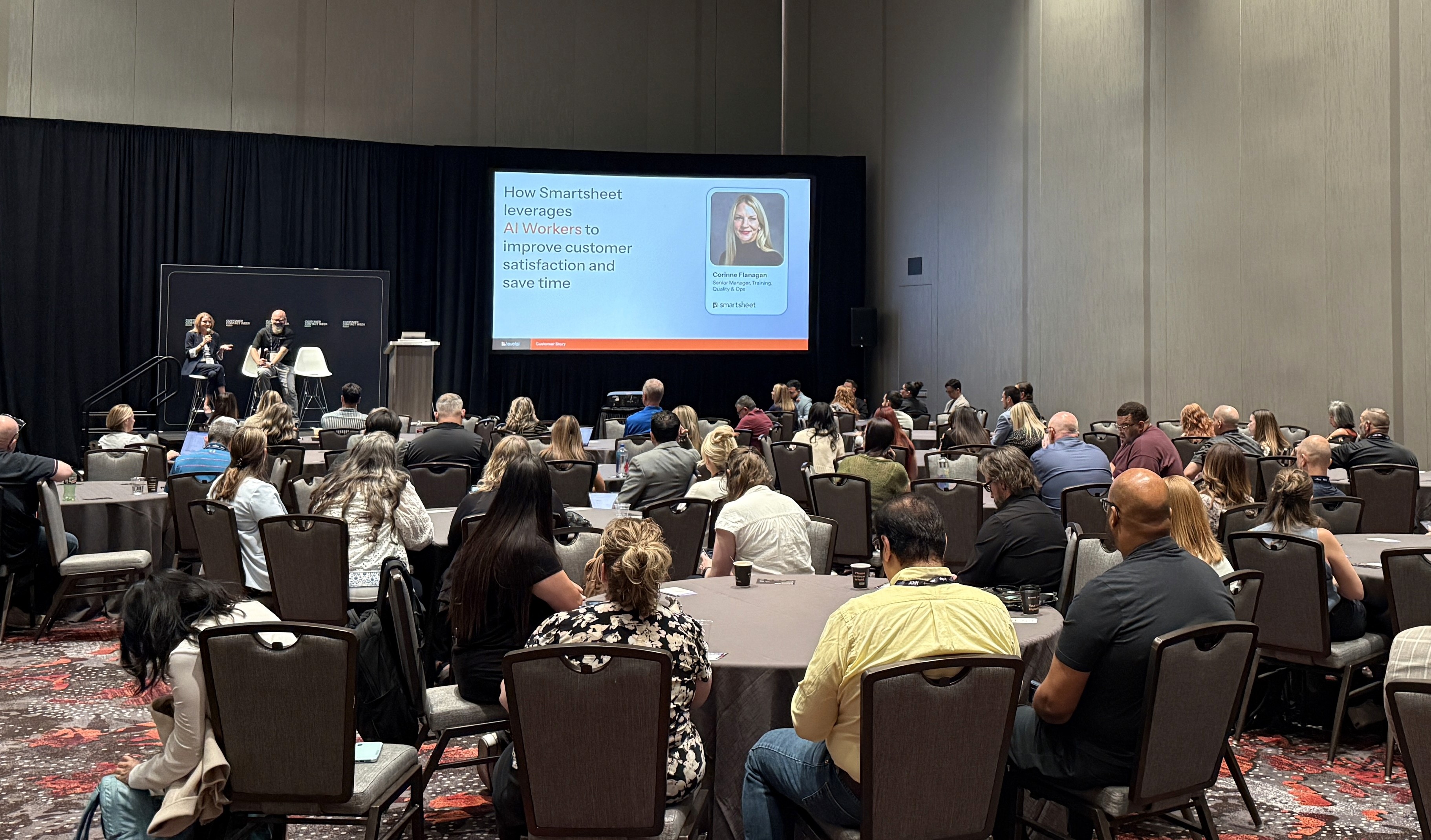
On Tuesday, Level AI hosted a 90-minute workshop that included a panel discussion, case study and working session. The thesis: CX coaches, analysts, and QA leads spend the majority of their week on administrative overhead — finding the right calls, filtering transcripts, packaging data for stakeholders — before they do any actual work. That gap between data and action is not a technology problem. It compounds at scale.
Ashish Nagar walked the room through how AI Workers close that gap: a Coach that produces personalized agent development plans from real interaction data, a QA Specialist that audits every conversation instead of a 3% sample, a VoC Analyst that delivers research-grade reporting in hours instead of weeks. Then he built one live on stage using questions sourced directly from the audience.
Corinne Flanagan, Senior Manager, Training, Quality & Ops at Smartsheet joined Rob Dwyer, Level AI’s Executive in Residence, for the case study. A practitioner panel followed with Ethan Adshade, Sr. Director, Global Training and Education at a global entertainment company, Hannah Ramsdell, Manager, Contact Center Insights & Strategy at Dick’s Sporting Goods, and Michelle Winnett, SVP, Global Delivery & Ecosystem Strategy at LiveOps - each speaking to what changed when their teams moved from manual, sampled workflows to agentic ones.
Key takeaways:
QA at 3% sample rates misses the failure patterns driving repeat contacts. Full-conversation coverage changes what teams can see and act on.
Agent coaching built on sampled data produces development plans built on the wrong inputs. AI Workers pull from the full interaction record.
VoC reporting that takes weeks is not actionable. Compressing that cycle to hours changes how organizations respond to what customers are actually saying.
What we heard at Booth 145
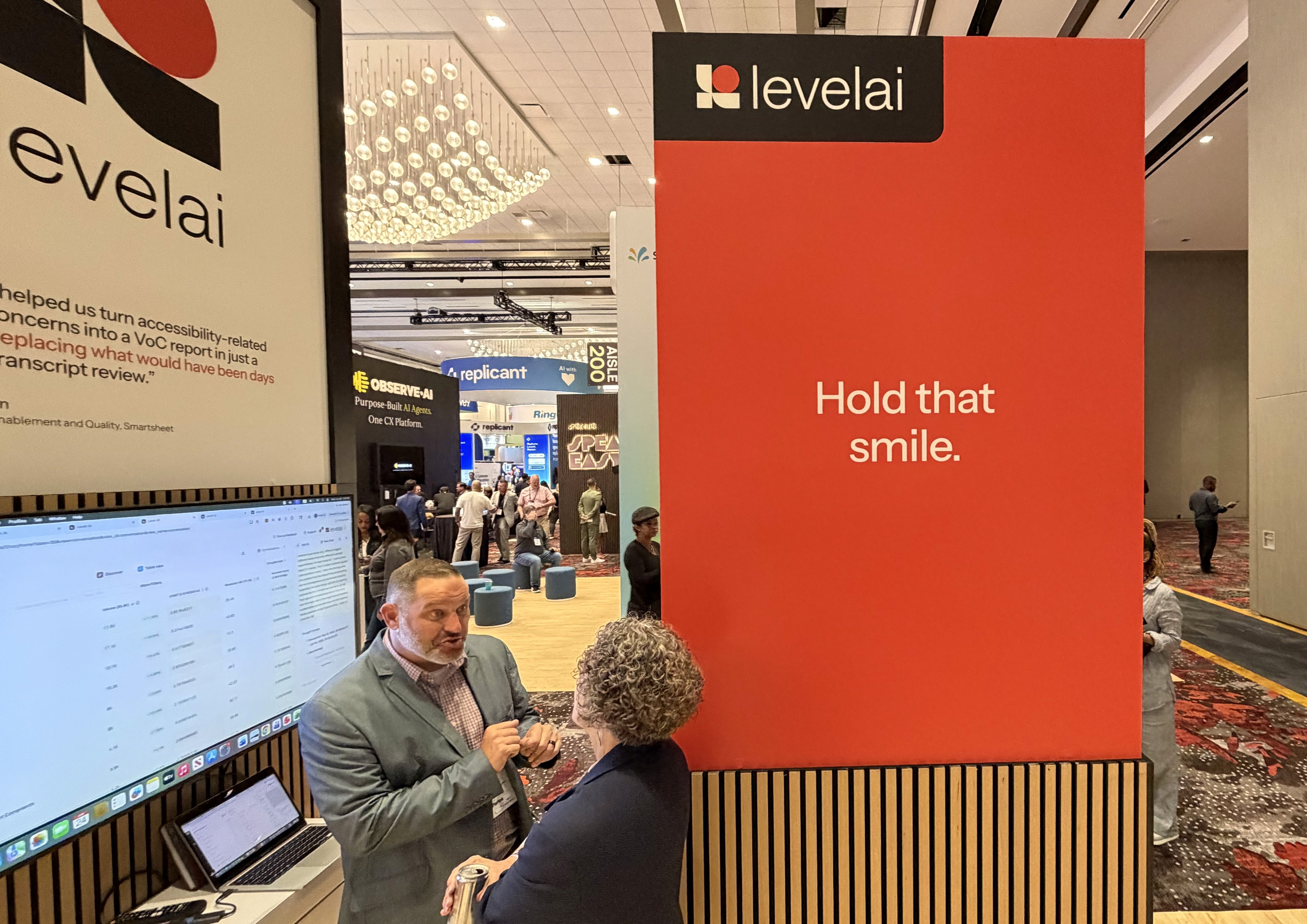
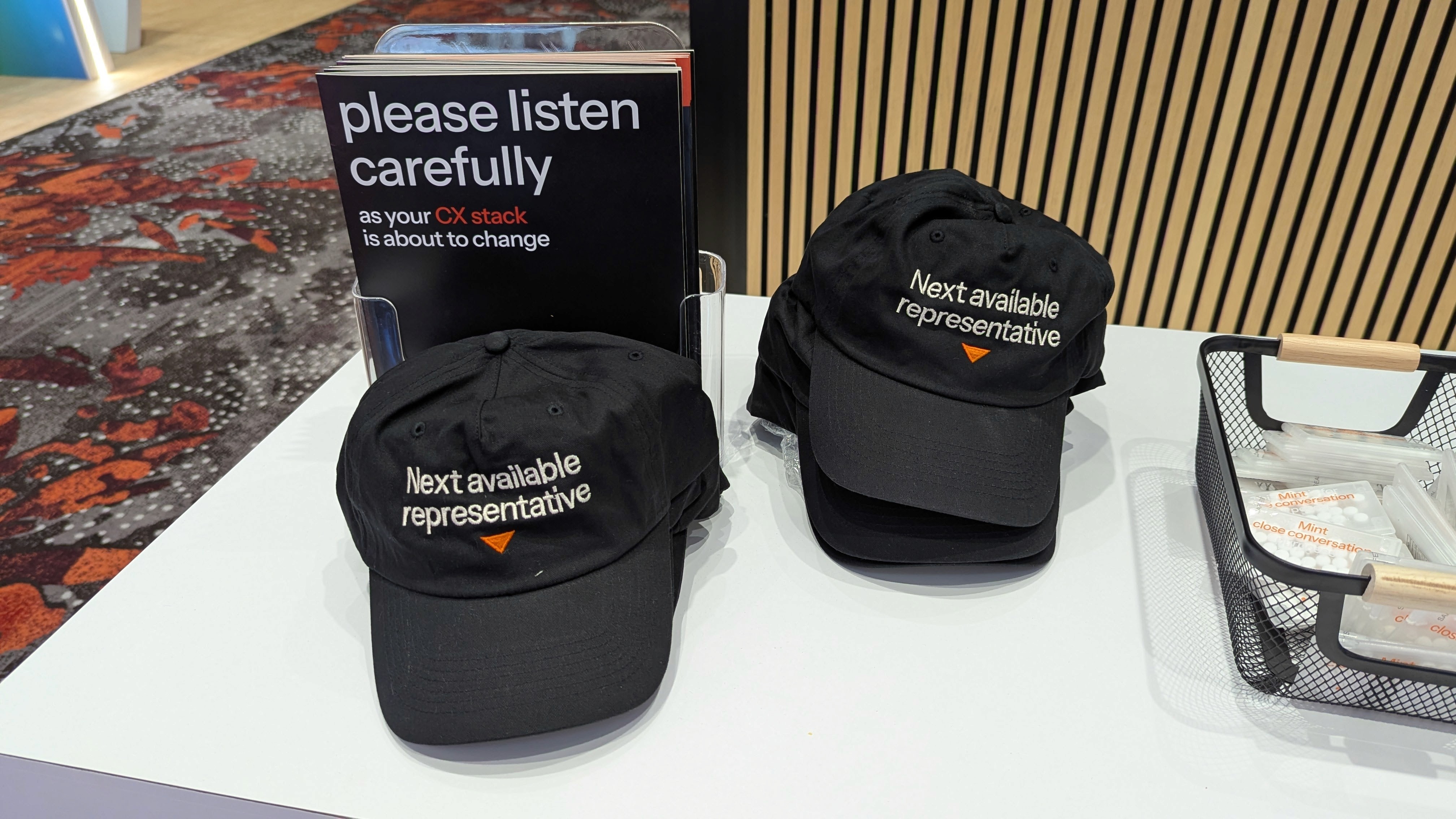
You couldn’t miss the Level AI on the show floor. Attendees sipped from Level AI coffee cups, and between waiting in line for free headshots, flexing custom dad hats and iconic stickers, the conversations at the booth and in the cabana covered a lot of ground. A few threads that came up repeatedly:
Leaders who had deployed AI agents — and reversed them — were most interested in what governance infrastructure should have looked like before go-live, not after.
QA teams running on sample-based review were asking the same question: what does it mean to score every interaction, and what does that surface that we are currently missing?
The interest in AI Workers was highest among teams with strong human operations already in place — people who understand what great coaching and QA look like, and want AI to do more of it rather than replace it with something weaker.
Level AI × Five9
This year Level AI was awarded Partner Excellence of the Year by Five9 and CCW was the first major event since that recognition where both teams were on the floor together.
On Wednesday evening, Level AI sponsored the Five9 Partner Powered Reception at Guy Fieri’s Vegas Kitchen & Bar. The reception brought together Five9’s partner ecosystem for the kind of conversation the show floor doesn’t have room for: where the integration roadmap is headed, what joint customers are seeing in practice, and what the next phase of the partnership looks like operationally.
At CCW, Five9 also launched a new release of their Voice AI Agents — purpose-built for the agentic era, with natural language understanding, intent detection, orchestration layers, and smooth human handoffs with full context. Connecting that capability with Level AI’s conversation intelligence and full-coverage QA infrastructure is the work the partnership makes possible.
Level AI announced in Agent Assist CMP Research Prism
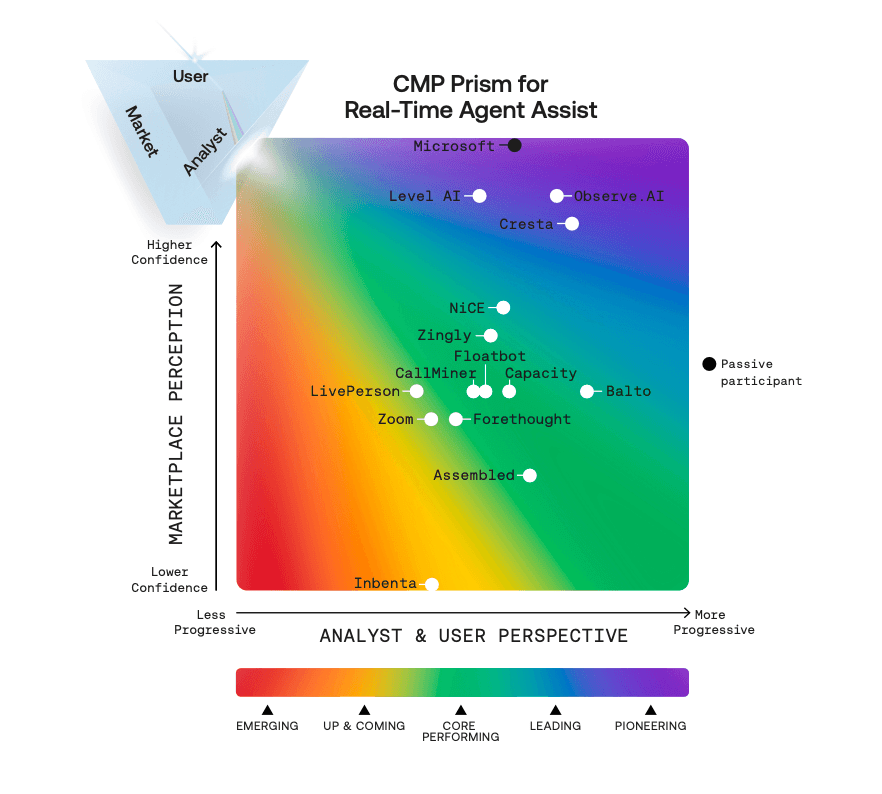
CMP Research unveiled their latest Agent Assist Prism evaluation at the Wednesday 5pm stage session - a top buyer investment priority for 2026–2027 according to their own data.
Our placement reflects the infrastructure we’ve built to make that data layer actually work: full-coverage conversation capture, real-time context surfacing, and QA that runs on every interaction rather than a sample. That foundation is why Agent Assist at Level AI improves over time rather than plateauing.
This new Prism builds on recognition we earned earlier this year. In February, CMP named Level AI a Pioneer in both Automated QA/QM and Customer Analytics — the first time we appeared in any CMP evaluation, and a placement that put us ahead of significantly larger competitors in both categories.
Level AI now holds three Leading and Pioneering CMP Prism placements across QA, Analytics, Agent Assist, and Virtual Agent. This distinguished technology evaluation highlights our commitment to providing innovative, adaptable solutions that enhance the customer contact and CX landscape. Each one reflects a different layer of the same platform. The organizations seeing results from their AI investments are the ones where quality, analytics, agent assist, and virtual agents share a data layer instead of running as disconnected tools, which is precisely the vision we’re building.
Level AI is Pioneering the Next Era of Customer Experience
The next phase of AI in the contact center is not about more deployments. It is about what happens when those deployments are governed, measured, and built on conversation data that actually reflects the full customer experience.
The 74% reversal rate is not a story about AI failing. It is a story about what happens when capability outpaces infrastructure. Quality, auditability, and conversation intelligence are not afterthoughts. They are the foundation.
The organizations that came to CCW with results — not just roadmaps — built quality and measurement in from the start. That is the phase the industry is now entering.
Missed us at CCW?
Explore how Level AI helps leading CX organizations at Dick’s Sporting Goods, Wayfair, Smartsheet and more operate efficiently, deliver exceptional customer experiences, and drive business intelligence