Key takeaways
AI virtual agents understand intent and emotion in real time, enabling natural, human-like conversations.
They automate routine tasks like order tracking and refunds, reducing agent workload and improving efficiency.
Built-in sentiment analysis detects frustration early and adjusts responses to improve customer experience.
They generate insights from every interaction to help CX teams refine workflows and boost performance.
AI virtual agents enable organizations to:
Automate routine customer interactions like billing questions, order tracking, and account updates with natural, human-like responses.
Reduce agent workload by accurately resolving high-volume, repetitive requests.
Provide 24/7 support coverage across voice and chat channels without adding headcount.
Scale efficiently by lowering handle times, reducing operational costs, and improving CSAT.
Continuously learn from real conversations to improve accuracy, containment, and overall customer experience over time.
In this guide, we’ll start by explaining what an AI virtual agent is and the main types used across customer experience teams, from contact centers to IT and HR service desks. Then, we’ll show how Level AI’s Virtual Agent, our intelligent conversational intelligence platform, helps organizations automate support, accelerate resolutions, and elevate the customer experience at scale.
Level AI is used by marquee companies in a variety of different verticals such as ecommerce & retail, financial services, healthcare, printing & gifting, transportation, and tech.
What is an AI virtual agent?
An AI virtual agent uses artificial intelligence to interact with customers, answer questions, and complete tasks through natural, human-like conversations.
Unlike basic chatbots that rely on scripted responses, AI virtual agents use advanced technologies such as natural language processing and machine learning to understand intent and respond in real time across chat and voice channels.
These agents are capable of much more than simply providing information. They take action by integrating with backend systems to perform tasks such as processing refunds, tracking orders, or managing account changes.
AI virtual agents are used across customer experience and employee and customer support environments to:
Provide 24/7 support at scale
Reduce repetitive workload on human teams and customer service agents
Deliver faster, more consistent assistance
Surface insights from conversations to drive continuous improvement
Below, we’ll look at two types of virtual agents, discuss the pros and cons of each, and explain how they differ.
Two types of AI virtual agents
AI virtual agents generally fall into two categories: rule-based and AI-powered.
Many organizations still rely on rule-based bots or legacy virtual assistant tools that follow prewritten scripts or decision trees. These systems can handle basic, predictable questions, but they often fall short in real conversations.
Plus, conversations can feel robotic when customers phrase questions differently. Bots fail to recognize tone, urgency, or emotion, leading to unnecessary escalations to human agents.
Modern AI-powered virtual agents overcome these limitations by combining natural language understanding, machine learning, and contextual intelligence to interpret customer intent in real time and respond naturally across both chat and voice.
Below, we’ll explain how each type of virtual agent works and what makes them different, and then later expand on AI use cases in the contact center.
Rule-based virtual agents
Rule-based virtual agents rely on scripted flows, keyword matching, and decision trees to guide conversations. They can respond to basic questions when a customer uses expected phrases like “How do I reset my password”. But with only simple NLP capabilities, they still break down when a request is phrased differently or the conversation shifts topics.
This approach often falls short because real customer conversations are unpredictable. If a customer says, “My order still hasn’t shown up, what is going on?”, a rule-based system might not recognize this as a shipping delay because the customer didn’t use predefined keywords like “tracking” or “delivery status.”
Because it lacks true contextual understanding, a rule-based system can misinterpret the request and offer responses that don’t address the customer’s actual concern.
These rigid systems struggle with interruptions or topic changes, require constant manual updates to maintain accuracy, and tend to create repetitive, robotic experiences that frustrate customers and increase escalations.
This inability to grasp nuance makes interactions feel robotic and wastes time, especially when customers want updates or responses to simple queries.
Intelligent virtual agents
Intelligent virtual agents offer a better chatbot customer experience through true AI, including NLU, machine learning, and generative AI models that understand context, intent, and emotion in real time.
Instead of following rigid decision trees, they interpret what customers mean, not just the specific keywords or phrases they use during an interaction.
For example, if a customer says, “I’m locked out of my account again,” an intelligent AI-powered virtual agent recognizes this as a login or authentication issue, walks the customer through verification, and resets their access — all without human intervention.
An AI customer service agent can handle interruptions, switch topics mid-conversation, and adapt its tone based on the customer’s phrasing or mood. The result is a fluid, human-like exchange that feels natural rather than scripted.
Intelligent AI agents help CX teams increase call center efficiency by resolving issues more quickly, maintaining consistent quality across all channels, and freeing human agents to focus on complex or high-value interactions.
6 use cases of AI virtual agents in customer experience
1. Provide natural, human-like support at scale
Most chatbots still sound mechanical because they’re built on decision trees and keyword triggers. When a customer deviates from the script, such as changing topics mid-sentence, asking a question phrased differently, or simply showing frustration, these systems often become confused and force customers to repeat themselves or start over.
Modern AI virtual agents are designed to handle real conversations that are unpredictable, emotional, and multi-layered. They use NLU to interpret meaning rather than simply matching words, allowing them to follow context across multiple turns and respond naturally even when the discussion shifts.
For example, if a customer says, “I thought this was supposed to arrive yesterday. Can you check what happened?”, a legacy chatbot might fail to recognize it as a delivery question because it doesn’t contain keywords like “shipping” or “tracking.”
An AI-powered virtual agent, on the other hand, would correctly identify the intent, retrieve the order status, and share an accurate update within the same conversation.
The most advanced virtual agents, like Level AI’s Virtual Agent, can maintain context and tone across both voice and chat, ensuring that conversations flow smoothly and customers never feel like they are talking to a script.
Level AI’s Virtual Agent uses DialogIQ to avoid those rigid interactions. With advanced NLU and sentiment detection, it interprets not only what is being said, but also how it is being said.
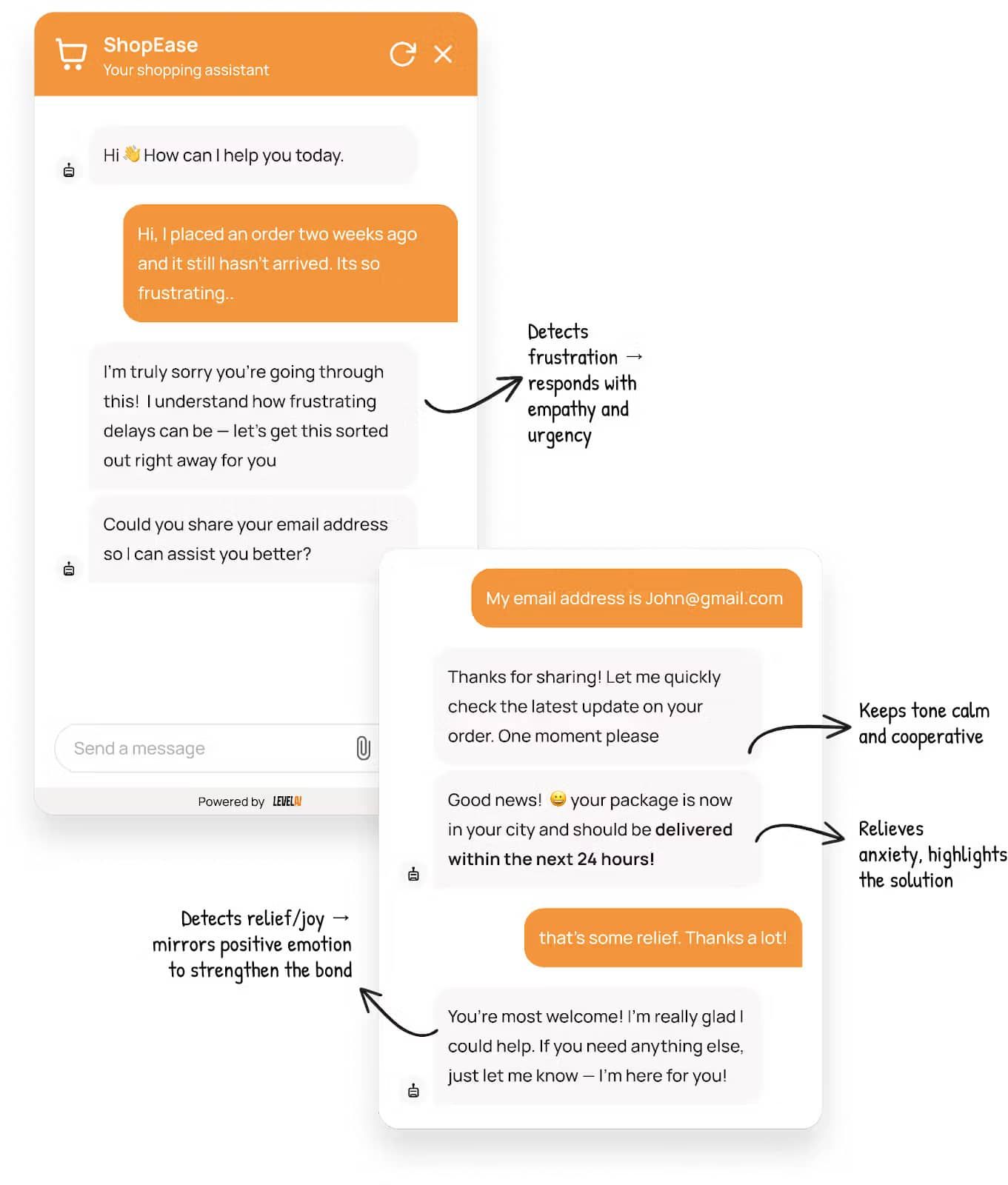
This helps organizations improve satisfaction, boost containment, and ensure customers feel understood rather than managed by a script.
In fact, companies that implemented DialogIQ report up to a 50% reduction in abandonment rates due to more fluid, engaging conversations.
2. Detect customer frustration early to improve experience quality
Many CX teams struggle to understand how customers actually feel during support interactions. Most rely on surveys or manual reviews, which only capture a fraction of conversations and often miss early signs of frustration.
The problem is that surveys rarely capture the whole picture because only a small fraction of customers respond, and those responses often come from people who had either a very good or a very bad experience. This leaves teams with incomplete, delayed feedback that doesn’t reflect what most customers actually think or feel.
The better approach is to implement an AI virtual agent that uses speech analytics software to analyze tone, word choice, and phrasing in real time. Instead of waiting for survey results, it can detect frustration, satisfaction, or confusion during the conversation itself and adapt its responses accordingly. This gives CX leaders continuous, unbiased insight into customer sentiment and overall service quality.
For example, a CX team using AI-driven sentiment analysis can see trends forming across thousands of interactions. This could be a sudden increase in negative sentiment tied to billing inquiries, or a decline in positive sentiment tied to account login queries.
Identifying these changes in real time allows managers to quickly intervene by updating workflows or retraining the agent scripts behind those interactions.
Level AI’s Virtual Agent takes this a step further by detecting the broadest range of human emotions of any product in its category:
Anger
Annoyance
Disapproval
Disappointment
Worry
Admiration
Happiness
Gratitude
Our sentiment analysis tools allow the Virtual Agent to adjust in real time. For instance, it can respond with calm language when a customer is upset about a delayed shipment or with enthusiasm when they’re satisfied with the resolution provided.
This allows organizations to capture customer sentiment automatically, eliminate the need for manual surveys, and improve service quality through real-time emotional awareness. Teams using Level AI’s DialogIQ have seen up to a 30% increase in CSAT.
3. Automate routine customer service requests
Routine service requests account for a large share of customer interactions. This includes anything from billing updates to order changes and refund processing.
While these tasks are necessary, they often slow response times and prevent teams from focusing on higher-value customer interactions. Even when traditional chatbots are used, they typically stop at providing information instead of taking real action, leaving agents to finish the job.
AI virtual agents can now handle these tasks end-to-end. The highest-performing CX teams use them to interpret intent, plan the necessary steps, and connect directly to internal systems. This allows the AI to complete actions automatically, such as updating account information, processing payments, and sending confirmations, and to support complex tasks that previously required human assistance.
As a result, organizations can deliver faster resolutions, reduce manual workload, streamline support operations, and create a more seamless experience without adding headcount.
For example, an ecommerce company could use an AI virtual agent to manage common post-purchase inquiries. Instead of waiting for a human agent, customers can request a return, update their shipping address, or modify a subscription directly through the conversation. The AI completes each task instantly while keeping customers informed throughout the process.
An example of this in practice is Level AI’s Virtual Agent, which uses AgentIQ to deliver this level of intelligent automation. It interprets intent, breaks each request into clear steps, connects to the right internal systems, and completes the task automatically.
AgentIQ integrates directly with tools like Salesforce, Zendesk, and HubSpot, allowing it to:
Adjust or cancel customer orders instantly
Retrieve and update account details
Log, route, and prioritize support tickets automatically
Handle returns, refunds, and billing adjustments
Proactively message customers with updates, reminders, or confirmations
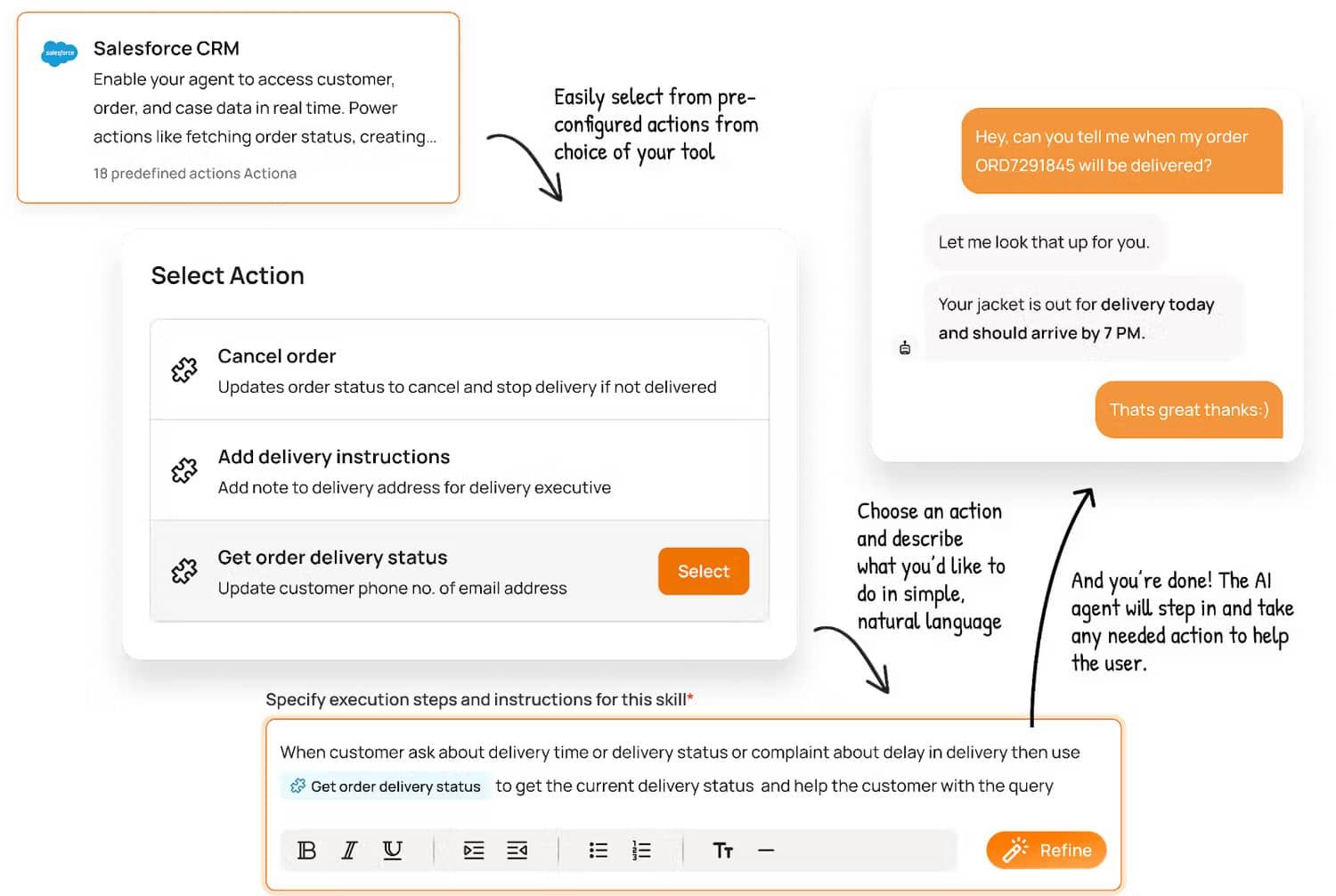
The setup process is also simple. Teams can define “skills” for specific tasks, set triggers to activate those skills, and connect knowledge sources (such as refund policies or delivery-time PDFs) to improve accuracy, without requiring any coding experience or engineering support.
Once deployed, the system automatically detects high-volume, low-effort customer requests and begins handling them autonomously. AgentIQ delivers 3x higher containment, reduced escalation volume, and faster time-to-resolution across the customer journey.
4. Guide human agents in real time
Even with AI automation in place, many customer interactions still require human intervention to solve complex issues. The challenge for CX teams is that agents often use multiple AI tools for customer support, policies, and workflows simultaneously. This leaves room for delays, inconsistent responses, or missed opportunities to upsell or resolve issues efficiently.
Training alone can’t cover everything, especially when customers phrase questions in new ways or when products, pricing, or policies change frequently.
The use of modern AI virtual agents helps by supporting human agents in real time. Rather than taking over the conversation, the AI acts as an intelligent co-pilot. It can listen to what the customer says, analyze the conversation, and offer guidance as the interaction unfolds.
It can detect intent, surface relevant knowledge articles, suggest the next best action, or flag moments where empathy or escalation might be needed.
For example, during a complex refund request, an AI system could instantly identify that the customer qualifies for an exception based on purchase history, prompting the agent with the correct approval workflow and recommended language to resolve the issue quickly and confidently.
Level AI’s Virtual Agent takes this one step further by supporting human agents through AgentIQ, which actually completes tasks for customers by executing workflows from start to finish.
Additionally, Level AI offers Real-Time Agent Assist, a separate AI assistant that human agents can use to quickly access deeper context, generate responses, and resolve complex questions outside of automated workflows. Instead of searching through documents or escalating to a supervisor, agents can resolve issues faster and deliver a smoother, more efficient customer experience.
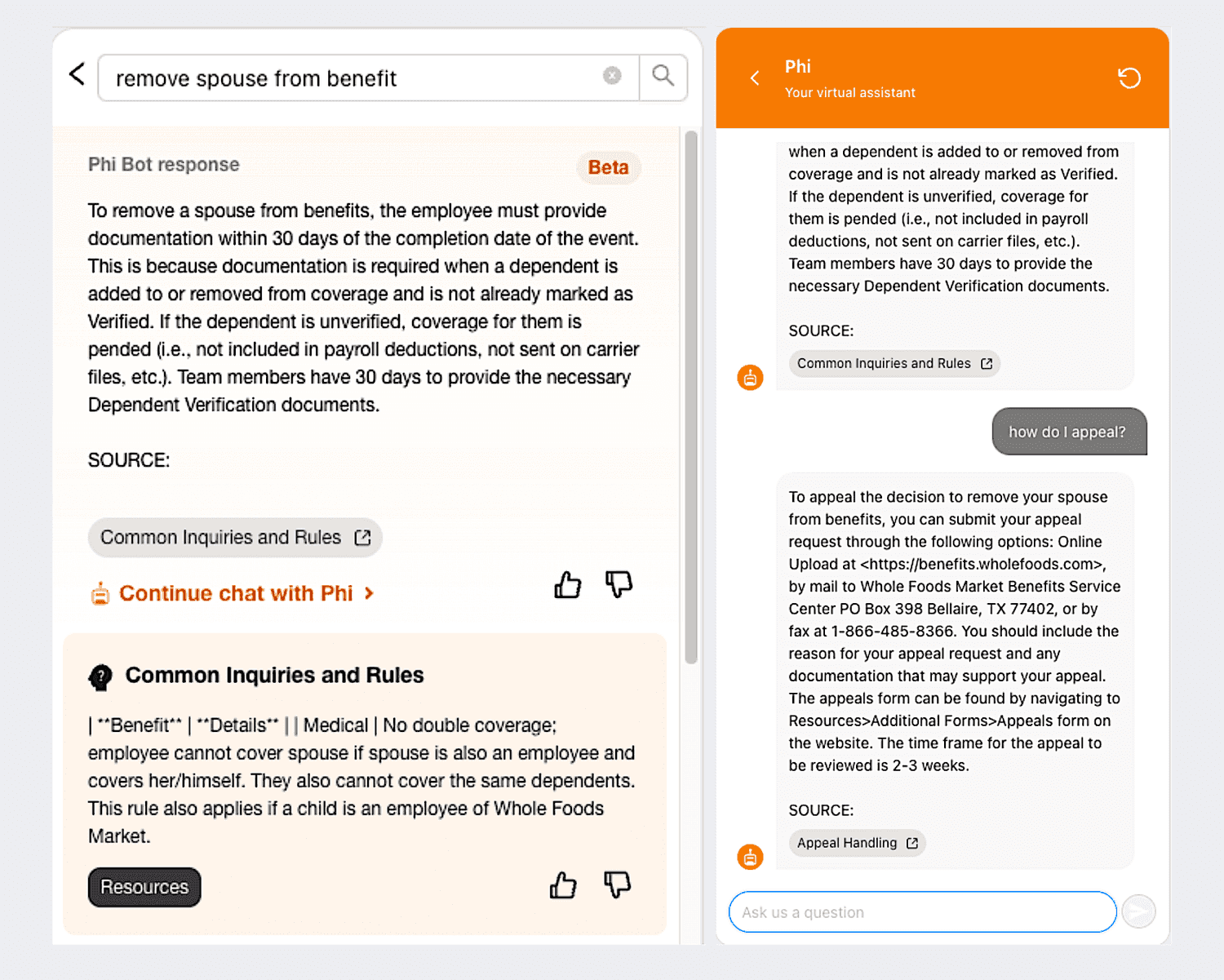
While AgentIQ handles self-service tasks end-to-end, Real-Time Agent Assist helps live agents by surfacing relevant information from knowledge bases, drafting replies, and guiding them through complex interactions in real time.
This helps customer support teams act decisively, maintain consistency, and elevate every customer interaction.
5. Generate actionable customer experience insights
Understanding what customers experience, and why they feel the way they do, is still one of the biggest challenges in CX. Traditional reporting methods rely on manual call reviews, post-interaction surveys, or limited data samples.
However, these methods often leave blind spots, meaning your team will miss recurring issues, fail to grasp customer sentiment fully, and struggle to understand why customer satisfaction scores change over time.
The best-performing organizations take a more data-driven approach using advanced conversational AI to analyze 100% of customer interactions across channels and discern a variety of customer analytics use cases. This allows them to see not only what customers are saying, but also how they’re feeling.
The problem is that most virtual agents still lack this level of visibility. They can respond to customer inquiries, but they can’t show what went right, where the interaction went off track, or what moments triggered confusion, frustration, or escalation. CX leaders are then forced to review transcripts manually and guess what happened, rather than confidently acting with accurate data.
Level AI’s Virtual Agent is an example of a system designed to provide this level of visibility in practice. The Virtual Agent uses EnlightIQ for its AI call analytics, monitoring service quality across all channels, and automatically surfacing insights, such as performance and automation opportunities.
More specifically, EnlightIQ offers:
Voice of the Customer (VoC) Insights that go beyond basic keywords and sentiment tags to reveal the why behind customer reactions. CX leaders can get continuous, survey-free visibility into what customers love, what frustrates them, and where processes need improvement.
iCSAT, Level AI’s proprietary metric that uses customer sentiment analysis to measure sentiment, effort, and resolution together to show how customers truly felt during an interaction and how effectively the agent met your service standards.
AutoQA, which evaluates responses the way a human quality reviewer would by scoring every interaction against company rubrics for accuracy, clarity, tone, and policy adherence. It gives CX teams visibility into how the virtual agent is performing, helps refine future responses, and provides valuable data during pre-deployment testing to ensure quality before the system goes live.
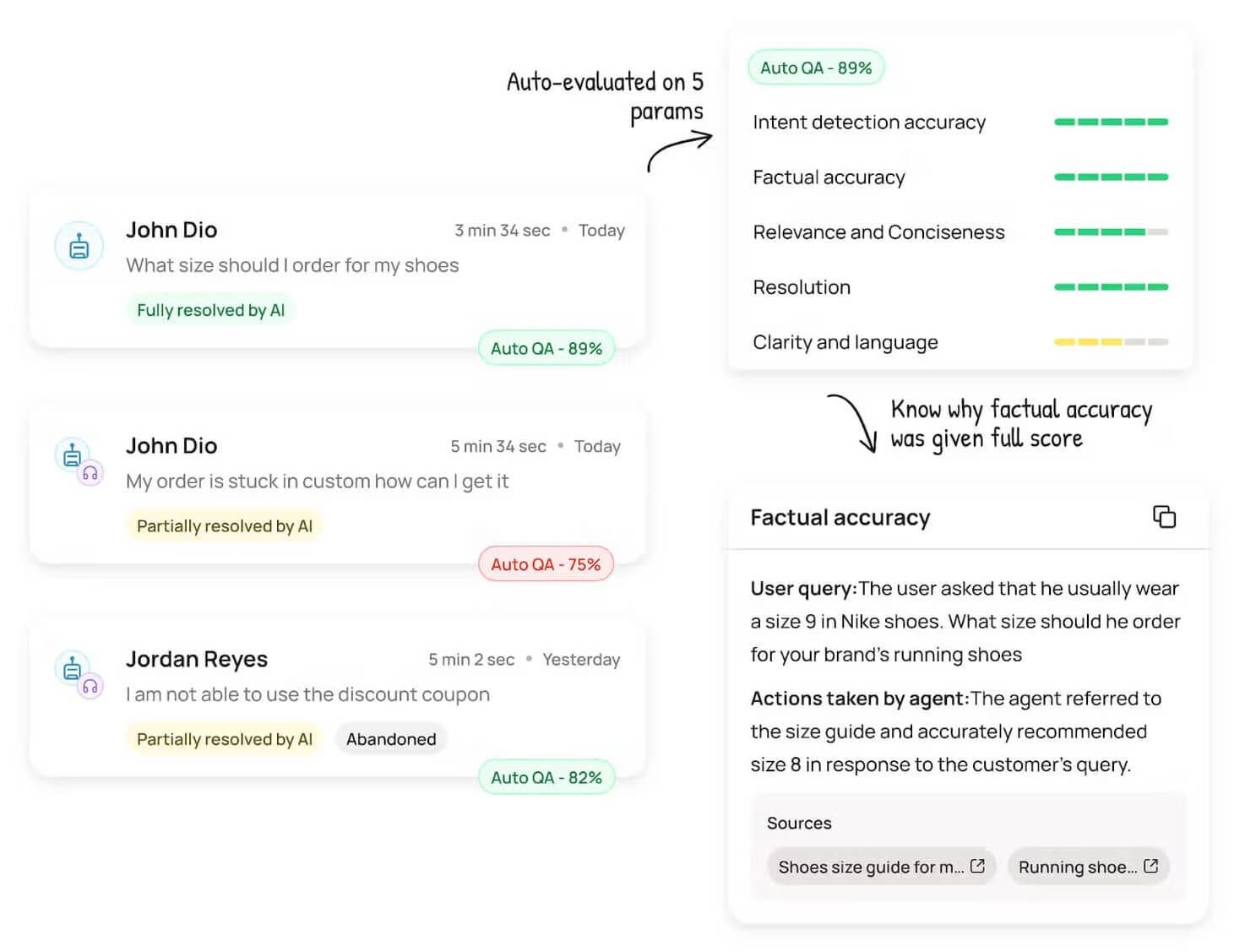
Together, these features turn everyday customer interactions into a reliable source of operational insights. Teams can identify emerging issues, such as a spike in refund requests or repeat questions about delivery delays, and adjust policies or automation flows before they impact satisfaction scores.
Since every interaction is analyzed in real time, EnlightIQ helps CX leaders gain complete visibility into agent performance and achieve 2x better automation and continuous learning accuracy.
6. Provide personalized product and service recommendations
Traditional chatbots provide generic product suggestions based on preset rules or simple keywords. This often leads to irrelevant recommendations that don’t account for customer needs, context, or intent. It also feels more like upselling to the customer rather than actual help that guides them through the experience naturally.
Modern AI-powered virtual agents are based on conversation analytics software and take a more personalized approach. They can ask clarifying questions, understand intent, and factor in preferences, history, and context. These systems can actually understand what the customer wants or would like and provide a relevant solution.
For example, an ecommerce virtual agent could assist a shopper who says, “I need something comfortable for a long flight and business meetings after I land.”
Instead of showing broadly matching “travel outfits,” the AI could recommend wrinkle-resistant pants, supportive footwear, and a lightweight blazer based on the customer’s style preferences, budget, and past purchases.
The virtual agent could even ask follow-up questions like:
“Do you prefer slim or relaxed fit?”
“Are you looking for something machine-washable?”
“Would you like matching accessories?”
This approach builds trust and confidence while helping customers discover products they’re more likely to buy. Such personalized recommendations typically offer higher conversion rates, fewer returns, and fewer escalations to human agents.
See what an AI virtual agent can do for your customer experience
Modern virtual agents can do much more than just answer questions. They understand context, recognize emotion, take action across systems, and continuously improve with every interaction.
Level AI’s Virtual Agent is an example of an AI-powered virtual agent in practice. Ready to see how our agent can transform your CX? Schedule a demo today to learn more.