We Compared 8 Best Conversational Intelligence Software in 2026





Key Takeaways:
1. Conversation intelligence platforms analyze voice and text interactions at scale to uncover customer intent, sentiment, and behavior. They give teams full visibility into every conversation.
2. Manual review processes don't scale, which leads to inconsistent insights and limited coverage. AI-powered tools solve this by automatically analyzing 100% of interactions.
3. Core features to look for include sentiment analysis, intent detection, real-time agent assistance, automated QA, and customer feedback insights.
4. Level AI stands out as a unified platform with deep intent understanding, emotion-level sentiment analysis, real-time agent assistance, and automated performance scoring.
5. The biggest value comes from turning conversations into actionable insights, helping teams improve customer experience, boost sales outcomes, and make better business decisions.
Introduction
A conversation intelligence platform analyzes large volumes of voice and text interactions to uncover actionable insights about what customers are saying and how those conversations impact outcomes. Customer support, marketers, and sales teams use this data to review a larger number of customer conversations and gain increased visibility into what's happening across the organization.
However, without dedicated conversation intelligence software, even the highest-performing teams eventually struggle to maintain coverage and consistency as interaction volumes grow. Manually reviewing support interactions, relying on agents to complete post-call notes, and attempting to gauge customer sentiment through surveys or limited QA sampling becomes increasingly time-consuming and inconsistent. This forces teams to review only a small fraction of conversations to gather insights into how agents are performing or the overall customer experience.
Conversation intelligence platforms are designed to automate these tasks by analyzing every interaction as it happens and accurately measuring sentiment, intent, and performance without adding manual work for agents or QA teams.
In this article, we review the top eight conversation intelligence platforms used by contact centers, marketing teams, and sales organizations. We’ll start with Level AI, our unified platform for CX, then move on to other platforms best suited for each use case.
What to Look for in Conversation Intelligence Platform?
There are many features that make a great conversation intelligence platform, most of which are found in the tools we recommend in this guide. The table below compares key capabilities across the best conversational intelligence software for contact centers, marketing teams, and sales organizations.
| Feature | Level AI | Observe.AI | Qualtrics | Dialpad | SprinklrGong | Gong | Invoca | Avoma |
|---|---|---|---|---|---|---|---|---|
| Primary Use Case | Sales & CX platform | Contact center QA & coaching | Experience management & CX analytics | Cloud telephony + CI | Omnichannel CX & engagement | Sales intelligence | Marketing attribution | Meeting intelligence & summaries |
| AI Agents | ✅ Autonomous agents for routine tasks | ✅ Voice & chat AI agents | 🟡 Limited, survey-centric agents | ✅ Customer-facing AI agents | ✅ Virtual agents across channels | ✅ AI sales agents across revenue lifecycle | ❌ None | 🟡 AI assistant for coaching |
| Agent Assist | ✅ Context-aware guidance | ✅ Real-time agent assist | ❌ None | ✅ In-call prompts | ✅ Agent assist across channels | 🟡 Post-call guidance | ❌ None | ❌ None |
| Intent Detection | ✅ Scenario-based, context-aware | 🟡 QA-oriented intent | 🟡 Experience-linked patterns | 🟡 Keyword-driven | 🟡 Channel-specific | 🟡 Sales-focused | 🟡 Outcome-focused | 🟡 Topic tracking |
| Sentiment Analysis | ✅ Full-spectrum emotion + scoring | 🟡 Post-call sentiment | 🟡 Survey-linked sentiment | 🟡 Real-time indicators | 🟡 CX-level trends | 🟡 Basic sentiment | 🟡 Attribution-oriented | 🟡 Lightweight |
| Automated QA & Scoring | ✅ 100% interaction scoring | ✅ Strong post-call QA | ❌ Not supported | 🟡 Limited scoring | 🟡 Manual workflows | ❌ Not QA-focused | ❌ Not supported | ❌ Not supported |
| Coaching Workflows | ✅ Built-in scoring + coaching | 🟡 QA-driven coaching | 🟡 Feedback analytics | 🟡 Manager prompts | 🟡 CX ops focus | 🟡 Rep coaching | ❌ None | 🟡 Shared insights |
| After-Call Automation | ✅ Summaries, CRM updates, tagging | 🟡 QA summaries | 🟡 Survey follow-ups | ✅ AI call summaries | 🟡 Workflow-based | 🟡 Notes & follow-ups | 🟡 Call summaries | ✅ Summaries + action items |
| VoC Insights | ✅ Direct from conversation data | 🟡 QA feedback trends | 🟡 Survey-driven insights | 🟡 Basic insights | 🟡 Customer experience trends | 🟡 Deal-centric signals | 🟡 Marketing call quality | 🟡 Meeting sentiment |
| Analytics & Reporting | ✅ Unified dashboards + Query Builder | ✅ QA dashboards | ✅ CX analytics reporting | 🟡 Standard metrics | ✅ Enterprise CX reporting | 🟡 Sales dashboards | 🟡 Attribution reporting | 🟡 Meeting analytics |
| Integrations & Scale | ✅ CRM, CCaaS, ticketing, APIs | ✅ CCaaS & QA ecosystem | 🟡 CRM + survey tools | ✅ UC + CRM | ✅ Enterprise ecosystem | ✅ CRM & sales tools | 🟡 Marketing stack | 🟡 Calendar + CRM |
1. Level AI: AI Conversation Intelligence Tool
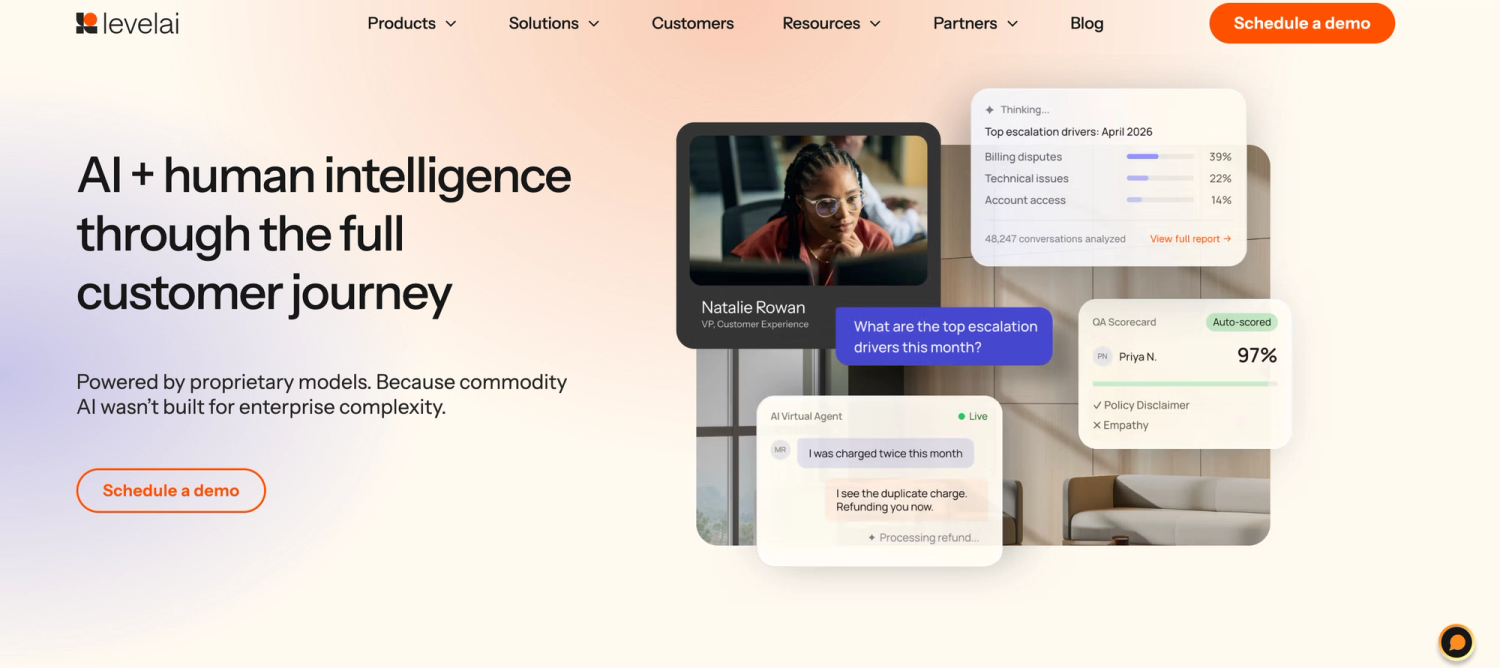
Level AI uses natural language understanding and semantic intelligence to analyze 100% of customer conversations across voice and digital channels. Instead of relying on keyword matching, it interprets meaning, helping teams understand true customer intent, sentiment, and behavior at scale.
Now lets understand Level AI key features:
1. Understanding Customer Intent
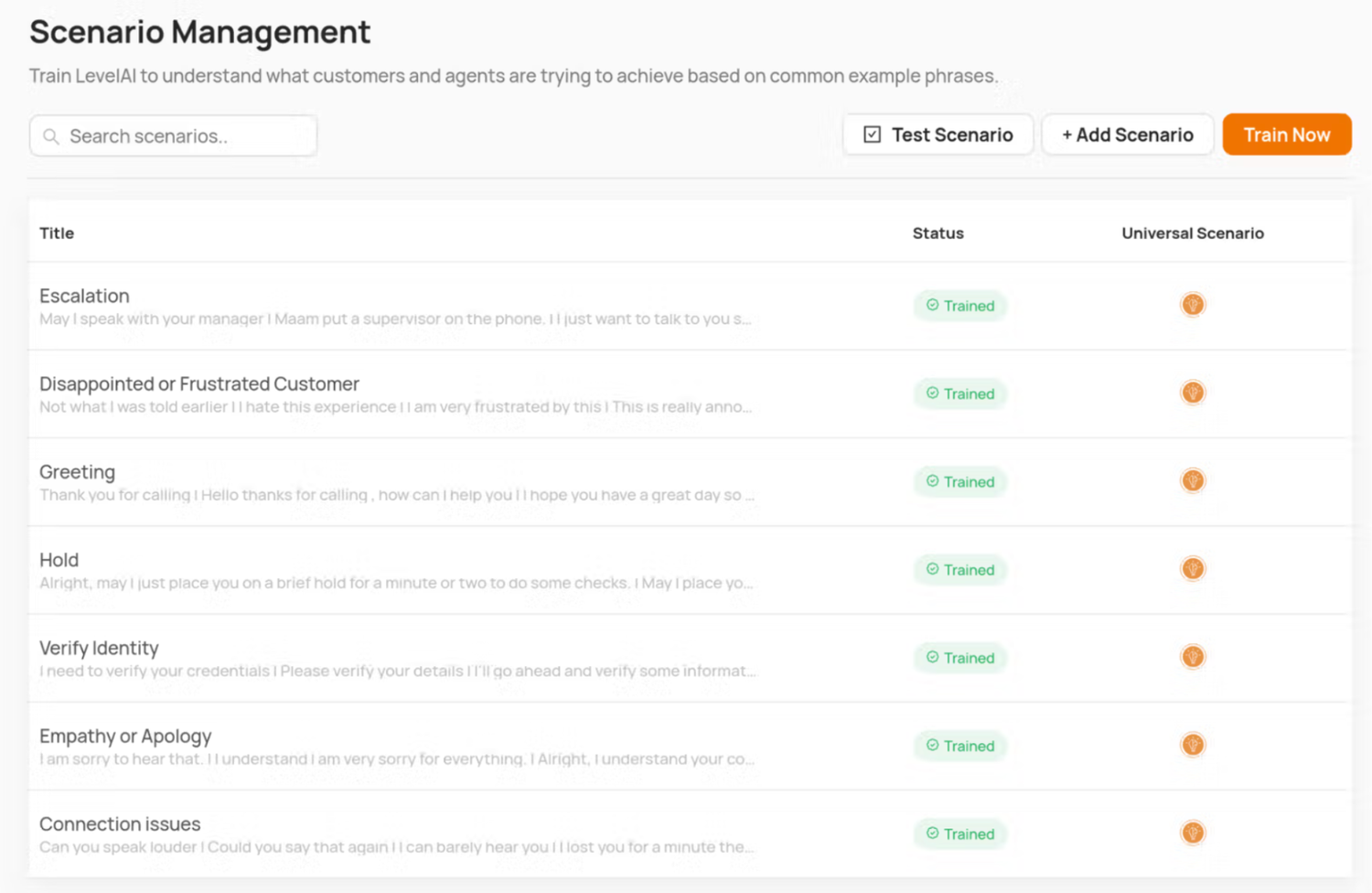
Many tools rely on keywords and miss the full context. Level AI understands intent even when customers use different words. For example, phrases like “I want to return this” or “this is not what I expected” are grouped under the same intent. The same applies to sales conversations where different phrases can signal pricing concerns.
With the Scenario Engine, teams can create categories such as billing issues or shipping delays using a few sample phrases. The system applies these across all conversations and tags them in transcripts. This makes it easy to search and analyze.
2. Advanced Sentiment Analysis
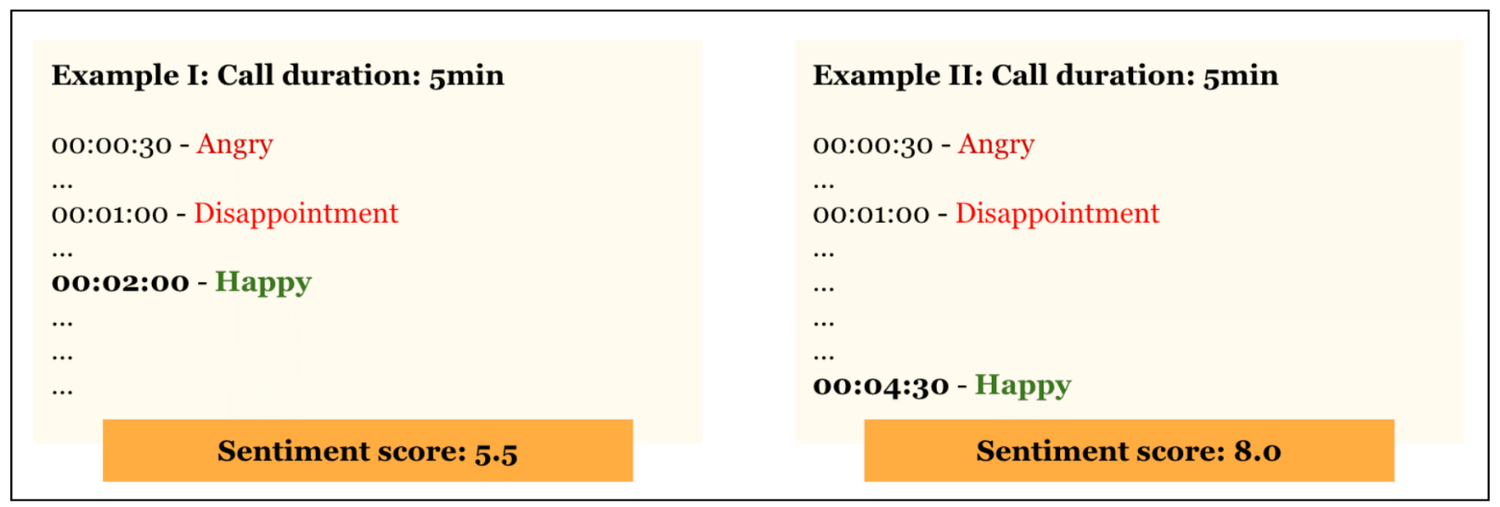
Most tools label sentiment as positive or negative. Level AI captures a wider range of emotions and how they change during a conversation. It can detect emotions such as frustration, disappointment, or happiness. These are tagged at specific points in the conversation. Each interaction also gets a Sentiment Score from 0 to 10. More weight is given to the later part of the conversation since that reflects the customer’s final experience.
3. Real-Time Agent Assistance
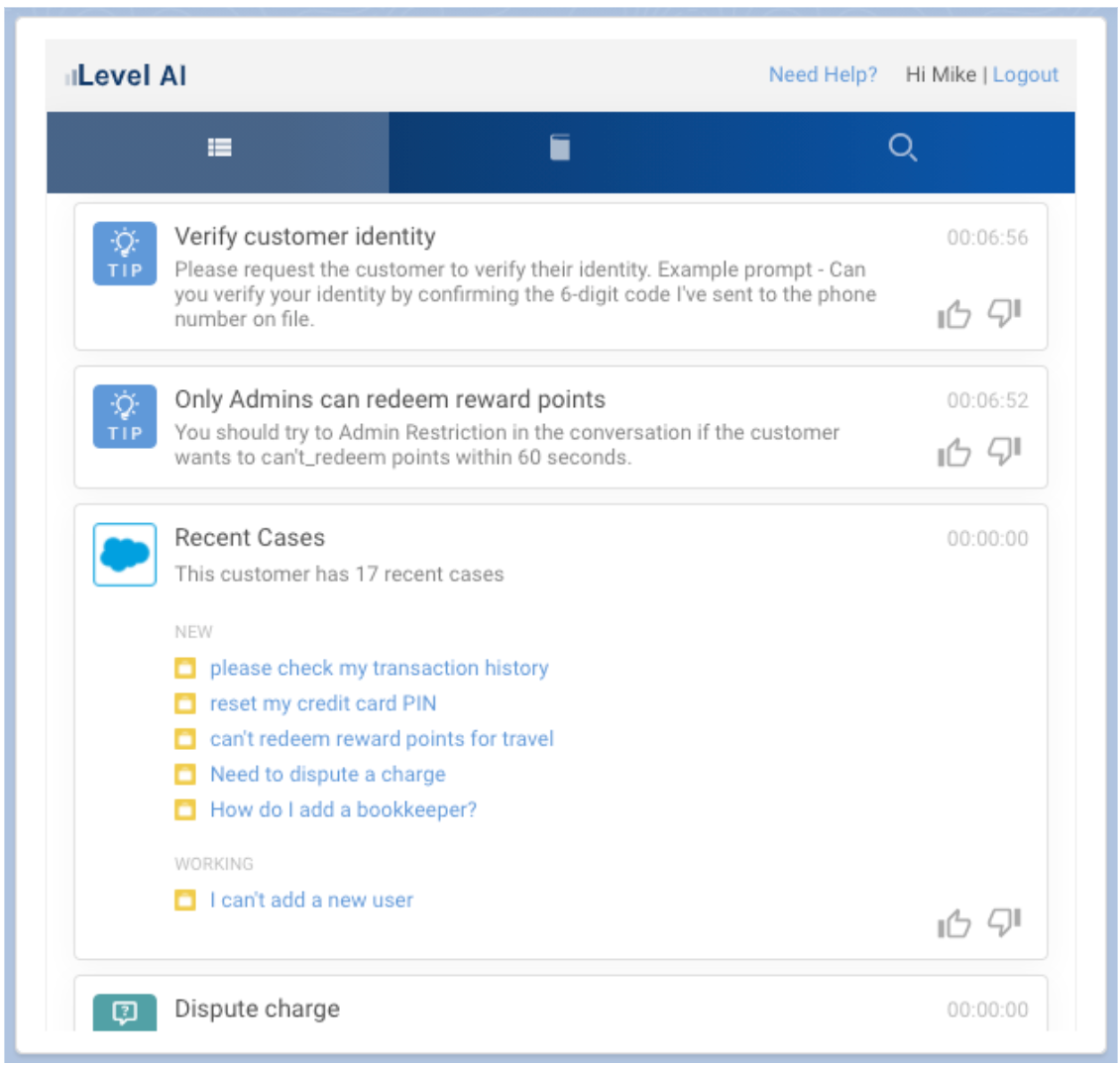
Level AI helps agents during live conversations. It listens to the interaction and shows relevant answers, help articles, and customer details in real time.
Suggestions update as the conversation changes. This allows agents to respond quickly without searching across multiple tools.
Agents can also rate the suggestions to improve future recommendations.
The Level AI Virtual Agent can handle common requests on its own. For example, it can update a subscription or send a receipt by connecting with backend systems.
4. Automated Agent Evaluation & Coaching
Manual reviews are slow and cover only a small number of conversations. Level AI solves this with InstaScore, which evaluates every interaction using defined criteria like clarity and problem resolution. Managers can review specific parts of a conversation to understand the score. This helps identify top performers and those who need support.
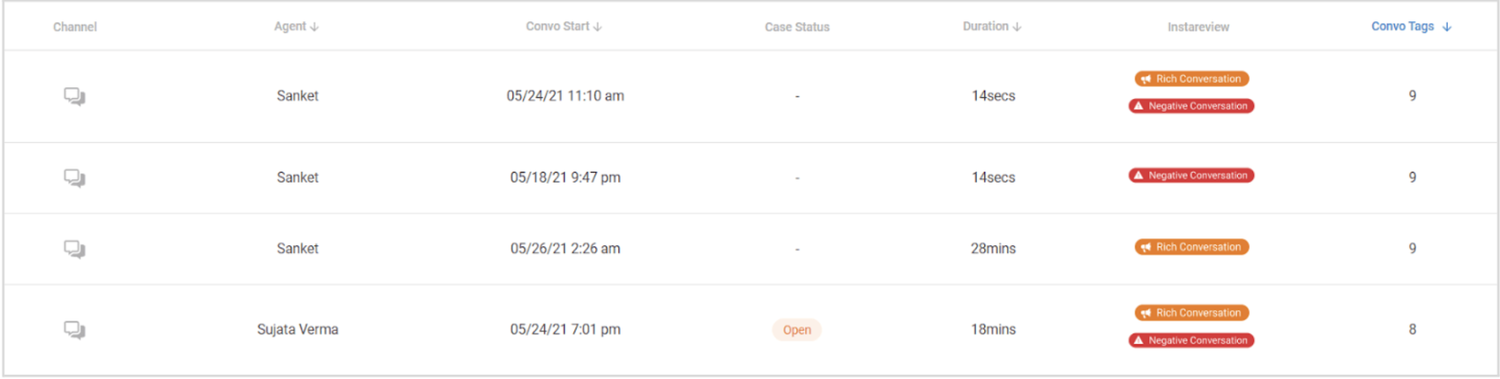
InstaReview highlights conversations that need attention, such as low scores or negative sentiment. This helps teams focus on coaching where it matters most.
5. Voice of the Customer (VoC) Insights
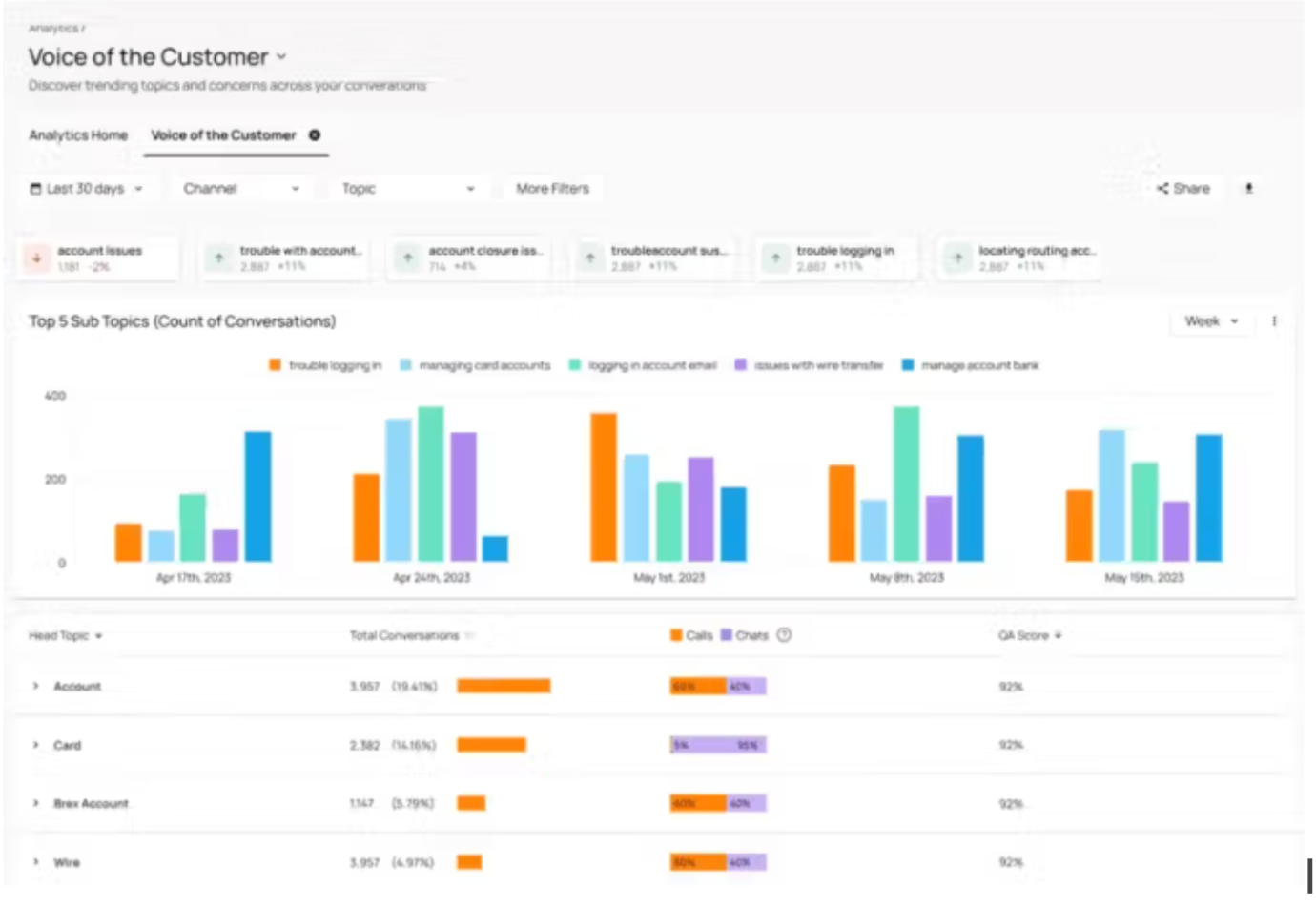
Level AI VoC insights turns conversation data into useful insights through dashboards and reports. It captures feedback directly from real conversations instead of relying only on surveys.
Teams can study trends, group conversations, and answer questions like which topics lead to upsells or how sentiment affects outcomes.
The Query Builder allows teams to combine conversation data with other systems for deeper analysis.
Dashboards can be filtered by metrics like handling time or escalation rate. Access controls ensure that the right people can view and share reports..
2. Observe.AI
Observe.AI is a conversation intelligence and quality assurance platform that helps contact centers analyze customer interactions. The platform offers various tools for scoring agent performance, identifying agent coaching opportunities, and automating agent tasks like post-call QA.
Observe.AI key features include:
1. Automated QA scoring: Uses AI to evaluate customer interactions and score agent performance without relying solely on manual reviews.
2. Agent coaching insights: Identifies performance gaps, behavior patterns, and coaching opportunities based on conversation data.
3. Post-call QA automation: Reduces the time spent on manual post-call reviews and evaluations by automating routine QA tasks.
4. Customizable scorecards: Allows teams to define QA criteria aligned with internal standards, compliance needs, and CX goals.
5. Performance analytics and reporting: Provides dashboards and reports to track quality trends, agent performance, and operational metrics over time.
Observe.AI pricing is not publicly disclosed and typically requires a custom quote based on team size.
3. Qualtrics
Qualtrics is an experience management platform that helps organizations measure, analyze, and improve customer experience across multiple channels. The platform is primarily used to connect interaction data with broader CX metrics such as CSAT, NPS, and customer effort. It's also commonly used alongside telephony or QA tools to capture post-interaction feedback and link it to operational and experience data.
Key features of Qualtrics include:
1. Customer feedback and survey analytics tools
2. Advanced CX analytics and reporting to aggregate experience data across channels
3. Journey and experience mapping
4. CRM integrations, including Salesforce and HubSpot
Qualtrics offers custom pricing only for enterprise teams.
4. Dialpad
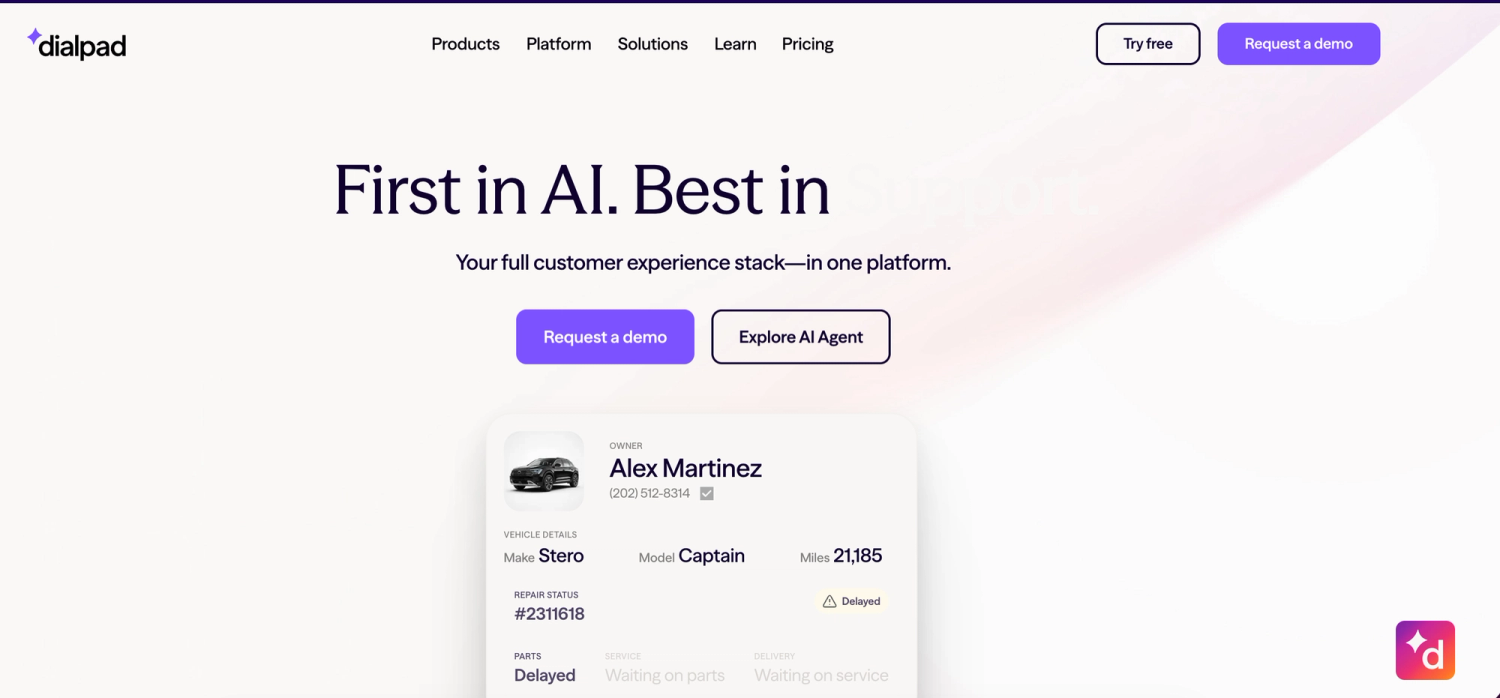
Dialpad is a communications platform that includes voice, messaging, meetings, and contact center functionality with native AI features. Dialpad's AI capabilities allow teams to follow conversations in real time, identify important topics or sentiment changes, and support basic coaching directly within the calling workflow.
Key Dialpad features include:
1. Real-time call transcription: Automatically transcribes live and recorded calls to support review and analysis.
2. AI-powered conversation insights: Flags keywords, topics, and basic sentiment indicators during interactions.
3. In-call visibility for managers: Allows supervisors to monitor live calls and provide guidance when needed.
4. Agent performance tracking: Surfaces high-level metrics tied to call activity and interaction outcomes.
Dialpad contact center plans typically start around $95 per user per month, depending on features and deployment size.
5. Sprinklr
Sprinklr is an enterprise customer experience management platform built to help organizations manage and analyze customer interactions. It’s commonly used by large contact centers and CX teams that need centralized visibility into conversations happening across social media, messaging apps, chat, email, and support channels.
Key features of Sprinklr include:
1. Omnichannel conversation analysis
2. CX and sentiment analytics
3. Case and workflow management with support for routing, prioritization, and resolution of customer issues
4. Enterprise reporting and dashboards
Sprinklr pricing is custom only and interested users must request a custom quote.
6. Gong
Gong is a revenue intelligence platform that sales teams use to analyze conversations, understand deal risk, and improve rep performance. The platform is most commonly used by mid-market and enterprise sales organizations that want visibility into pipeline health and the behaviors that correlate with closed deals. It can capture and analyze sales calls, emails, and meetings to surface insights around buyer objections, competitor mentions, pricing discussions, and next steps.
Key Gong features include:
1. Automatic sales conversation analysis
2. Deal and pipeline insights to flag risks, stalled deals, and opportunities
3. Rep coaching and sales performance trends
4. CRM and sales tool integrations like Salesforce
5. Revenue-focused analytics to support forecasting, win/loss analysis, and sales enablement
Gong pricing is not publicly listed and requires a custom quote.
7. Invoca
Invoca is a conversation analytics and call tracking platform built primarily for marketing teams. It connects inbound phone calls to digital marketing campaigns, so organizations can understand which channels, keywords, and ads drive high-quality conversations and conversions.
Key features of Invoca include:
1. Call tracking and attribution
2. Intent and outcome detection
3. Marketing performance insights
4. CRM and ad platform integrations
5. Routing and optimization tools
Invoca pricing is customized based on call volume, features, and team size.
8. Avoma
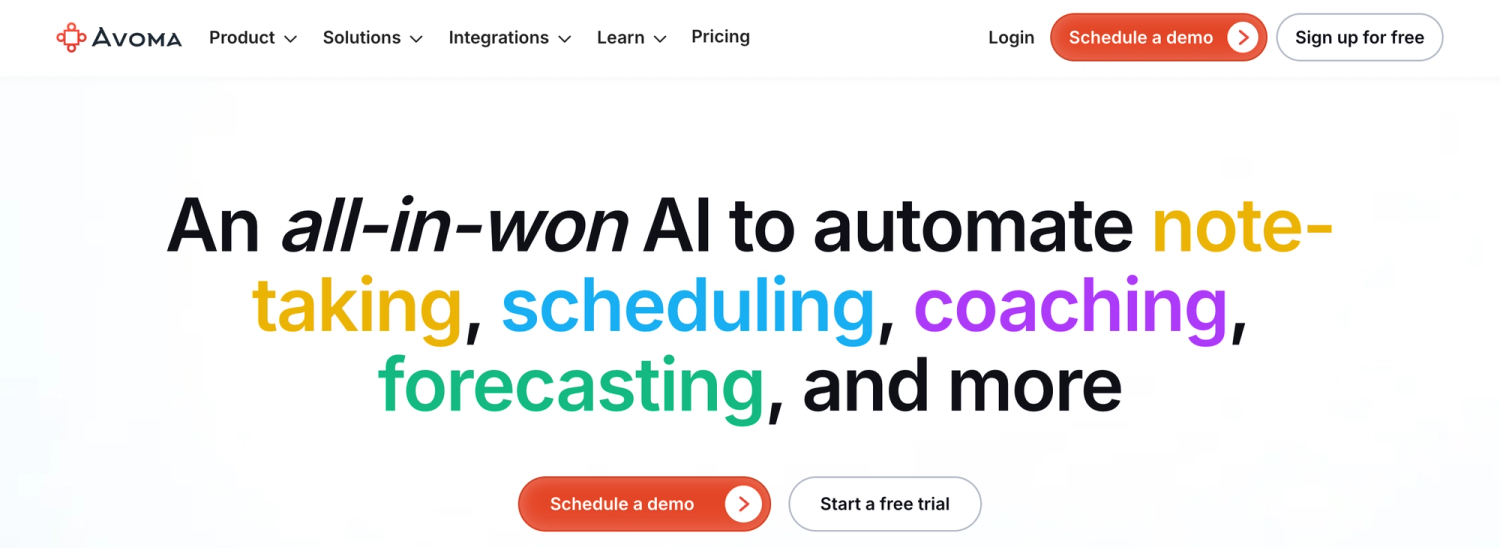
Avoma is an AI meeting assistant and conversation intelligence tool designed for sales, customer success, and go-to-market teams. It can automatically record meetings, generate summaries, and identify key topics and action items. While it offers basic conversation intelligence features, it’s more centered on productivity, collaboration, and knowledge sharing than deep sentiment or intent analysis.
Key Avoma features include:
1. Meeting recording and transcription
2. AI-generated summaries and notes
3. Topic and keyword tracking
4. Collaboration and knowledge sharing
Avoma pricing typically starts around $19–$29 per user per month.
Bringing Clarity to Customer Interactions with Conversation Intelligence
The top conversation intelligence platforms today can help teams understand intent, sentiment, performance, and outcomes across every customer interaction.
Level AI is used by marquee companies in a variety of different verticals, such as ecommerce & retail, financial services, healthcare, printing & gifting, transportation, and tech. It brings advanced capabilities together in a single platform, offering deep intent and sentiment analysis, automated scoring and coaching, real-time assistance, and Voice of the Customer insights. Together, organizations can gain more in-depth visibility and an actionable understanding of how customer interactions impact the business.
Ready to see how conversation intelligence can help your teams gain deeper insight from every interaction? Schedule a demo with Level AI to explore the platform in action.
Frequently Asked Questions
Q1. What is conversation intelligence software and how does it work?
A. Conversation intelligence software uses AI such as natural language processing and machine learning to analyze customer interactions across calls, chats, and emails. It identifies intent, sentiment, and key topics to help teams understand what customers are saying and why. Platforms like Level AI go deeper by analyzing the meaning behind conversations rather than just keywords, helping teams capture true customer intent at scale
Q2. Why do businesses need conversation intelligence software?
A. As interaction volume grows, manual QA and surveys fail to provide complete visibility. Conversation intelligence platforms analyze 100 percent of interactions automatically, helping teams improve customer experience, increase sales conversions, identify churn risks, and optimize agent performance. For example, Level AI enables teams to review every interaction instead of just a small sample, leading to more consistent insights and better decision making.
Q3. What features should you look for in a conversation intelligence platform?
A. The most effective platforms include intent detection, advanced sentiment analysis, real time agent assistance, automated QA and performance scoring, and Voice of Customer analytics. Level AI stands out with features like emotion level sentiment detection, real time agent assist, and automated scoring of 100 percent of conversations, helping teams move from raw data to actionable insights quickly.
Q4. What is the difference between conversation intelligence and conversational AI?
A. Conversation intelligence focuses on analyzing interactions to generate insights such as identifying intent, sentiment, and trends. Conversational AI focuses on automating interactions such as chatbots or virtual agents. Platforms like Level AI combine both by analyzing conversations and also enabling automation through AI agents that can resolve customer requests end to end.
Q5. What ROI can companies expect from conversation intelligence software?
A. Companies typically see higher conversion rates, reduced churn, improved agent productivity, and lower QA costs. With platforms like Level AI, businesses can analyze every interaction in real time, uncover trends, and drive better outcomes across CX and revenue. Many organizations also see improvements in customer satisfaction and significant time savings in QA processes.
Keep reading
View all