
Key takeaways
Cresta is a strong agent assist tool, but many enterprise buyers find its quality assurance and analytics capabilities less mature compared to dedicated platforms.
Enterprises often start evaluating Cresta alternatives when they need a more complete platform covering real-time guidance, automated QA, coaching, and customer insights in one place.
Most Cresta alternatives on this list offer native integrations with popular contact center platforms like Salesforce, Genesys, NICE, and Five9, which matters for enterprise IT teams.
Pricing is a recurring concern with Cresta. Several buyers in this market find more transparent and flexible pricing with alternatives, especially for mid-market or scaling teams.
If you want a platform that combines agent assist, auto QA, voice of the customer, and coaching under one roof, Level AI is the strongest alternative worth evaluating first.
Why Buyers Evaluate Cresta?
Cresta has built a solid reputation in the contact center space, particularly for real-time agent assist. Buyers are drawn to its AI-powered suggestions that help agents respond better during live calls. According to Gartner, by 2029, agentic AI will autonomously resolve 80% of common customer service issues without human intervention, reducing operational costs by 30%. This shift is accelerating enterprise investment in AI-powered contact center platforms such as Cresta.
But evaluation often surfaces limitations. Buyers who need more than just agent prompting start looking for tools that also cover automated quality management, coaching workflows, and actionable analytics. The frustration with Cresta typically shows up in three areas: sales process complexity, QA depth, and the cost of expanding beyond agent assist to a full platform.
How Did We Compare These Tools?
We evaluated each tool based on the criteria enterprise contact center leaders care about most. These include:
- The quality of real-time agent guidance
- The depth of auto QA and call scoring
- The strength of analytics and reporting, coaching workflows
- Ease of integration with existing CCaaS and CRM systems
- Transparent pricing.
- We also factored in customer reviews from G2, Gartner Peer Insights, and Capterra.
Every platform was assessed for enterprise readiness, meaning security, scalability, and support for large agent populations. We focused especially on tools that go beyond single-use case functionality and can serve as a long-term contact center AI platform across multiple teams.
Top Cresta Alternatives: Comparison Table
Here is a quick overview of all 10 platforms to help you compare at a glance. Each tool is covered in detail below. You can also explore how Level AI stacks up directly on the Level AI vs Cresta comparison page.
Platform | Best For | Real-Time Assist | Auto QA | Analytics | Pricing |
Level AI | Full-stack contact center AI | Yes | Yes | Advanced | Contact for pricing |
Balto | Real-time agent guidance | Yes | Limited | Basic | Subscription |
Observe AI | Conversation intelligence | Yes | Yes | Strong | Contact for pricing |
AmplifAI | Agent performance management | Limited | Yes | Moderate | Contact for pricing |
Chorus by ZoomInfo | Sales coaching | No | Limited | Moderate | Subscription |
Gong | Revenue intelligence | No | Limited | Strong | Contact for pricing |
Convin | Conversation QA and coaching | Yes | Yes | Moderate | Subscription |
NICE | Enterprise WFO and CX | Yes | Yes | Advanced | Contact for pricing |
Genesys | Cloud contact center platform | Yes | Yes | Advanced | Subscription/Usage |
Dialpad | AI-powered communications | Yes | Limited | Moderate | Subscription |
1. Level AI
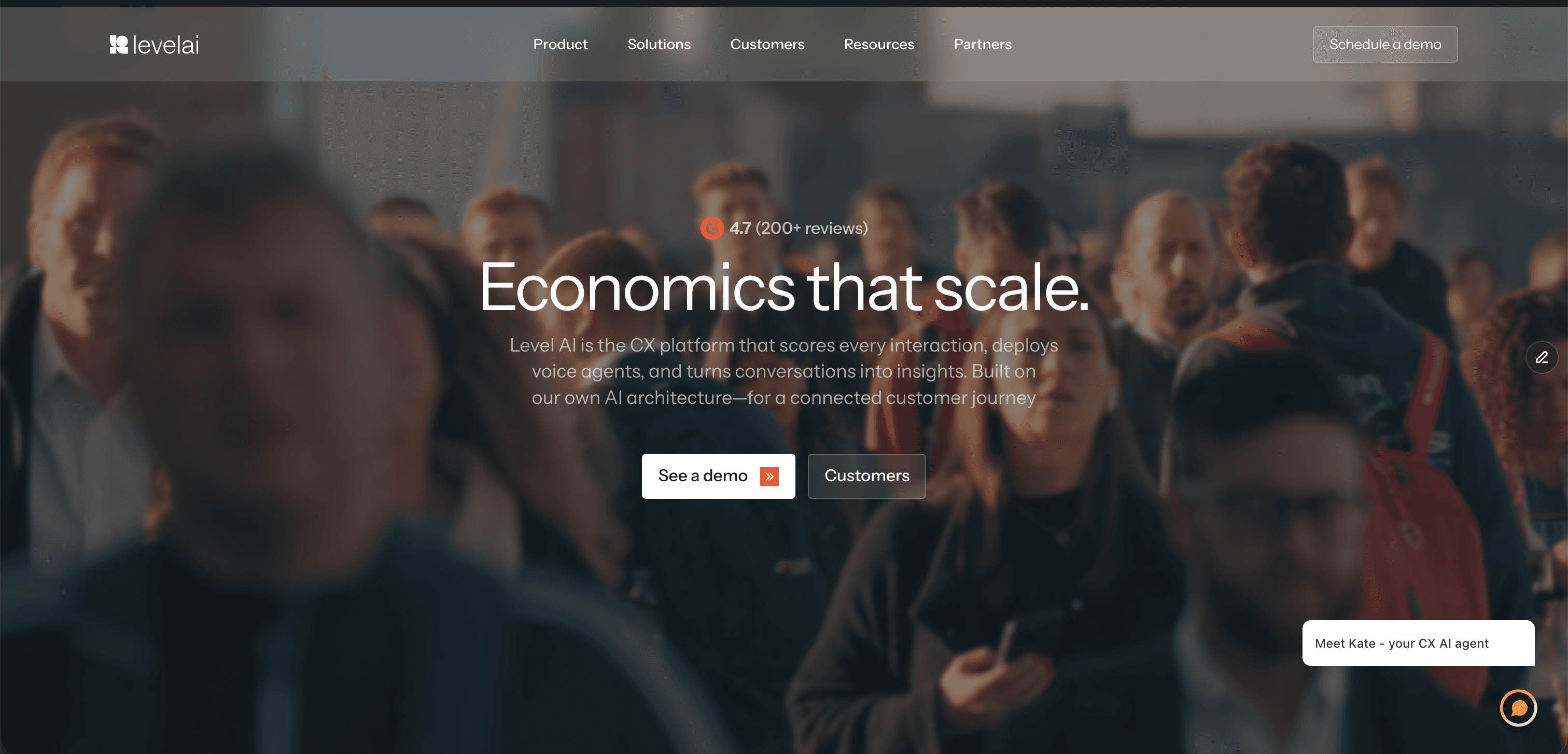
Level AI is a full-stack contact center AI platform built specifically for enterprise customer service teams. Unlike Cresta, which focuses primarily on agent assist, Level AI covers the entire contact center workflow from real-time agent guidance during calls to automated quality assurance, to coaching, to voice of the customer insights. Everything runs from one connected platform, which means your QA scores, coaching plans, and customer trends all feed into each other instead of living in separate tools.
Enterprise buyers who evaluated both Cresta and Level AI consistently note that Level AI offers stronger automated quality management and deeper analytics. The platform scales from hundreds to thousands of agents and is used by companies in financial services, healthcare, insurance, retail, and BPO. Level AI is also known for faster time to value, with teams going live in weeks rather than months.
With Level AI, we were able to save hundreds of thousands of dollars. But the bigger impact is we’ve expanded entry points with customers, and those interactions are delivering revenue through CARE to the business.” - Paul H., Vice President of Global CARE Team at VistaPrint
Key Features
Real-time agent assist with live call prompts, knowledge suggestions, and next-best-action guidance
Automated QA that scores 100% of calls, chats, and emails without manual review
AI-powered agent coaching plans generated automatically based on QA and performance data
Voice of the Customer insights that surface trends, sentiment, and themes across all customer conversations
Inferred CSAT (iCSAT) that predicts customer satisfaction on every interaction, not just surveyed ones
Native integrations with Salesforce, Genesys, NICE, Five9, Zendesk, and 40+ other platforms
AI virtual agent for automated self-service on voice and digital channels
Enterprise-grade security with SOC 2 Type II certification and data privacy controls
Strengths
One platform for agent assist, QA, coaching, and analytics removes the need for multiple tools
100% call coverage in QA means no sampling gaps or missed compliance issues
Strong voice of the customer capabilities that help CX leaders spot product, process, and service issues fast
Customers report a 60-80% reduction in QA effort and significant cost savings within the first year
Responsive implementation and support team that helps enterprises go live faster
Best For
Level AI is the best fit for enterprise contact centers that need a single platform to handle real-time guidance, automated QA, coaching, and customer intelligence. It is especially strong for teams in regulated industries like financial services, insurance, and healthcare, where compliance coverage and audit trails matter.
" transform="translate(85.643 10.143)" width="23.725855670103115px"/><path d="M 71.828 0 L 0 50.702" fill="transparent" height="50.70235051546392px" id="TnJFUMH9b" stroke-dasharray="" stroke-linecap="butt" stroke-linejoin="miter" stroke-miterlimit="10" stroke-width="0.68" stroke="rgb(254, 250, 241)" transform="translate(85.508 75.029)" width="71.82828865979384px"/><path d="M 81.579 0 L 0 52.003" fill="transparent" height="52.00280412371134px" id="ccJzhVTGI" stroke-dasharray="" stroke-linecap="butt" stroke-linejoin="miter" stroke-miterlimit="10" stroke-width="0.68" stroke="rgb(254, 250, 241)" transform="translate(85.495 73.738)" width="81.57921649484533px"/><path d="M 65.653 0 L 0 32.827" fill="transparent" height="32.826556701030924px" id="X0Vp_q8HG" stroke-dasharray="" stroke-linecap="butt" stroke-linejoin="miter" stroke-miterlimit="10" stroke-width="0.68" stroke="rgb(254, 250, 241)" transform="translate(85.462 92.931)" width="65.65311340206183px"/><path d="M 88.08 14.951 L 0 0" fill="transparent" height="14.950762886597914px" id="JM_UgSiJ_" stroke-dasharray="" stroke-linecap="butt" stroke-linejoin="miter" stroke-miterlimit="10" stroke-width="0.68" stroke="rgb(254, 250, 241)" transform="translate(86.233 125.789)" width="88.07950515463914px"/><path d="M 83.204 72.803 L 0 0" fill="transparent" height="72.80313402061856px" id="KlyUUjlMK" stroke-dasharray="" stroke-linecap="butt" stroke-linejoin="miter" stroke-miterlimit="10" stroke-width="0.68" stroke="rgb(254, 250, 241)" transform="translate(85.089 125.71)" width="83.20379381443304px"/><path d="M 7.8 114.081 L 0 0" fill="transparent" height="114.08065979381445px" id="kAiUvduBR" stroke-dasharray="" stroke-linecap="butt" stroke-linejoin="miter" stroke-miterlimit="10" stroke-width="0.68" stroke="rgb(254, 250, 241)" transform="translate(85.95 125.478)" width="7.800247422680428px"/><path d="M 0 93.604 L 9.75 0" fill="transparent" height="93.60445360824741px" id="FsgTAQB0n" stroke-dasharray="" stroke-linecap="butt" stroke-linejoin="miter" stroke-miterlimit="10" stroke-width="0.68" stroke="rgb(254, 250, 241)" transform="translate(76.2 125.421)" width="9.750432989690694px"/><path d="M 0 76.379 L 76.703 0" fill="transparent" height="76.37888659793816px" id="NxOhHvPJ5" stroke-dasharray="" stroke-linecap="butt" stroke-linejoin="miter" stroke-miterlimit="10" stroke-width="0.68" stroke="rgb(254, 250, 241)" transform="translate(9.343 125.217)" width="76.7034556701031px"/><path d="M 0 26.651 L 39.002 0" fill="transparent" height="26.651381443298988px" id="QETNKJ3L6" stroke-dasharray="" stroke-linecap="butt" stroke-linejoin="miter" stroke-miterlimit="10" stroke-width="0.68" stroke="rgb(254, 250, 241)" transform="translate(47.096 125.177)" width="39.0017319587629px"/><path d="M 0 16.901 L 85.154 0" fill="transparent" height="16.900948453608265px" id="BL63wDICD" stroke-dasharray="" stroke-linecap="butt" stroke-linejoin="miter" stroke-miterlimit="10" stroke-width="0.68" stroke="rgb(254, 250, 241)" transform="translate(0.094 125.125)" width="85.15396503092786px"/><path d="M 0 0 L 78.004 17.876" fill="transparent" height="17.875793814432996px" id="PIX70Vlqf" stroke-dasharray="" stroke-linecap="butt" stroke-linejoin="miter" stroke-miterlimit="10" stroke-width="0.68" stroke="rgb(254, 250, 241)" transform="translate(8.362 107.251)" width="78.00376082474227px"/><path d="M 0 0 L 67.928 52.327" fill="transparent" height="52.32742268041238px" id="u_syqWqWD" stroke-dasharray="" stroke-linecap="butt" stroke-linejoin="miter" stroke-miterlimit="10" stroke-width="0.68" stroke="rgb(254, 250, 241)" transform="translate(17.593 72.861)" width="67.92826391752578px"/><path d="M 0 0 L 77.029 70.528" fill="transparent" height="70.52832989690722px" id="DmW_aE2A0" stroke-dasharray="" stroke-linecap="butt" stroke-linejoin="miter" stroke-miterlimit="10" stroke-width="0.68" stroke="rgb(254, 250, 241)" transform="translate(9.489 54.678)" width="77.02866804123713px"/><path d="M 0 0 L 27.301 126.431" fill="transparent" height="126.43109443298971px" id="JrLaRUubC" stroke-dasharray="" stroke-linecap="butt" stroke-linejoin="miter" stroke-miterlimit="10" stroke-width="0.68" stroke="rgb(254, 250, 241)" transform="translate(58.341 -0.071)" width="27.30111340206188px"/><path d="M 0 4.012 C 0 1.796 1.796 0 4.012 0 C 6.228 0 8.025 1.796 8.025 4.012 C 8.025 6.228 6.228 8.025 4.012 8.025 C 1.796 8.025 0 6.228 0 4.012 Z" fill="rgb(254, 80, 0)" height="8.024669690721652px" id="Nh5qrPJs_" transform="translate(81.396 121.369)" width="8.024669690721623px"/></svg>)
Schedule a Free Demo with Level AI
2. Balto
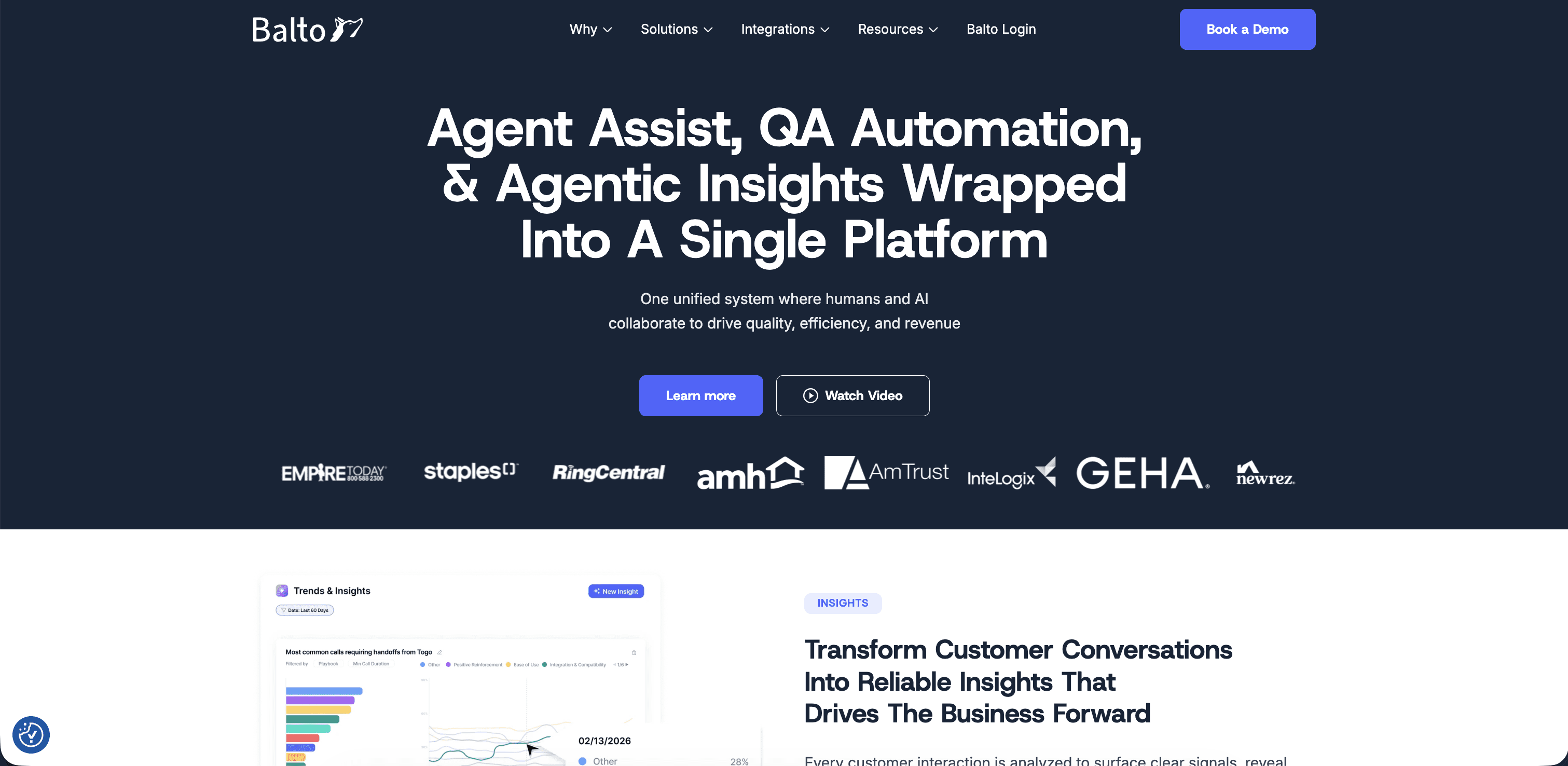
Balto is a real-time guidance platform for contact centers. It sits on top of your existing phone system and listens to calls as they happen, then surfaces prompts, checklists, and compliance reminders for agents. Balto is particularly popular with sales and compliance-heavy environments where agents need to hit specific scripts or regulatory requirements during calls. It works with most major telephony systems and is known for a fast deployment process.
Where Balto falls short for enterprises is in the depth of its QA and analytics. The platform is strong during the call but offers limited post-call intelligence. Teams that want to understand why customers are unhappy, track coaching outcomes, or get a full picture of call center performance will typically need to pair Balto with another tool.
Key Features
Real-time script adherence and checklist prompts during live calls
Automatic alerts for compliance-sensitive language or missed steps
Manager notifications when agents need live support on a call
Post-call summaries and basic reporting on agent adherence
Integration with Salesforce CRM for activity logging
Customizable playbooks for different call types and teams
Mobile-accessible manager dashboard
Strengths
Fast to deploy, often live within days for teams using supported telephony
Strong compliance prompting that reduces regulatory risk in real time
Easy for agents to learn and adopt without heavy training
Good fit for call centers that have a strong script or structured sales process
Works as an add-on to existing telephony without replacing infrastructure
Weaknesses
Limited auto QA capabilities compared to platforms like Level AI or Observe AI
Analytics are surface-level and do not surface root-cause customer trends
Not designed for post-call coaching workflows or performance management
Best For
Balto works best for sales-focused call centers or compliance-heavy teams that need real-time script adherence support during calls. It is a strong point solution but not a full-stack platform for enterprises that need QA, coaching, and analytics together.
Read a detailed guide on Balto Alternatives for enterprises.
3. Observe AI
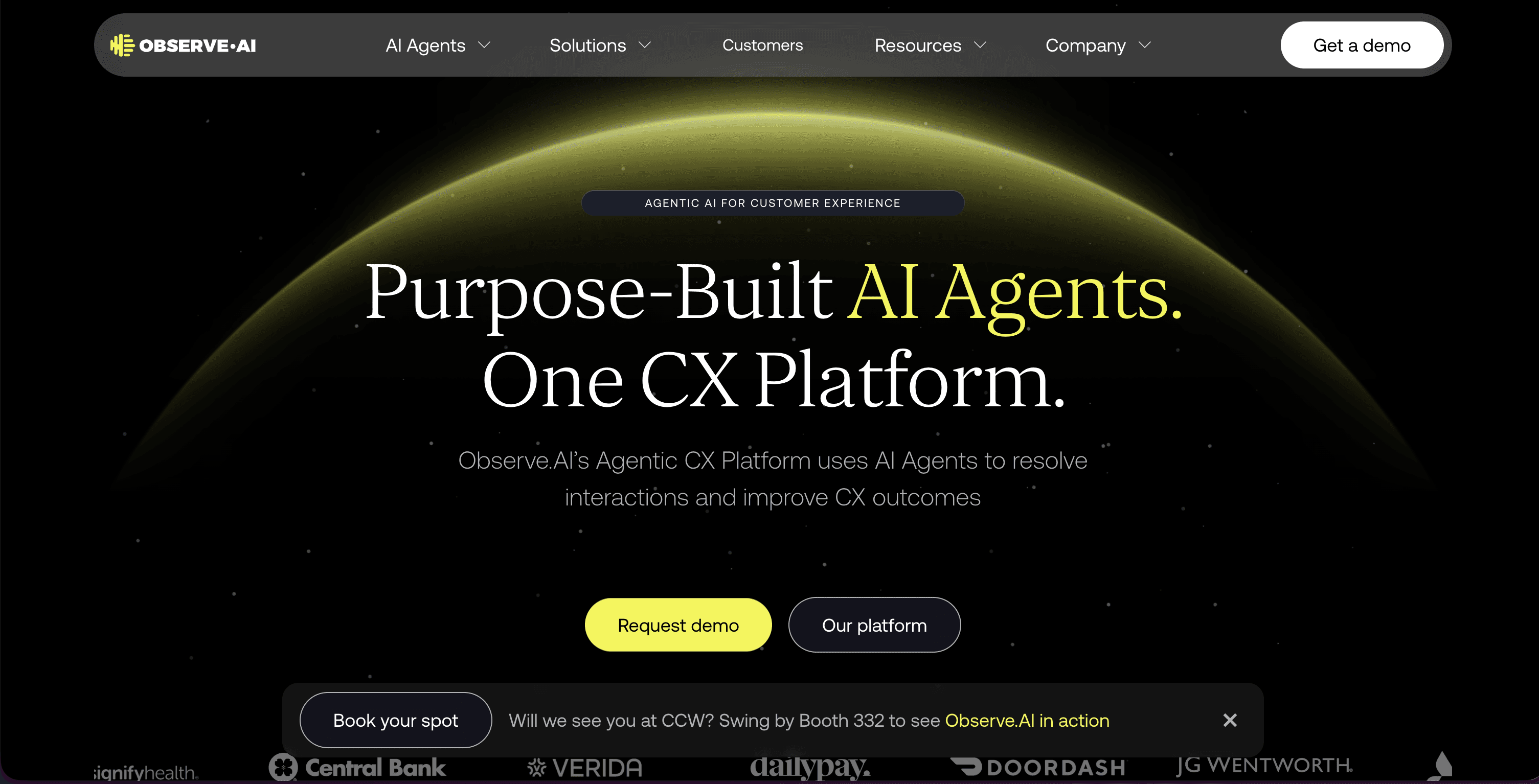
Observe AI is a conversation intelligence platform built for contact centers. It combines speech analytics, automated quality management, and agent coaching in a single platform. Observe AI analyzes 100% of calls after they happen and uses AI to score agents, flag issues, and surface trends. The platform is especially strong in its transcription accuracy and the depth of its post-call analytics.
Observe AI also added a real-time assist product called Observe AI Assist, making it a more direct Cresta competitor. However, buyers evaluating both tools often note that Observe AI vs Level AI comparisons come down to breadth: Observe AI is strong on QA and analytics but newer to real-time guidance, while Level AI offers both more equally.
Key Features
Automated call scoring across 100% of voice interactions
Real-time agent assist with live guidance and smart prompts
AI-driven agent coaching with performance tracking over time
Speech analytics to detect keywords, topics, and sentiment at scale
Supervisor alerts for calls that need immediate attention
Business intelligence dashboards for CX and QA leaders
Integrations with major CCaaS platforms and CRMs
Strengths
Strong transcription quality that drives accurate call scoring and topic detection
Good post-call analytics for understanding trends across large call volumes
Established presence in the market with strong enterprise customer references
Real-time assist product adds value for teams who want live guidance in addition to QA
Flexible reporting that can be customized for different team structures
Weaknesses
Real-time assist is a newer product and may not yet be as mature as post-call capabilities
Some users report a learning curve when configuring scorecards and QA workflows
Pricing can be complex for organizations that need both real-time and post-call products
Best For
Observe AI is a good fit for enterprises that prioritize post-call analytics and want a strong QA foundation with the option to add real-time guidance. It is well-suited for large contact centers in healthcare, financial services, and insurance.
Read our detailed guide on Observe Alternatives
4. AmplifAI
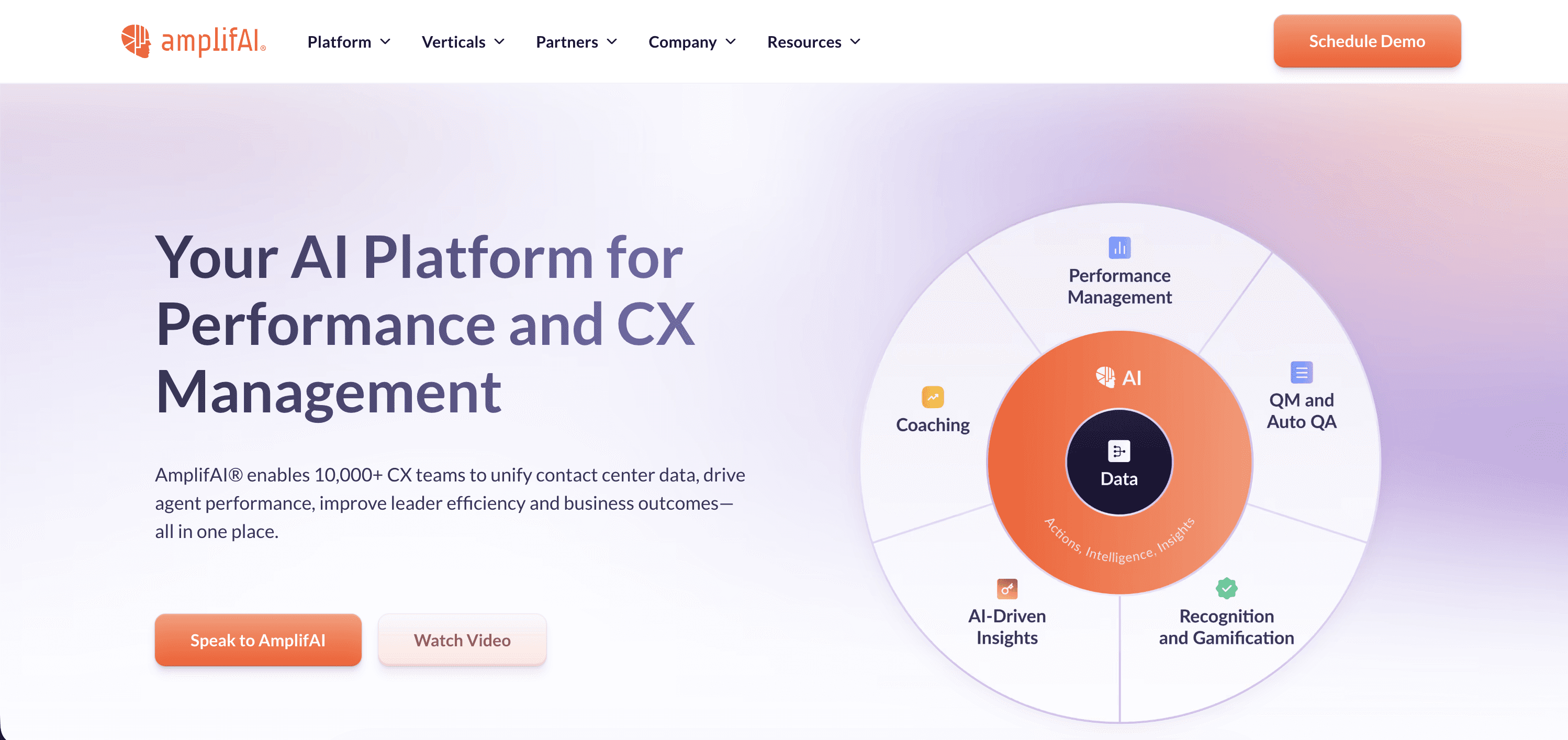
AmplifAI focuses on agent performance management and coaching. It takes data from your existing quality assurance and workforce management tools and turns it into automated coaching recommendations for frontline agents and team leaders. The platform is designed to help managers spend less time on manual performance reviews and more time on coaching conversations that actually move the needle.
AmplifAI is not a full conversation intelligence platform. It does not transcribe or analyze calls on its own. Instead, it acts as a layer on top of existing tools. This makes it a useful add-on for teams that already have a QA solution but need better agent coaching workflows and performance tracking.
Key Features
AI-driven coaching recommendations based on QA scores and performance data
Automated coaching workflows that guide managers through regular development conversations
Gamification features to engage agents in their own performance improvement
Customizable performance dashboards for supervisors and team leads
Integration with QA tools, WFM platforms, and CRMs
Learning content delivery tied to specific coaching gaps
Goal tracking and performance trend reporting over time
Strengths
Strong focus on coaching outcomes and measurable performance improvement
Reduces the time managers spend on manual performance reviews
Gamification increases agent engagement in the feedback process
Works alongside existing QA tools without requiring a full platform switch
Good for organizations that want to formalize and scale their coaching culture
Weaknesses
Relies on external QA data and does not analyze conversations on its own
Not a fit for teams that also need real-time agent assist or call analytics
Feature depth in analytics is limited compared to full-stack platforms
Best For
AmplifAI works best for contact centers that already have a QA tool and want to improve how coaching is delivered and tracked. It is a coaching layer, not a full platform, so it is most useful when combined with a more comprehensive conversation intelligence solution.
5. Chorus by ZoomInfo
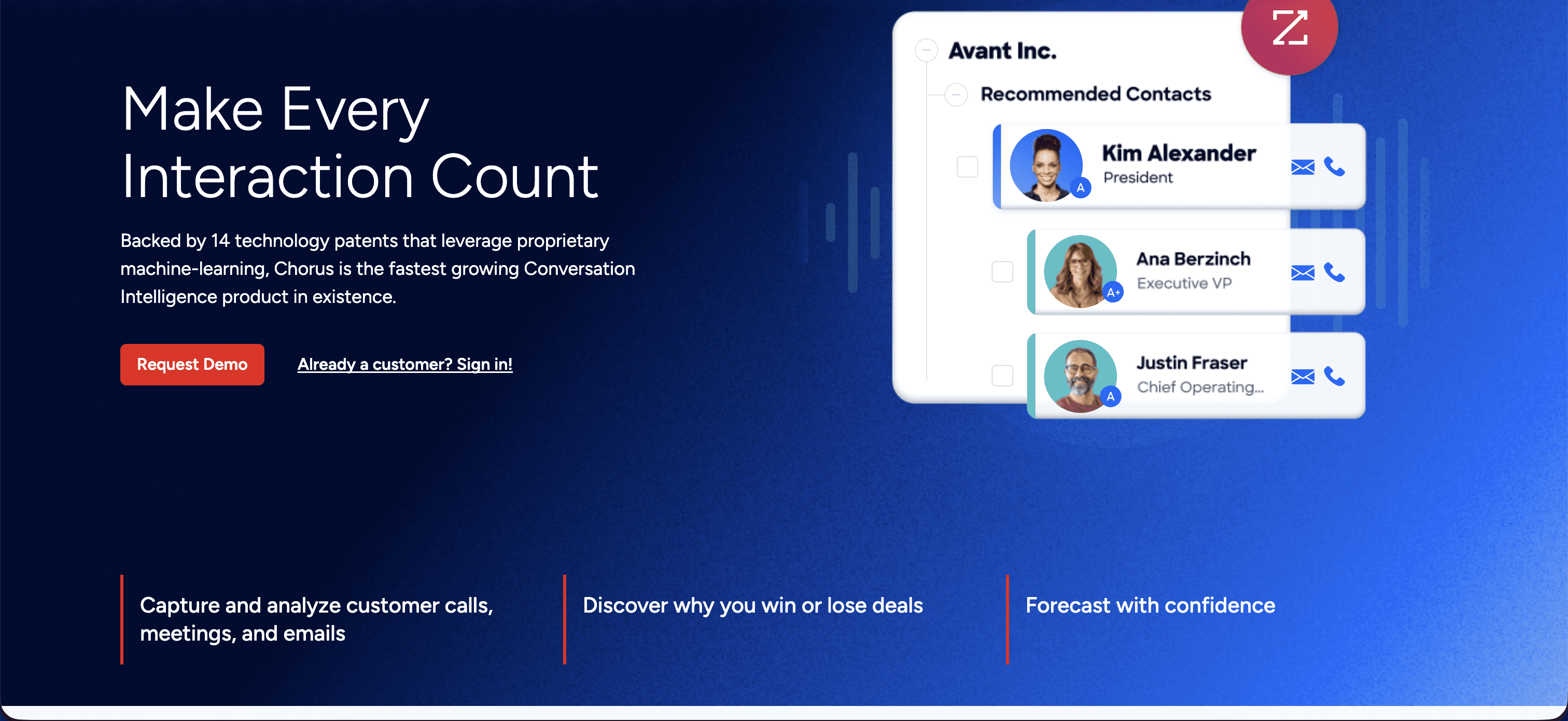
Chorus by ZoomInfo is a conversation intelligence tool that was originally built for B2B sales teams. It records and analyzes sales calls, helping reps and managers understand what is working in their sales conversations. Chorus is strong at capturing deal intelligence and coaching sales reps based on call recordings and transcripts. Since ZoomInfo acquired Chorus, the platform has been more tightly integrated into ZoomInfo’s broader go-to-market data suite.
Chorus was designed for sales, not for customer service or support contact centers. Teams evaluating it as a Cresta alternative should note that it lacks real-time agent assist, automated QA scorecards, and the kind of customer sentiment analysis that contact center leaders need. It is a better fit for sales organizations than for customer service enterprises.
Key Features
Call and meeting recording with AI-generated transcripts and summaries
Deal intelligence that tracks themes and risks across sales conversations
Coaching playlists where managers share examples of good and bad calls
CRM integration with Salesforce for automatic activity logging
Talk-to-listen ratio and other conversational analytics for sales reps
Search across call libraries to find specific topics or moments
Integration with ZoomInfo data for enriched account and contact intelligence
Strengths
Strong for sales teams that need to analyze and coach on deal conversations
ZoomInfo integration adds useful go-to-market context for sales-focused organizations
Solid CRM sync with Salesforce reduces manual data entry for sales reps
Good call recording and transcript search for training and knowledge sharing
Easy to set up for teams already in the ZoomInfo ecosystem
Weaknesses
Not built for customer service contact centers, lacks QA scorecards and compliance tools
No real-time agent assist for live calls
Limited analytics depth for support, service, or collections workflows
Best For
Chorus by ZoomInfo is best for B2B sales teams that need to analyze sales conversations, coach reps on deal progression, and integrate call intelligence with their CRM. It is not a strong fit for contact center leaders focused on customer service, QA, or compliance.
6. Gong
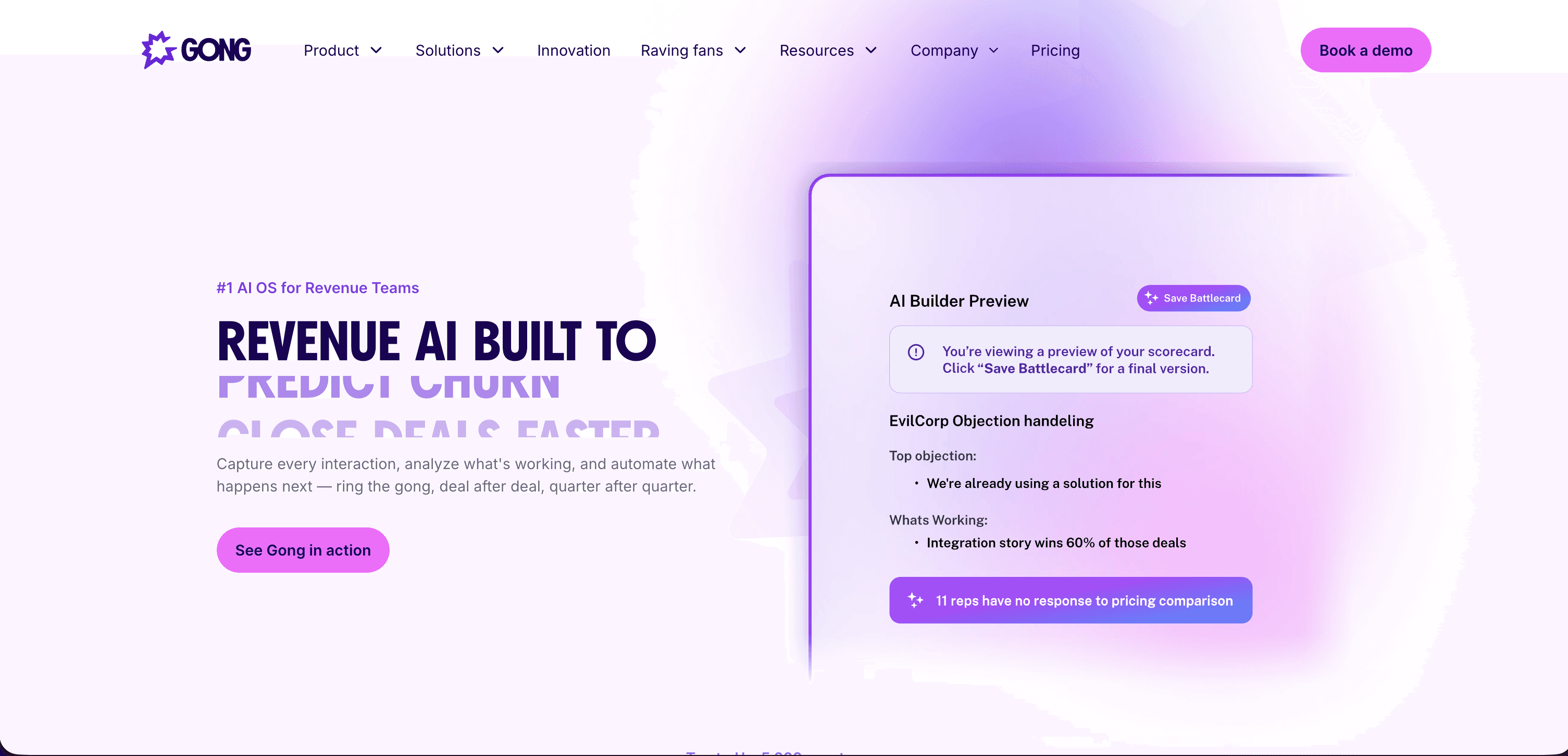
Gong is one of the best-known revenue intelligence platforms on the market. It captures and analyzes sales calls, emails, and meetings to help sales leaders understand pipeline health, forecast deals, and coach their teams. Gong’s AI models are trained on a large dataset of B2B sales conversations, making its insights particularly relevant for sales performance use cases. The platform also integrates with CRM, email, and calendar tools to give sales teams a full picture of every deal.
Like Chorus, Gong is a sales tool. Its strengths in deal analysis and revenue forecasting do not transfer well to contact center environments where the priorities are customer satisfaction, compliance, agent productivity, and service quality. Enterprises comparing Gong to Cresta should note they are solving different problems. Gong is a fit for your sales team. It is not a fit for your support or service contact center.
Key Features
Revenue intelligence with AI-driven deal risk alerts and pipeline analysis
Call recording and transcript analysis for sales conversations
Forecast insights based on conversation signals and CRM data
AI-generated call summaries and next steps pushed to CRM
Coaching tools for sales managers to build rep development plans
Integrations with Salesforce, HubSpot, Microsoft Dynamics, and major video conferencing tools
Market intelligence that surfaces competitive themes from calls
Strengths
Industry-leading revenue intelligence for B2B sales organizations
Strong AI models trained on a large base of sales conversations
Excellent CRM integration that reduces manual data entry and improves pipeline visibility
Very good sales coaching tools with clear performance trend tracking
Widely adopted with a large customer base and strong peer reviews on G2
Weaknesses
Not designed for customer service or support contact centers
No automated QA, compliance monitoring, or real-time assist for service agents
High cost for organizations that do not have a large sales team to justify it
Best For
Gong is the right choice for B2B sales organizations that want deep revenue intelligence, deal coaching, and forecast accuracy. It is not a Cresta alternative for customer service contact centers and should not be evaluated as one.
7. Convin
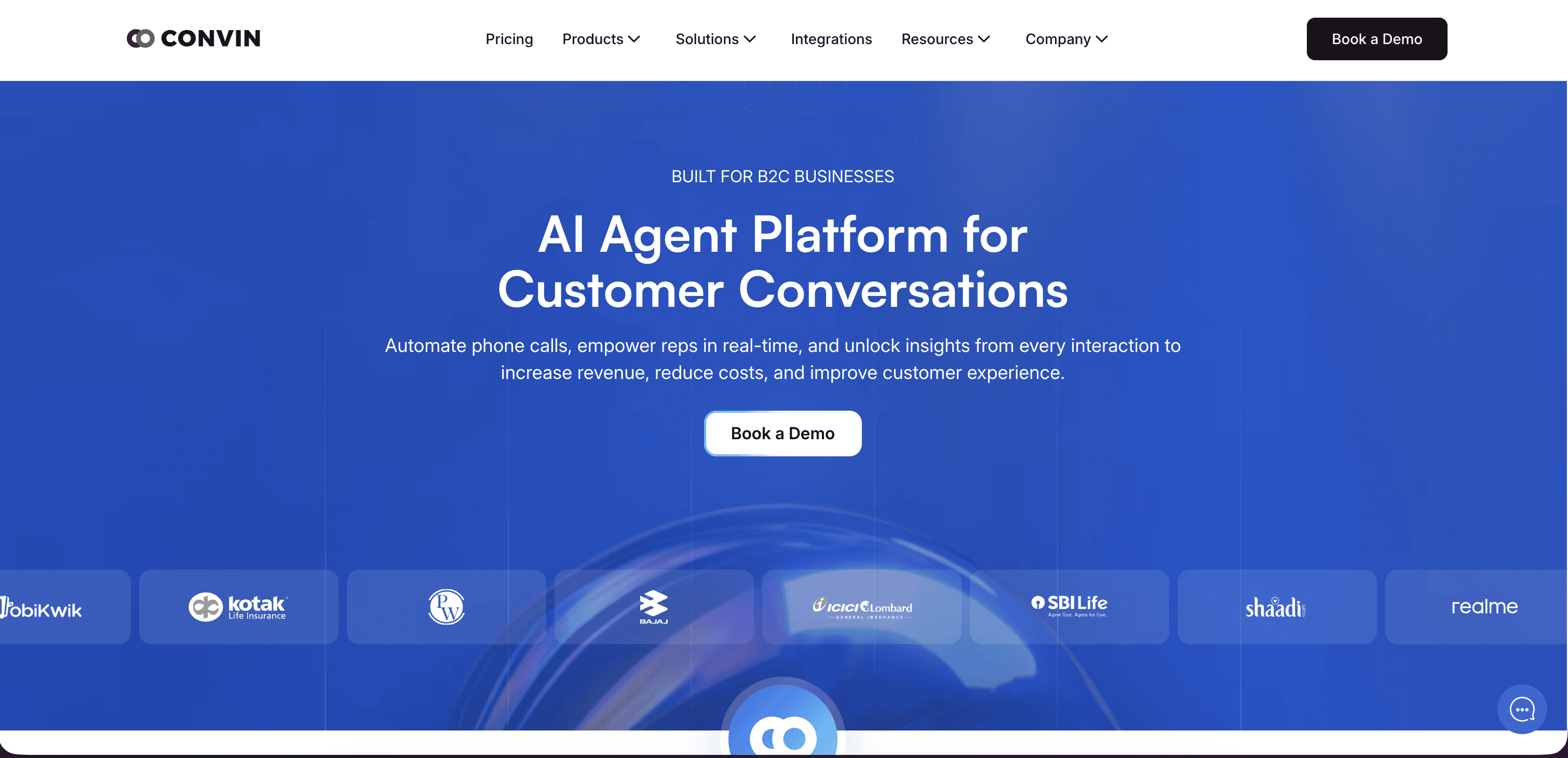
Convin is a conversation intelligence platform that covers call recording, automated quality assurance, agent coaching, and real-time assist. It is built for customer-facing teams in sales, support, and collections. Convin’s auto QA scores every conversation and uses those scores to generate coaching recommendations for agents and supervisors. The platform has grown quickly in the market and has a strong presence in India and the Asia Pacific region.
Convin is a more affordable option compared to some enterprise-tier platforms, which makes it attractive for mid-market teams and contact centers that are getting started with AI quality assurance. However, enterprise buyers in North America and Europe may find Convin’s integration ecosystem and data residency options less mature compared to Level AI, Observe AI, or NICE.
Key Features
Automated call and chat QA that scores 100% of interactions
Real-time agent assist with live battle cards and objection handling prompts
Coaching modules that track agent improvement over time
Conversation analytics with topic, sentiment, and keyword detection
Integration with popular dialers, CRMs, and helpdesk tools
Supervisor dashboards with team performance visibility
Multilingual transcription and analysis support
Strengths
More affordable pricing makes it accessible for growing contact center teams
Covers the full workflow of QA, coaching, and real-time guidance in one tool
Fast implementation with a structured onboarding process
Strong multilingual support is an advantage for global or multilingual operations
Good customer support and responsiveness from the Convin team
Weaknesses
Integration depth may be limited for some enterprise CCaaS and CRM environments
Data residency options may not meet requirements for regulated industries in certain regions
Analytics maturity is less advanced than enterprise-tier platforms like Level AI or NICE
Best For
Convin is a good fit for mid-market contact centers and growing teams that need a full-featured platform at a lower price point. It is also a strong choice for teams in Asia Pacific or those with multilingual agent populations.
8. NICE
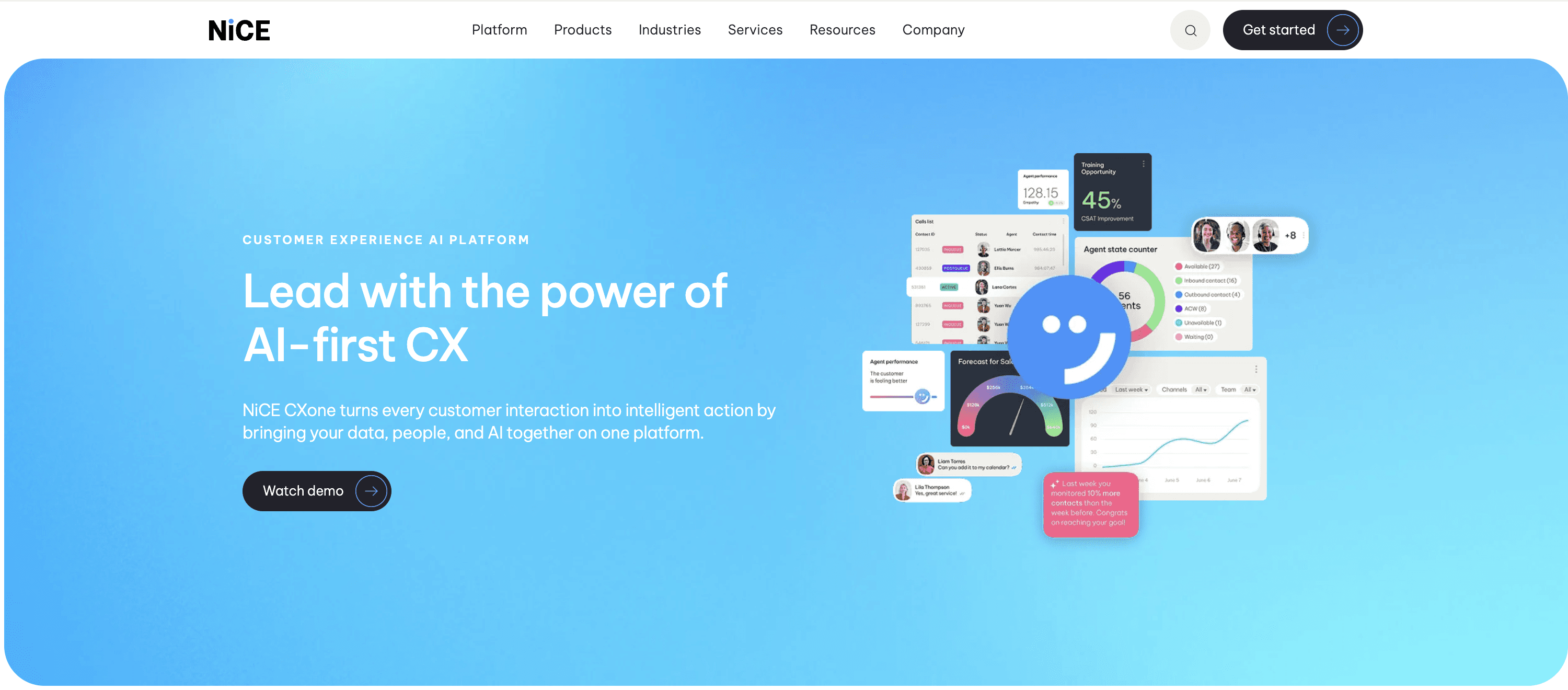
NICE is one of the largest and most established players in the contact center technology space. Its flagship platform, NICE CXone, offers a comprehensive suite of capabilities including workforce optimization, quality management, speech analytics, agent desktop tools, and digital engagement channels. NICE serves thousands of enterprises globally and has built deep integration with its own suite of contact center products.
NICE is often evaluated by large enterprises that want a single vendor to handle telephony, WFM, QA, and analytics. The platform’s size is also its main limitation: it can be slow to implement, expensive, and complex to configure. Smaller teams often find that the platform is more than they need. Enterprise buyers should also assess how well NICE integrates with their existing systems before committing, as the platform ecosystem can create vendor lock-in.
Key Features
Comprehensive workforce management including scheduling, forecasting, and adherence tracking
Automated quality management with AI-powered call scoring
Real-time agent guidance and desktop automation
Omnichannel support covering voice, chat, email, and social channels
Advanced speech and text analytics across all interaction types
Native CCaaS capabilities with the CXone cloud contact center platform
Extensive reporting and analytics with custom dashboards
Strengths
Full-suite platform that can replace multiple point solutions for large enterprises
Strong workforce management capabilities that go beyond what most AI-only platforms offer
Established enterprise customer base with references across many industries
Broad omnichannel coverage for organizations managing many communication channels
Deep reporting and analytics that support complex operational structures
Weaknesses
Complex to implement and configure, often requiring significant professional services
High total cost of ownership when all modules are factored in
Can feel heavy and slow-moving for teams that need to iterate quickly
Best For
NICE is best for very large enterprises that want a single vendor for telephony, workforce management, QA, and analytics. It is a strong fit when the priority is consolidation and when the organization has the resources and timeline to implement a complex platform.
9. Genesys
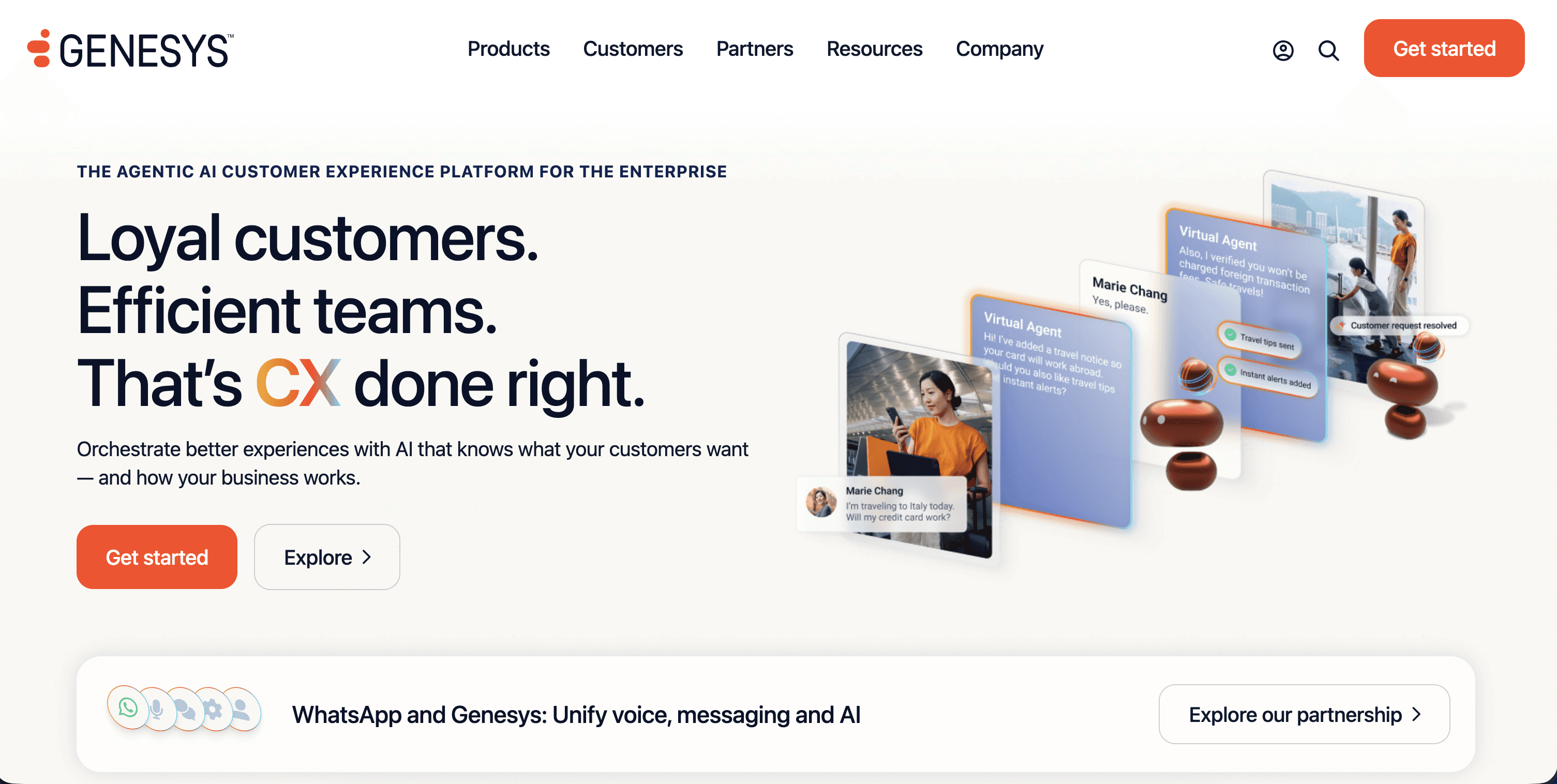
Genesys is a leading cloud contact center platform that powers voice, digital, and AI-driven customer interactions for thousands of enterprises worldwide. Its main product, Genesys Cloud CX, provides omnichannel routing, IVR, workforce management, agent assist, and analytics in a unified cloud platform. Genesys is often the infrastructure backbone for contact centers, rather than an analytics and QA tool layered on top.
Comparing Genesys to Cresta is a bit like comparing a phone system to a coaching app. They serve different layers of the contact center stack. Genesys is a solid choice for organizations that need to modernize their contact center infrastructure, but teams that want deep AI-driven QA and coaching will typically add a specialized tool like Level AI on top of Genesys rather than replace it.
Key Features
Cloud-based omnichannel routing for voice, chat, email, messaging, and social
AI-powered IVR and self-service with natural language understanding
Workforce management with scheduling, forecasting, and performance tracking
Built-in quality management and evaluation tools
Genesys AI for agent assist, predictive routing, and conversation analysis
Native integrations with Salesforce, ServiceNow, Microsoft, and major CRMs
Open APIs for custom integrations with third-party analytics and AI tools
Strengths
Strong cloud infrastructure for enterprise-scale omnichannel operations
Native workforce management reduces the need for a separate WFM tool
Large ecosystem of partner integrations and ISV solutions
Good developer tooling and open APIs for customization
Strong track record with large enterprises in regulated industries
Weaknesses
QA and coaching features are not as deep as specialized tools like Level AI or Observe AI
Can be complex and expensive to configure for organizations with unique routing needs
AI capabilities are improving but still lag behind dedicated AI platforms in some areas
Best For
Genesys is the right platform for enterprises that need to modernize their contact center infrastructure and want a cloud-native solution for routing, IVR, and workforce management. Most organizations use it as the foundation and add dedicated AI tools on top for QA, coaching, and analytics.
10. Dialpad
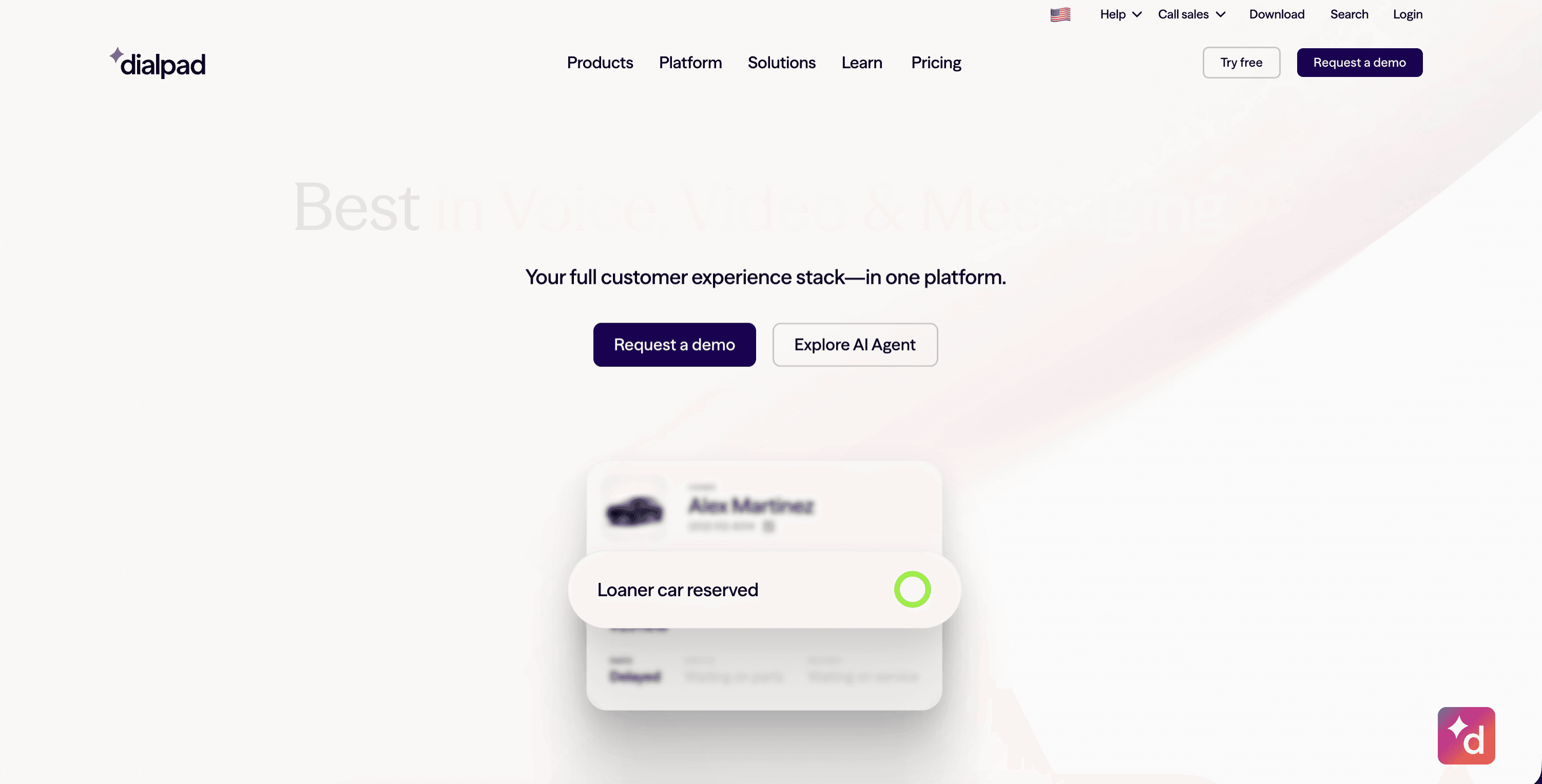
Dialpad is an AI-powered communications platform that includes business phone, video meetings, and contact center capabilities. Its contact center product, Dialpad Support, offers call routing, real-time transcription, AI-generated call summaries, and basic speech analytics. Dialpad stands out for its clean interface and the speed of its real-time transcription, which powers its AI features for agents and supervisors.
Dialpad is popular with smaller and mid-market businesses, and its pricing is more accessible than enterprise-tier tools. However, it lacks the depth of QA, coaching, and customer insight analytics that large enterprise contact centers need. Teams comparing it to Cresta as a full enterprise replacement will find that Dialpad, like Cresta, covers some of the same gaps but in different areas.
Key Features
Real-time AI transcription during live calls with automatic summaries
Sentiment detection and flagging for supervisor awareness
Call routing and IVR for inbound contact center operations
AI-generated post-call action items and CRM logging
Built-in video meetings and messaging alongside voice for unified communications
Basic analytics dashboard for call volume, duration, and team activity
Integration with Salesforce, HubSpot, Zendesk, and major CRM and helpdesk tools
Strengths
Clean and easy-to-use interface that agents and managers adopt quickly
Real-time transcription quality is a genuine strength and drives useful AI summaries
Good value for smaller contact centers that want AI features without enterprise pricing
Unified communications means phone, video, and messaging in one platform
Fast deployment and a relatively simple setup process
Weaknesses
QA and scoring capabilities are basic compared to dedicated auto QA platforms
Not well-suited for complex enterprise compliance or regulatory monitoring needs
Analytics depth is limited for large contact centers with detailed reporting requirements
Best For
Dialpad is a good fit for smaller or mid-market contact centers that want a simple, AI-enhanced communications tool with real-time transcription. It is not the right choice for large enterprises that need advanced QA, coaching programs, or deep customer analytics.
Wrapping up: Choosing an AI Platform That Scales With Your Business
Cresta earns its place in the market as a capable real-time agent assist tool. But most enterprise contact center leaders evaluating Cresta are ultimately looking for more than one thing. They want agent guidance, yes, but they also want automated quality assurance, structured coaching, and the kind of customer intelligence that helps them fix the root causes of poor service, not just coach agents in the moment.
Level AI is the Cresta alternative that delivers all of this in one connected platform. Instead of buying one tool for agent assist and another for QA and a third for analytics, Level AI gives enterprise teams a single system where everything works together. Your QA scores feed coaching plans. Your coaching plans tie to performance outcomes. Your customer insights surface the issues that need fixing at the product and process level.
The results speak for themselves. Customers like VistaPrint reduced QA and coaching effort by 80%. Smartsheet drove a 12% boost in customer satisfaction scores. Via Transportation saved thousands of dollars in quality-driven savings. If you want to see what Level AI can do for your contact center, the best next step is a live demo where your team can see the platform against your actual use cases.
Frequently Asked Questions
1. What is the biggest difference between Cresta and Level AI?
Cresta focuses primarily on real-time agent assist during live calls. Level AI provides real-time assist plus automated quality assurance, agent coaching, and voice of the customer analytics in a single platform. If you need more than just in-call guidance, Level AI covers the full workflow that Cresta does not.
2. Is Cresta good for auto QA?
Cresta's strength is real-time agent assist. Its auto QA capabilities are generally considered less mature than dedicated platforms like Level AI or Observe AI. Many buyers who start with Cresta for agent assist end up adding a separate tool for quality management, which increases both cost and complexity.
3. What should I look for in a Cresta alternative?
The key things to evaluate are: real-time agent guidance during calls, automated QA that covers 100% of interactions, coaching workflows that are triggered by QA data, customer trend analytics, and native integration with your existing telephony and CRM systems. You can use the Level AI comparison page to see how the platforms stack up side by side.
4. Can I use Level AI alongside my existing contact center platform?
Yes. Level AI integrates natively with major CCaaS platforms including Genesys, NICE CXone, Five9, Talkdesk, and Amazon Connect. It also connects with CRMs like Salesforce and Zendesk. You can use Level AI's integrations without replacing your existing telephony or ticketing infrastructure.
5. How long does it take to implement a Cresta alternative?
Implementation timelines vary by platform and the complexity of your environment. Level AI customers typically go live in four to eight weeks. Platforms like NICE and Genesys can take three to six months for a full deployment due to their broader scope. Simpler tools like Balto and Dialpad can be up and running in days. The right contact center AI solution depends on how fast you need to see results and how much change management your organization can absorb.